

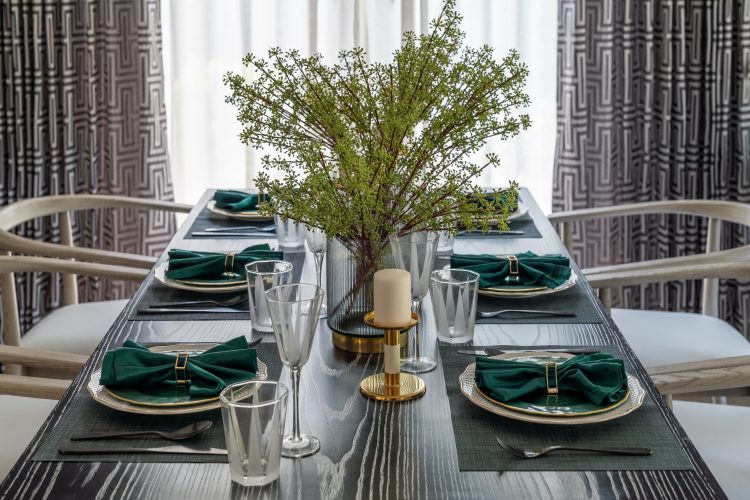
A dining room is more than a place to share a meal. It’s where stories unfold, traditions are honored, and connections deepen. The art of setting the table is about creating an atmosphere that enhances these moments and can turn an ordinary dinner into a cherished memory. With the right touches, your dining room can become a stage where both everyday meals and festive gatherings feel extraordinary. Here’s how you can create dining experiences that linger in the minds of your guests this holiday season and beyond.
Begin with the foundation
Before layering in accessories, consider the table’s finish and shape. A polished wood surface offers timeless elegance, while a stone or glass table makes a sleek, contemporary statement.
When you’re selecting the table linens, use them strategically. A runner allows the natural beauty of the table to shine through while adding warmth and color. For more formal occasions, a textured linen tablecloth creates a sophisticated background, especially in rich seasonal shades like deep moss, burgundy, or slate gray.
Curate a mix of dinnerware
Plates and bowls aren’t just functional; they’re an extension of the overall design. Combining materials and finishes can create visual interest, turning the tablescape into a work of art. However, keep at least one element consistent, such as color family or material, to prevent the table from feeling disjointed.
Here are pairings to consider:
- Pair fine porcelain with matte stoneware for contrast.
- Mix metallic chargers with simple, neutral plates for a layered look.
- Accent pieces, like hand-painted dessert plates, add charm and individuality.
Elevate flatware and glassware.
These necessary pieces are often overlooked, yet they’re what your guests handle most. Substantial flatware feels inviting in the hand, and stemware shapes influence the way beverages are perceived.
Consider investing in versatile glassware for your home. A set of universal wine glasses, paired with elegant water goblets, maintains a cohesive look. For flatware, mix metals thoughtfully. Brushed gold adds warmth, while polished silver lends classic sophistication.
Use layers of texture to add depth
A memorable tablescape engages the senses. Textures, whether tactile, visual, or both, invite people to slow down and savor the experience. Texture is especially effective in neutral palettes, where depth comes more from feel than color.
Here are some ways to weave texture into your dining table:
- Combine linen napkins with velvet ribbons for a touch of seasonal elegance.
- Use woven placemats under refined dinnerware for a balanced look.
- Add tactile details, such as hammered metal napkin rings or carved wooden chargers.
Create a centerpiece that encourages connection
The centerpiece is the visual anchor of the table, but it should never block conversation. Cluster several smaller elements instead of one large arrangement to create balance and flexibility, especially for longer tables.
Some additional ways to ensure your centerpieces don’t block connection include:
- Low floral arrangements in tonal hues allow eye contact across the table.
- Candles in varying heights add movement and warmth without overwhelming the room.
- Seasonal accents, such as pomegranates, branches, or gourds, can help ground the space.
Balance lighting for ambiance
Dining is as much about atmosphere as it is about food. Lighting determines the mood, and subtle layers are the key to creating a harmonious ambiance. Also, choose unscented candles so they don’t compete with the aromas of the meal.
- A chandelier provides drama, but dim it slightly for intimacy.
- Accent with wall sconces or buffet lamps for added depth.
- Always include candles at the table for a soft, flattering glow.
Add personal touches
Details that show thoughtfulness elevate the experience from pleasant to memorable. Personal touches don’t need to be elaborate. Even a well-chosen playlist softly in the background enhances the dining experience.
- Handwritten place cards add a personal gesture.
- Seasonal napkin folds or small take-home favors create delight.
- A single bloom or sprig of herbs at each setting feels fresh and intentional.
Setting the table isn’t about perfection. It’s about creating an environment that nurtures and inspires people. When guests leave remembering how the room made them feel, you’ve turned a meal into an experience and succeeded in crafting an unforgettable gathering.