(TNS)—Do you always tell yourself that you’ll start saving more money, but you never actually get around to it? If that describes you, you’re probably making these three savings mistakes even smart people make.
Not Paying Yourself First
Let’s begin by accepting two facts. Fact one: You spend all your money every month, and have nothing left to save. Fact two: You can’t change Fact one.
Fine. I won’t argue with you.
Instead, let’s just make a subtle change in how you pay your bills. Currently, you deposit your paycheck into your checking account, and then you start writing checks. If you’re like most, you pay the mortgage first, then car payments and other loans, followed by the phone bill and utilities. You save the credit cards (if any) for last because the amount you pay to them is directly related to how much is left in your checkbook after all the other bills are paid.
So, you send minimal amounts to each credit card company and by the time you’re done, your checkbook balance is at or near zero. And while you promised yourself that you’d save some money this month (like you promise yourself every month), you now discover (as always) that there’s nothing left to save. In fact, you barely had enough to pay the bills themselves.
Without realizing it, you are treating yourself as a creditor, albeit a benign creditor. You want to pay this fellow named Yourself, but you know Yourself will never hassle you for the money, so it’s OK to miss a few payments — or ignore Yourself altogether.
To fix this, you must pay Yourself first — before you pay any other bills. By writing a check to Yourself for $25 or $50 (or whatever), you are certain that you will have paid Yourself before your checkbook runs out of money.
And if you’re concerned that you will run out of money, don’t fret — because you’re going to run out of money anyway (you always do, right?). At least, this way, you’ll run out of money after you’ve paid yourself.
Watching the Dollars but Not the Pennies
Considering the huge amounts you’re spending on taxes, homes, cars, clothes, insurance, food and day care, you might not think spending a dollar here or there is a big deal.
But simple daily choices — such as buying a bag of chips or a can of soda at lunch — can have a much bigger impact on your wallet and on your savings than you realize.
Here’s an easy way to keep those pennies in your pocket. The next time you reach for that soda on the supermarket shelf, head to the fast-food joint or subscribe to all the premium channels on cable, ask yourself one simple question: Is this expense going to help you achieve your financial goals?
If you really want to see how much those pennies add up, try using a trick my big brother Brad taught me when I was 8: Stop spending coins; spend only paper currency.
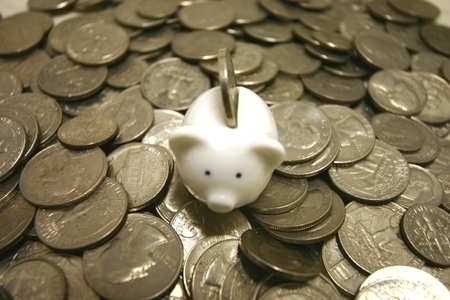
It’s easy: Just put the change you collect each day into a piggy bank (I still use the Planters Peanuts tin can that Brad gave me), and you’ll save $20 a month or more.
Not Contributing to Your Retirement Plan at Work
Without question, if you do only one thing for your financial future, it should be participating in your company’s retirement plan. It’s the easiest way to save money because the money is automatically deducted from your paycheck — and you’ll never miss what you never see.
In a perfect world, you’d be contributing the maximum that the law allows. But life isn’t always perfect. As much as you’d love to be setting aside big chunks of your paycheck for retirement, you might not be able to, due to all the bills you’ve got to pay every month.
So here’s what you do: Forget about contributing the maximum to your retirement plan at work. Instead, just contribute 1 percent of your pay. Then, wait for your next paycheck and see if you notice the reduction.
You see, the key to successful retirement planning is: “Save until it hurts.” If a 1 percent contribution hurts, stay at that level until it doesn’t hurt anymore. But as soon as you don’t notice the pay cut, you’re ready to increase your contribution by another 1 percent. Keep repeating this strategy until you’re saving the maximum.
In addition, most employers that offer retirement plans give you an incentive to contribute some of your pay to your plan: If you put some money into your plan, your employer will too. This is free money that you don’t want to pass up.
So get started now. The sooner you save, the less you need to save each month, the more wealth you will accumulate, and the sooner you can quit saving and start enjoying a life of leisure.
Ric Edelman is the chairman and CEO of Edelman Financial Services.
© 2016 GOBankingRates.com, a ConsumerTrack web property.
Distributed by Tribune Content Agency, LLC.