 By Mary Beth Breckenridge
RISMEDIA, April 30, 2008-(MCT)-We have the weapons for germ warfare at our disposal. Anti-bacterial products are everywhere. Hand soaps, household cleaners, even socks and countertops promise to kill the stuff we can’t see and make our surroundings more sanitary.
But do we really need to live in an anti-bacterial bubble?
Even the experts disagree.
Some say we’re overdoing it. They say soap and water are adequate and fear that overuse of anti-bacterial products might harm us in the long run.
Others scoff at that concern. They argue that anti-bacterial products can be beneficial and there’s no proof of long-term consequences.
That makes it tough for consumers to decide what’s best for themselves and their families. But here’s a bright spot: In talking with researchers and industry representatives about the issue, we did discover a couple of areas of consensus:
– Washing your hands is the single most important thing you can do to fight the spread of illness.
– Sometimes extra attention to germ-killing is warranted. We’ll talk about these areas later.
First, let’s look at the controversy.
For starters, it’s important to know what we’re talking about.
The word “germs” is generally applied to two types of microorganisms, bacteria and viruses. Many of the products on the market are labeled as anti-bacterial, which means they primarily target bacteria. They have little or no effect on viruses.
The term “anti-microbial” is broader and can apply to various microorganisms, including fungi as well as bacteria and viruses. But a product labeled anti-microbial doesn’t necessarily fight all of them.
Most of the controversy swirls around anti-bacterial products, and that distinction is part of the reason.
The most common illnesses-colds, flu and gastrointestinal upsets-are caused by viruses, noted Marcia Patrick, infection control director at MultiCare Health System in Tacoma, Wash., and chair of the communications committee of the Association for Professionals in Infection Control and Epidemiology. Anti-bacterial products don’t kill those common viruses, yet she and other researchers worry that consumers who don’t know that may be lulled into a false sense of security.
They see “anti-bacterial” on a label, and “they immediately think that’s good,” said Julian Davies, emeritus professor of microbiology and immunology at the University of British Columbia.
Davies also is concerned that anti-bacterial products target good bacteria as well as bad. Our bodies need those good bacteria, he said: They help us digest our food, for example, and keep harmful microorganisms from entering our bodies through orifices.
Davies believes marketing has fed a greater fear of bacteria than is warranted. While we do need to clean our bodies and our homes to keep bacteria levels under control, he said, we don’t always need to try to eradicate them.
“Look at children. They used to play in the dirt. Nobody worried about them,” he said.
A bigger part of the controversy, however, lies with the active ingredient found in many of these products, triclosan, or its close cousin, triclocarban.
Triclosan is often used as a disinfectant in health-care facilities as well as in the home. It’s also often used in Microban, the brand for a technology used to embed various types of microbe-fighters in a huge range of products-countertops, paints, towels, computer keyboards, even socks and sandals.
Triclosan has been proved effective in reducing the spread of infection in health-care facilities. But because triclosan can irritate skin, consumer cleaning products contain lower concentrations of it.
Some researchers say it’s too low to be effective. An analysis of research published in September in the journal Clinical Infectious Diseases found that plain soap and water was just as effective for hand washing as consumer products containing triclosan, said Allison Aiello, an epidemiologist at the University of Michigan School of Public Health and the review’s lead author.
What’s more, some scientists fear triclosan could cause bacteria to become resistant to control methods. That hasn’t been proved, but laboratory evidence suggests it’s possible, Aiello said.
That contention raises the hackles of Philip M. Tierno, director of clinical microbiology and diagnostic immunology at New York University Medical Center.
“It’s baloney,” Tierno said. The No. 1 cause of resistance is overuse and misuse of antibiotic drugs in medicine and agriculture, he said. “Put the onus where it belongs.”
Brian Sansoni, a spokesman for the Soap and Detergent Association, which represents cleaning-product manufacturers, calls the resistance question “one of the biggest suburban myths out there.”
“There’s been zero cases showing everyday use of these products leads to antibiotic resistance,” he said. “… These headlines should not be giving people pause to reach for these products.”
Aiello and other scientists, however, say questions remain about the resistance issue because it hasn’t been adequately studied. “We need to be looking at the community setting,” she said.
Even Tierno agreed anti-bacterial products aren’t always necessary. For one thing, only 1% to 2% of microbes are likely to make us sick, he said; for another, bacteria are so prevalent and reproduce so fast that it’s impossible to liminate them anyway.
For example, he thinks a Microban cutting board might be a good idea, because its anti-microbial properties would target foods that get embedded in the small knife cuts. But he doesn’t see the point of the Microban pizza cutter handle he spotted recently in a store. You’re going to clean it anyway, he said, so what’s the point?
Unfortunately, not everyone is as fastidious about cleaning as they should be, countered Kathy Hall, Microban’s vice president of marketing. People might not need Microban in their countertops if they disinfected them every day, she said, but that’s not always the case.
Hall insists Microban is not a substitute for cleaning, but more like an insurance policy against our occasional lapses.
But could it be that some of us are looking for easy fixes instead of investing the effort in basic cleanliness?
That brings us back to the hand-washing issue.
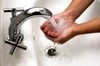
Researchers agree on the absolute importance of proper hand washing to prevent the spread of infectious illnesses. The type of soap you use isn’t important; it’s the mechanical action of rubbing the hands together, combined with the surfactant in the soap, that loosens bacteria and viruses so they can be rinsed away.
Doing it right takes time, however-20 to 30 seconds, or about the time it takes to sing “Twinkle, Twinkle, Little Star” to yourself. Scrub all surfaces, including between your fingers and under your nails. It doesn’t hurt to rinse and repeat, Tierno said.
Likewise, the scientists say it’s important to keep your house clean of the stuff that contains a high number of illness-causing germs or can invite bacteria growth, such as food messes. Many advocate disinfecting bathroom surfaces and kitchen areas or implements that come into contact with raw meat, although Patrick said she thinks hot, soapy water and a vigorous scrubbing are adequate for a non-wood cutting board.
There are times when disinfection takes on added importance, they said-specifically, when someone at home is sick or at increased risk of catching an infectious illness.
In those cases, Patrick recommended cleaning surfaces first and then using a bleach-water solution or an alcohol wipe to sanitize them. Wipes need to contain at least 60% alcohol to be effective, she said.
On a day-to-day basis, though, Tierno said what’s most important is just good personal and household hygiene.
“If you do that,” he said, “you’ll be relatively safe.”
When to Wash
Wash your hands after:
– Using the toilet.
– Changing a diaper.
– Handling raw meat.
– Touching a contaminated surface.
– Touching a pet.
– Handling a used tissue.
– Blowing or touching your nose.
– Coming into contact with body fluids.
Wash your hands before:
– Preparing food.
– Eating.
– Feeding someone else.
Source: Allison Aiello, assistant professor of epidemiology, University of Michigan School of Public Health.
© 2008, Akron Beacon Journal (Akron, Ohio).
Distributed by McClatchy-Tribune Information Services.