Founded in 1976, Seven Gables Real Estate has grown to become the leading independent brokerage in Orange County, California, composed of 11 offices responsible for more than $2.2B in business over the past 12 months.
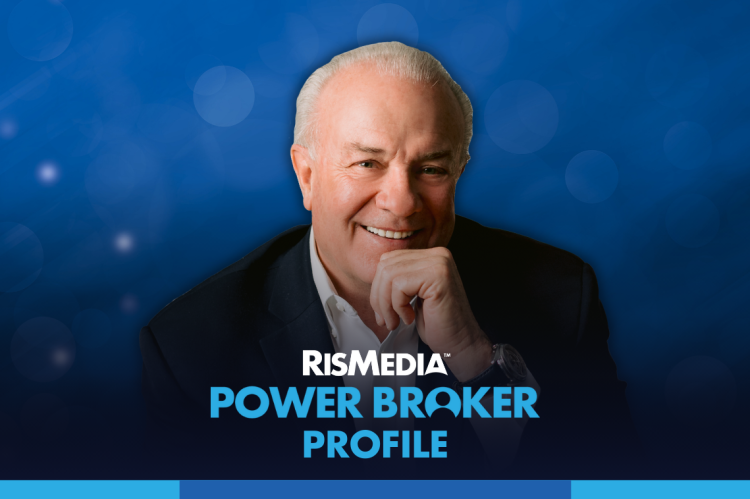
But the company’s influence extends well beyond its SoCal borders. A part of the firm virtually since its inception, CEO Mike Hickman is one of real estate’s most dedicated leaders, enmeshed in the issues affecting the future of the industry as a whole. Educator, advocate and life-long learner, Hickman lives by the words of legendary basketball coach, John Wooden: “It’s what you learn after you think you know it all that matters most.”
“I think that’s the tremendous lesson for all of us—that you don’t stop learning,” says Hickman. “You don’t stop getting coached. You don’t stop getting motivated. That’s a journey that’s ongoing.”
Here, Hickman shares the strategies and philosophies that have resulted in decades of success, as well as his hopes—and fears—for where residential real estate is headed next.
Maria Patterson: Why has Seven Gables remained independent for its almost 50 years in business? How has independence helped the company grow and prosper?
Mike Hickman: We want to choose our own path. We want to be nimble enough and quick enough to react to market changes. And the tide has changed quite often in our industry.
We believe that knowledge is power in an industry that allows for such a low bar of entry. We also believe that we don’t want to be restricted by the confines of a franchise or corporate entity that may not have as much knowledge about the local community that we have collectively as a company. So the fact that we can be nimble, the fact that we can choose our own path, the fact that we can institute our own programs, choose our own belief systems—we don’t have to adhere to a franchise situation. It just doesn’t fit with our culture.
That’s the foundation of our thought processes and our belief systems, and agents like it. We do everything we can to further their interest and make them the best version of themselves they can possibly be.
MP: Is it a competitive advantage to be a long-time independent at a time when so many others are being swallowed up by larger companies and brands?
MH: As a 50-year-old company, you can have the perspective that we’re old, stodgy, we do the same-old, same-old, but that’s not the case. We have focused internally for the entire life of this company. We don’t go out and pound our chest that we’re No. 1. We don’t need to because our agents are living proof. We have a 200% – 300% market lead on some of our competitors in key markets, but we’re not advertising that to the detriment of other companies. We’d like to keep our community relations with other companies and other agents in a positive place.
MP: What’s your take on the rampant consolidation taking place right now?
MH: I think what Robert (Reffkin) did was brilliant. I think the Anywhere/Compass merger was an absolutely brilliant move, and I applaud him for that. But what it did is leave an opening, which oftentimes happens in large mergers like that.
I’m the chairman of a group called Brainstormers. It’s been around for 70 years. At our last meeting, I polled the owners who were sitting in a room with me about when they started their companies, and it was very fascinating because the vast majority of them started in 1975, ’76, and ’77. I did some research and there was the same sort of vacuum, if you will, occurring at that time with consolidation of large companies, and people entering the business from outside the real estate space. What it did was send a signal to people who said, ‘I’m going to start my own company.’ I suspect that will happen again. The very spirit of the entrepreneur who owns a brokerage or operates a team, I think will prevail.
MP: Generally speaking then, consolidation is a positive for you?
MH: It’s a positive for me. I think it’s going to create a lot of entrepreneurs who are going to start their own companies. I think it’s a positive for the consumer, and it’s a positive for the industry, sparking some new, fresh ideas. I think the same-old, same-old will not survive a year from now when the Compass/Anywhere merger is complete.
MP: So will the Compass/Anywhere deal be a good thing or a bad thing?
MH: They have their work cut out for them trying to solve a $2.6 billion debt problem. But when they’re done, it’s going to be a super powerful organization that will have some clout in the industry. And like I said, kudos to Robert for pulling it off. When it’s finally done, they’ll be able to stand up to NAR and stand up to Zillow.
Another way I look at it, Compass, you can call it anything you want, but they are a traditional brokerage. So that means we’re going to have this larger-than-life traditional brokerage operating in the country. What does that say about traditional brokerage when everybody’s trying to buck the system with virtual offices?
MP: In your company’s history, what have been a couple of the most significant evolutions you have gone through—and how did they play a role in your longevity and your growth?
MH: Many of the evolutions we’ve gone through have been brought on by outside sources—the great recession, interest rate increases, all of those things. But at each turn, when the market turned on us and we had to survive, we got better at what we did. We looked at how we do our business, who we serve. And that’s the customer and the agent. The agent really is our client. How do we get better at what we do with our agents? How do we support them? You can always look at profits and try to increase them by reducing expenses. But I’m a firm believer that you can’t cost-cut your way to profitability. So when we survived the great recession, so to speak, yes, we had to do expense cutting, but we looked more at ways to increase our income.
MP: So a very proactive approach…
MH: Very proactive. I’m constantly seeking opportunities, but more importantly, constantly seeking information. What can I do better as a leader to provide for my agents that trust me with their careers at a time when things can be a little scary? I constantly ask that. That’s the question that keeps me up at night. How can I do better to provide opportunities for our agents in a world that suggests that that’s not possible?
MP: I love that philosophy—focusing on agents and increasing profitability—because it will help get you through any upheaval.
MH: Part of it is being a really good listener. I think leadership is more about listening than talking and presenting and doing all the other things that come with that. The No. 1 thing we can do as leaders is listen to what people are telling us. Listen to what the industry is telling us, process and then apply where necessary.
MP: What has been your approach to growth over the years?
MH: We have grown to roughly 575 agents and staff within our six family of companies. We could have grown a little bit more probably, but we’re fairly selective. We actually go to people and suggest that this business is not for them. The MLS or NAR suggest that 50% of the agents in the industry sold one house or less—that’s not the case here. I can’t imagine wasting our resources on people who are lovely people, but don’t take the relevant steps to be productive.
MP: Has anything significantly changed at your firm related to the outcome of the commission lawsuits and rule changes?
MH: I was a proponent of the change. I believed that it would enhance our professionalism as a group to make it essentially mandatory to have a buyer/broker agreement. I believe that was something that should have happened a long time ago.
Besides the negativity toward NAR and how they handled the case, I think the outcome is favorable for the consumer. I think it’s favorable for agents who know how to present and know how to talk about the actual representation of a buyer and the value they can bring to a buyer. Our commissions on the buy side are actually higher because our agents have proven more value to the consumer.
MP: What’s your secret? How did you get your agents to adhere to and succeed with the new rules of real estate?
MH: We started prepping our agents six months before the verdict was handed down. I had taken my Brainstormers group to the NAR headquarters in Chicago. They allowed us to use their boardroom, and we invited their lawyers in. I asked, ‘Do you have a Mandatory Settlement Conference scheduled anytime in the future prior to trial?’ A lawyer said, ‘Absolutely not. We’re going to win this case a hundred percent.’ That’s when I knew we were doomed. I came back and said, ‘We’ve got to start training now.’
I hired a research firm, and we sat behind a two-way mirror for about eight hours. We brought in three different groups of buyers—all different age groups. New buyers, first-time homebuyers, experienced investors—all kinds of price ranges, all socio-economic backgrounds, all races, genders.
There were so many ‘aha’ moments—it helped us formulate a process for how we can be more informative for buyers and sellers, and more importantly, how we act with buyers in the future. So when (the verdict) happened in October, we said, ‘Okay, no big deal. We’re ready to go. Here’s our forms.’ Everybody knew what their job was and their process.
MP: How many firms and real estate professionals do you think are handling this whole change and shift as well as your firm is?
MH: I don’t think many are. I’m an eternal optimist, but the reality of the situation is they’re not. I see MLSs trying to reinsert what the compensation’s going to be to a buyer’s agent. I see it on certain forms from certain companies. I see people slipping back into the old ways of doing things around the country. I see it. I hear about it. And it’s going to be hard because somebody’s going to get sued as a result of this, and this time it will put people out of business.
But the upshot of this is that I think it’s good for the industry, and I think people need to conform—and the minute we conform, the better it is for the industry, because one of the things that’s missing in our industry is complete alignment all the way around.
MP: Speaking of sea changes, somebody said to me not too long ago that AI is going to have a bigger impact on our industry than the internet. How are you preparing agents to navigate this new landscape?
MH: The adoption rate of AI is four or five times more and faster than the adoption of the internet, which leads me to believe that we have touched only 1% of what AI can do for us in this industry.
Everybody’s using AI, but there are no guardrails around it. We have a policy that everybody has to sign off on, telling them that they’re not covered by E&O insurance if they present misinformation and they could be held liable for incorrect information.
I think we haven’t even begun to think about the ways and opportunities that AI can benefit our relationship with agents. The use of data in our industry and using AI as an advantage is going to be increasingly in the forefront of what we do. The prism I look at it through is, can it and will it amplify the relationship with a client or amplify the relationship I have with my agents? How can it, No. 1, do different things, and No. 2, do things differently. Doing things differently is creating efficiency in a process; doing different things is innovation.
MP: Well, it certainly sounds like you’re ahead of the pack, which is a good place to be.
MH: I don’t know if we are, but we’re trying hard.
MP: As we move into 2026, Mike, what do you think is the most important thing an agent can do to be successful?
MH: I think a lot of people in our industry have become so transaction based. Yet 80% to 85% of their business really comes from their past clients, their SOI and/or database. Why is that being ignored? So I would have a vision that is completely clear about how I was going to operate in the 2026 market. It wouldn’t be full of big goals. It would be my belief system about what I believe to be true and what I believe to be true about myself as an individual agent. What are my shortcomings? How many people in our industry take an assessment of their shortcomings and then focus on their strengths?
The goal always seems to be the transaction—my next deal. What if we thought about it differently? How do you get to be the best version of yourself? You can’t do that unless you have the right mindset to do it. You have to have the clarity and vision of what you want to accomplish in 2026, and you have to have a plan you follow and somebody who holds you accountable.
It’s basic, but in our industry, people chase a transaction more than they do staying steady with the clarity of their vision. Plant your flag on the hill and know what you’re marching toward. It doesn’t have to be a number goal. It can be, ‘I will become the best that I can possibly be,’ whatever that looks like.