The commencement of the war with Iran caused further damage to consumer sentiment in March, according to the latest Survey of Consumers from the University of Michigan.
The Index of Consumer Sentiment clocked in at 53.3 in March, down 5.8% from 56.6 in February and down 6.5% from 57 at the same time last year. The index is also lower than the preliminary 55.5 reported earlier in the month.
Consumer sentiment has now hit its “lowest level since December 2025,” according to Surveys of Consumers Director Joanne Hsu.
Hsu noted declines across all age groups and political parties, as well as “particularly large drops” amongst middle and high income consumers due to rising gas prices and “volatile financial markets in the wake of the Iran conflict.”
The Current Economic Conditions index—measuring how consumers feel about the current state of the economy—also declined, slipping 1.4% month-over-month to 55.8 (down from 56.6 in February). The index is now down a whopping 12.5% year-over-year, having fallen from 63.8 in March 2025.
Originally, preliminary data for Current Economic Conditions earlier in the month saw a rise to 57.8, but the report specified that final data was compiled from interviews conducted between February 17 and March 23, with two-thirds of those having been completed after the conflict with Iran began.
The Index of Consumer Expectations saw the largest fall month-over-month, decreasing 8.7% from 56.6 in February to 51.7 in March. This is a larger gap than originally predicted in the preliminary data, which only saw a fall to 54.1. The year-over-year gap, however, is the smallest in the report, only down 1.7% from 52.6 in March 2025.
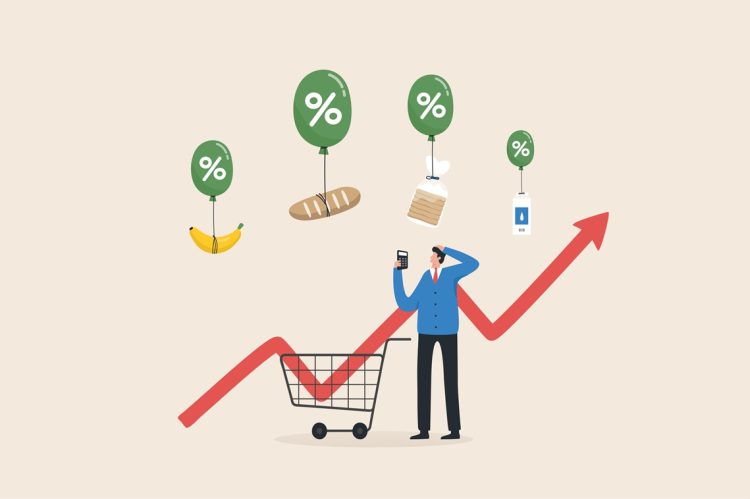
Inflation expectations for the year ahead grew from 3.4% in February to 3.8% this month, the largest one-month increase since April 2025, and exceeds those seen in 2024. These expectations also remain well above the 2.3-3% range seen in the two years pre-pandemic.
Long-run inflation expectations actually saw a slight decrease to 3.2%, remaining in the 2.8% and 3.2% range observed throughout 2024. This, however, is still elevated from the below 2.7% observed in 2019 and 2020.
The report also specifically notes that for interviews completed after the Iranian conflict began, inflation expectations were higher.
Hsu noted that “Overall, the short-run economic outlook plunged 14%, and year-ahead expected personal finances sank 10%, while declines in long-run expectations were more subdued.”
“These patterns suggest that, at this time, consumers may not expect recent negative developments to persist far into the future,” she continued. “These views are subject to change, however, if the Iran conflict becomes protracted or if higher energy prices pass through to overall inflation.”