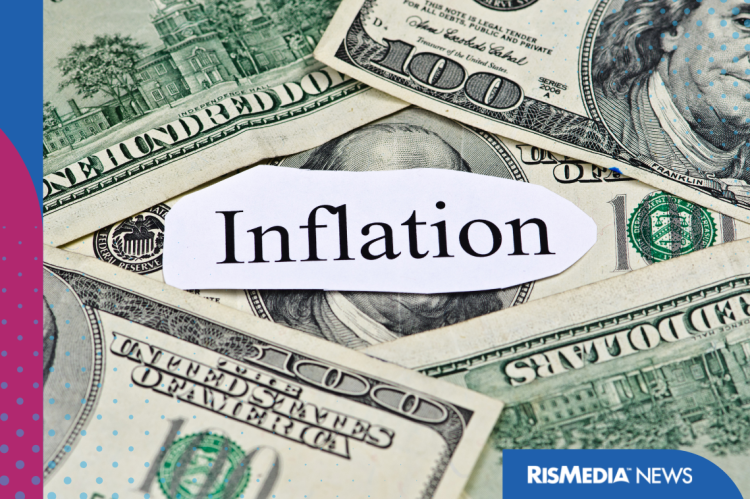
Inflation shot up once again in April as energy prices continue to see large jolts both monthly and yearly, according to the latest data from the Bureau of Labor Statistics. Economists warn the country may now be facing an “inflation contagion,” with the path ahead murkier than before.
The Consumer Price Index’s (CPI) all items index grew 0.6% in April, setting annual inflation at 3.8%. This follows March’s 0.9% rise to 3.3% annual inflation, which at the time Bright MLS Chief Economist Lisa Sturtevant noted was the largest monthly gain in nearly four years due to the conflict in the Middle East.
The increase was largely attributed to a 3.8% rise in energy inflation (over 40% of the increase). Shelter inflation also grew 0.6% in April, coupled with rises in the indexes for food and food at home at 0.5% and 0.7%, respectively.
Notably, over the past 12 months the energy inflation has increased a whopping 17.9%, and food inflation has increased 3.2%.
“Anyone who is filling their tank with gas this week is seeing firsthand the impact of this inflation report,” said Cotality Chief Economist Selma Hepp. “Rising energy costs are the main driver that will continue to apply pressure to the Federal Reserve to resist cutting interest rates, despite the expected change in the chair position later this week.”
The index for all items less food and energy—aka core inflation—grew 0.4% in April, setting annual core inflation at 2.8%. Increases here were seen mainly in household furnishings and operations, airline fares, personal care, apparel and education.
Realtor.com® Senior Economist Jake Krimmel said this is only the “second post-oil shock datapoint,” but the “directional signal is worrying.” What he said began as an “energy story” has now transformed into something broader, what he called an “inflation contagion.”
“For a Fed in transition, rising core inflation and a likely even hotter core PCE number make rate hikes a more credible threat than they were even a month ago,” Krimmel continued. “Treasury yields ticked up on the release this morning, which tells you markets are reading it the same way.”
With the Fed in transition, Hepp said we will see three speeches from members of the Federal Open Market Committee this week, and “we hope there will be some indication of how the new leadership will approach interest rate policy going forward.”
As for the housing market’s path ahead, Krimmel said that high inflation, no matter the direct cause, is “bound to impact the spring and summer housing market.”
“Higher bond yields mean higher mortgage rates, squeezing affordability further at the exact moment the spring market needs buyers to feel confident enough to act,” he continued. “Consumers who feel squeezed at the gas pump and uncertain about the future of the economy tend to pull back from making housing decisions with confidence.”
Krimmel also noted a fall in real earnings, another report from the BLS that tracks income of U.S. employees. He noted that this fall “represents a double-blow to housing affordability, which had been headed in the right direction earlier in the year.”
“So far none of the warning signs are flashing red, but the data to watch are new listings, mortgage purchase applications, pending sales and cancellations,” he concluded. “If inflation contagion takes hold, those are the places it will show up first.”