
RISMEDIA, February 2, 2010—(MCT)—The government’s $700 billion bank bailout bill has met its goal of helping bring the financial markets back from the brink, but has so far failed to increase lending from the banks who received the taxpayer assistance, a key government overseer reported recently in a generally critical review of the program.
“On the positive side, there are clear signs that aspects of the financial system are far more stable than they were at the height of the crisis in the fall of 2008,” according to a quarterly report to Congress submitted by the office of the Special Inspector General for the government’s $700 billion Troubled Asset Relief Program. The report, which was authored by TARP’s Special Inspector General, Neil Barofsky, also warned the Obama administration’s and the Federal Reserve’s policies to support the mortgage market could in fact be creating another dangerous housing bubble.
“Stated another way, even if TARP saved our financial system from driving off a cliff back in 2008, absent meaningful reform, we are still driving on the same winding mountain road, but this time in a faster car,” said the report.
The review argues the TARP program, so far, has failed in many other goals. For example, participating banks’ lending to businesses and consumers, has decreased, the report said. The report points out other problems for the TARP program, including continued high unemployment and expanding home foreclosures for the foreseeable future.
“Lending continues to decrease, month after month, and the TARP program, designed specifically to address small-business lending—announced in March 2009—has still not been implemented by Treasury,” according to the report. It pointed out that the Obama administration’s mortgage modification program for troubled homeowners has so far only helped a small fraction of the three to four million homeowners the Treasury Department hopes it will assist.
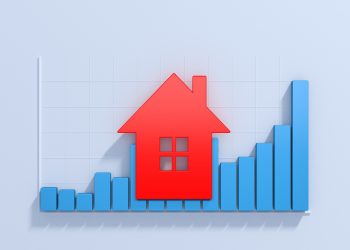
Could we be creating another housing bubble? In the report, Barofsky indicated the government’s emergency lending programs could re-inflate the housing bubble that helped create the financial crisis. “To the extent that the crisis was fueled by a “bubble” in the housing market, the Federal government’s concerted efforts to support home prices risk re-inflating that bubble in light of the government’s effective takeover of the housing market through purchases and guarantees, either direct or implicit, of nearly all of the residential mortgage market,” the report said.
The report charges that high prices for homes between 2004 and 2007 were the result of unrealistic expectations for house values, low interest rates, inaccurate high ratings for mortgage securities, lax standards by lenders for mortgages. It argues the Federal Reserve could be creating another housing bubble with its response to the crisis by keeping short-term and long-term interest rates low, setting up programs to support the mortgage market that also keep rates low, as well as a first-time home buyer tax credit and a program near completion to purchase $1.25 trillion in mortgage-backed securities.
“Because increasing access to credit increases the pool of potential home buyers, increasing access to credit boosts home prices,” the report wrote. “The Federal Reserve can thus boost home prices by either lowering general interest rates or purchasing mortgages and mortgage-backed securities.”
“Both actions, which the Federal Reserve is pursuing, have the effect of lowering interest rates, which increases demand by permitting borrowers to afford a higher home price on a given income. Similarly, the administration is boosting home prices by encouraging bank lending and by instituting purchase incentives such as the First-Time Home Buyer Tax Credit. All of these actions increase the demand for homes, which increases home prices,” said the report.
However, critics argue that long-term interest rates could increase in response to the Fed’s decision to wrap up its $1.25 trillion mortgage-backed securities purchase program by March 31, 2010, along with other federal actions, could result in higher interest rates at a time where many regions continue to experience a depressed housing market and record foreclosures.
(c) 2010, MarketWatch.com Inc.
Distributed by McClatchy-Tribune Information Services.