 (MCT)—It was a silly oversight. Back in high school, I had worked for my town’s library and accumulated a tiny retirement savings account.
Years later, I was told I could transfer the funds to another retirement plan. If I did nothing, I’d get a check for the balance, minus taxes and a penalty.
Can you guess which one happened?
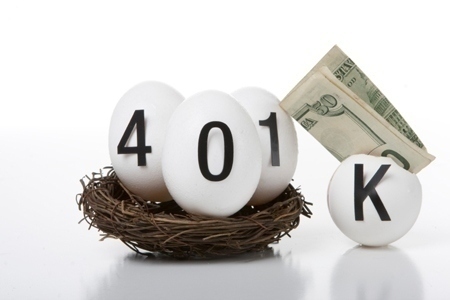
Cashing out of a 401(k) or other employer-sponsored retirement plan is common, especially among young workers.
According to a study by Boston-based Fidelity Investments, 41 percent of plan participants ages 20 to 39 cashed out a 401(k) when leaving their job from Jan. 1 to Sept. 30 last year, the highest of any age group.
The trend is concerning because young workers, many of whom change jobs frequently, forfeit years of compound growth when they empty their retirement savings.
Plus, in most cases, money that’s withdrawn from a retirement plan before you turn age 591/2 is subject to income taxes, as well as an early withdrawal penalty of 10 percent.
“The last thing you should do is cash out,” says Meghan Murphy, director of thought leadership at Fidelity.
So, what should you do?
Roll it over. Most financial planners recommend rolling your 401(k) balance directly into another retirement account. In doing so, the cash stays out of your hands (and the temptation to spend), and you won’t owe taxes or fees.
In many cases, you can roll the money into your new employer’s retirement plan. Not all companies accept a 401(k) rollover, so check with your human resources department.
Andrew Sloan, a financial planner in Louisville, Ky., likes this option because many 401(k) plans give employees access to low-cost institutional funds.
What’s more, your 401(k) funds, including future contributions, will be in one account, making it easier to track.
Unfortunately, transferring money from one 401(k) to the next is not always easy. A report last year by the Government Accountability Office found that investors often face plenty of red tape, as well as waiting periods, to roll funds from one employer plan to the next.
Plus, not all 401(k) plans offer a diverse set of funds or charge low fees, especially smaller employer plans. As an alternative, you can transfer your 401(k) balance directly into a rollover individual retirement account.
Again, you won’t owe taxes and fees when you do a direct transfer. You may also have more investment choices within an IRA.
“You have total control over your own money and can invest it however you wish,” says Debra Morrison, a financial planner in Lincoln Park, N.J. And you can choose “index mutual funds and keep the costs lower than a majority of corporate plans.”
Morrison says that once you set up a rollover IRA, you can later decide to convert all or part of the balance into a Roth IRA. If you do so, you’ll owe income taxes on the money you convert.
“That’s why I recommend waiting until November of the year to determine what your taxable income will be and, thus, what your tax bracket will be before making the conversion,” Morrison says.
But once you’ve switched to a Roth, your money will grow tax-free, and qualified withdrawals will be tax-free too.
Leave the money be. Don’t want to bother with a rollover? If your balance exceeds $5,000, you have the option to leave your money in your former employer’s 401(k) plan, which may be a good idea if you like the investment choices in the account and fees are reasonable.
If your balance is $5,000 or less, though, your employer may opt to transfer the money into an IRA for you or send you a check for the balance of your savings, minus 20 percent for federal income taxes, plus any state taxes.
You’ll get a notice before it happens, so pay attention to communication from your former employer — unlike me.
Carolyn Bigda writes Getting Started for the Chicago Tribune. yourmoney@tribune.com
©2014 Chicago Tribune
Distributed by MCT Information Services