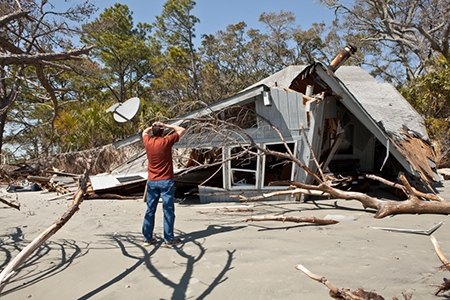
 There are a variety of natural disasters that could happen anytime during the year, but early September officially marks the peak of hurricane season. Those who are fortunate enough to survive the initial impact often find themselves dealing with a financial disaster that arrives soon after the storm is gone. It is not pleasant to imagine what could happen when an unexpected disaster strikes our communities, but those who do not prepare with savings and proper insurance coverage could face serious financial consequences.
The National Foundation for Credit CounselingⓇ (NFCCⓇ) offers the following tips to help financially prepare for a costly natural disaster:
• Check insurance coverage. Speak with an agent to understand the terms of existing coverage and deductible.
• Determine if additional coverage for fires, earthquakes or other special situation losses is needed. Be sure to review the policy for potential inclusion of wind and hail, umbrella liability and flood insurance. Most standard insurance policies do not cover these acts.
• If a home is involved, consider buying full replacement or replacement cost coverage instead of cash value since most items depreciate in value. If renting, buy renter’s insurance to cover damaged, destroyed or stolen personal property.
• Have a complete household inventory in an offsite location. Pictures or videos will make claims much easier, and will help avoid having to rely on memory when under stress.
• Put a family evacuation plan in place. It may be wise to leave the area if a storm is approaching, but with consideration for the cost of transportation, it is best to only go as far as absolutely necessary.
• Regarding gasoline for the car, fill up the tank as soon as the threat of a storm is announced. That helps avoid the inevitable lines, and the potential of the stations running out of fuel.
• Have access to ready cash. Whether leaving town in a hurry, or needing to pay with cash in the event electronic ATM, debit and charge machines are inactive, it is better to feel more secure with easily accessible cash.
• Rent a safe deposit box. Store originals and copies of important papers at an offsite location in case there is damage to the home. This includes medical records, emergency contacts, prescriptions, insurance policies, backup disks of critical computerized information, birth certificates and financial information such as a list of all credit cards and bank and brokerage accounts complete with account numbers and contact information.
• Store the key in a place where it can be found in case of evacuation.
• It may be necessary to stop some bills. If the residence is uninhabitable or totally destroyed, notify utility companies and other service companies, such as the phone company, so they can stop billing immediately.
• Often times a utility company will transfer service to a new address and waive initial connection charges.
• Be prepared to notify the three credit bureaus and the Federal Trade Commission that there has been a natural a natural disaster. By placing a fraud alert on accounts, this helps reduce the chances of becoming a victim of identity theft, as crooks seem to thrive on distressed individuals. With mail interrupted, it could be months before seeing any indication that unauthorized charges were being added to the accounts.
• Don’t be embarrassed about seeking assistance. Many employers offer access to an Employee Assistance Program (EAP) as a benefit.
• Contact creditors. Review your financial situation and develop a realistic budget to cover the time it will take to recover. Determine what amount can be regularly paid until the financial picture improves. If all known expenses cannot be covered, contact creditors and try to negotiate a payment plan. While many will be willing to accommodate the request, starting the conversation is the first step. A certified credit counselor also can help contact creditors and negotiate an appropriate payment plan on your behalf.
“Because disasters can take a significant toll on all aspects of our lives, it is vitally important to take a comprehensive approach when preparing in advance,” says Bruce McClary, spokesperson for the NFCC. “Having a plan that includes financial preparedness can help make the recovery process less stressful.”
Source: http://www.nfcc.org