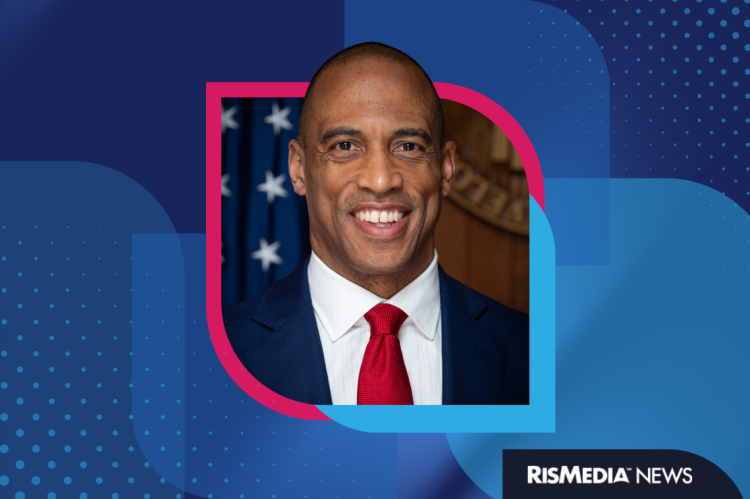
Testifying before Congress Jan. 21, Secretary of Housing and Urban Development (HUD) Scott Turner was questioned before the House Financial Services Committee on his oversight of HUD and the Federal Housing Administration, with a large focus on affordable housing and President Donald Trump’s executive order banning institutional investors.
Congresswoman Maxine Waters (D-CA) opened the hearing with a statement summarizing the changes HUD has experienced throughout Turner’s leadership, including the termination of more than 780 HUD employees, shuttering down regional and field offices and rolling back the equal-access rule.
Touching on President Trump’s recent executive order to ban institutional investors, like private equity firms, from purchasing single-family homes, Waters called out Turner for selling billions of dollars worth of distressed properties directly to corporate investors in 2025, and again for announcing another sale two days before President Trump’s order. Through the First Look Program, homebuyers are supposed to get the first shot at buying homes after foreclosures, but Waters accused Turner of routinely waiving this rule.
Representative Marlin A. Stutzman (R-IN) asked Turner his thoughts on the executive order and to touch on how HUD plans to implement it.
“We will be working with our federal partners at the Treasury, Federal Housing and Finance Agency (FHFA). According to the president’s executive order, we do have 30 days to work together and get back again with the president, but the intentions are very clear that we want to make sure that American people are able to buy homes,” Turner said. “Homes are for the American people.”
Focusing on last year’s California wildfires, Representative Brad Sherman (D-CA) pointed out how zero HUD dollars went to the victims. He pressed Turner on if he would support a Community Development Block Grant Disaster Recovery (CDBG-DR) program for the Los Angeles fires, but Turner did not provide a straight answer.
Congresswoman Ann Wagner (R-MO) shared recent statistics about homebuyers, including the average age of a first-time homebuyer reaching 40 and the share of home purchases made by first-time buyers now being 21%, marking a 50% contraction since 2007.
“Clearly, housing supply is not keeping up with demand, especially for young couples…For millions of people across the country, the prospect of owning a home seems completely out of reach,” she added.
Wagner asked Turner what HUD is doing to remove unnecessary red tape and costly regulations to bolster housing supply.
“We took down the Affirmatively Furthering Fair Housing (AFFH) rule, which was a costly, burdensome regulation on localities,” Turner shared.
Addressing housing affordability, in particular for younger folks, Congresswoman Janelle S. Bynum (D-OR) asked Turner what specific HUD resources are being deployed to make sure the new supply that comes online is not just luxury development, but instead homes that young people can afford.
“To me, it’s an overall picture of getting our fiscal house in order, bringing interest rates down, mortgage rates down and access to capital,” Turner said. “And with these things, I think, across generations, if we can bring affordability down—which we’re working on—and bring the supply up, then people in America will be able to afford to buy a home.”
He then touched on opportunity zones, adding that they give us an asset and a means to build affordable housing across the country.
Representative Maria Elvira Salazar (R-FL) addressed the growing construction workforce shortage as it relates to immigrants, asking Turner why U.S. citizens are not choosing to work in that sector.
Turner acknowledged that those jobs are available, but he said he does not know why Americans are not choosing them. When further pressed by Salazar on what action can be taken to fix this labor shortage, Turner said that there needs to be a focus on encouraging the trades.
Representative Emanuel Cleaver (D-MO) highlighted the importance of this hearing, given that he and Representative Mike Lawler (R-NY) introduced a bill to require HUD to testify annually, regardless of the administration, through the HUD Accountability Act.
Lawler asked Turner if he would support this annual testimony before Congress.
“Accountability is important. Transparency is important,” Turner said. “When we take these jobs, we want to be accountable to the mission that we have, so I’m happy to always be available.”