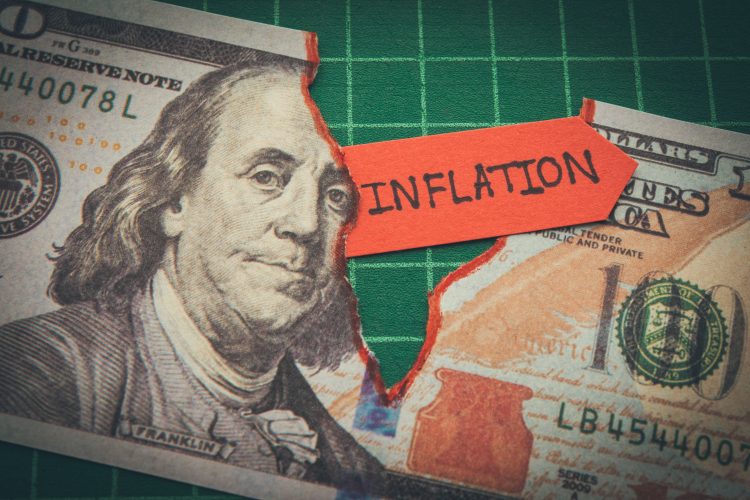
January appears to be looking up in terms of inflation as the latest data from the Bureau of Labor Statistics saw the Consumer Price Index (CPI) hit a low for both inflation and core inflation.
The CPI for January saw a 0.2% increase in the all items index, landing annual inflation at 2.4%. This is down from 2.7% in both December and November, and the “lowest level since last May,” according to Bright MLS Chief Economist Lisa Sturtevant. December’s monthly rise was attributed to a 0.2% rise in the shelter index.
Housing economists were cautiously optimistic, noting that lower inflation and a surprisingly resilient labor market could spark a resurgent housing market in the near-term.
The index for all items less food and energy—aka core inflation—increased 0.3%, putting annual core inflation at 2.5%. This is down from 2.6% in December and November, and Realtor.com® Senior Economist Jake Krimmel noted that core inflation is now at its “lowest level since March 2021.”
“Taken together, this was a solid report,” he continued. “January is notoriously tricky because of seasonality, so it is important not to overreact to one month. While the broader direction remains encouraging, inflation is not low enough for policymakers to declare victory either.”
Krimmel also noted that January’s inflation readings were both “right around expectations and, if anything, a touch lighter than forecasted.”
Sturtevant agreed that January’s report is “tricky,” as she noted complications and the need to wait for more data.
“Just a month or two ago, there was talk of ‘stagflation,’ or a combination of high inflation and high unemployment. Now, is it possible we’re going to have a ‘Goldilocks’ economy, where unemployment is low and inflation is coming down,” she said. “It’s probably a little too soon to call, and the economic data for February and March will be important signals.”
In terms of housing, shelter inflation—which measures rent and “owners’ equivalent rent” for homeowners—was up 0.2% year-over-year. Policymakers and economists have largely agreed that housing inflation is on the right track, with some arguing the lagging nature of data collected by the CPI provides a case for further rate cuts.
Krimmel said that “even with inflation moving in the right direction at the moment, nearly five years of elevated price growth have partially eroded income gains and weighed on consumer confidence.”
“The foundation for a housing rebound may be taking shape, but rebuilding confidence and moving the needle on affordability will require a sustained stretch of lower inflation and a more certain labor market,” he continued.
In terms of future Fed decisions, Sturtevant said that “a strong labor market and lower inflation probably mean a rate cut, particularly after the new Fed chair is installed.”
“Mortgage rates are already at about a three-year low, and homebuyers and sellers are taking notice,” she said. “Lower rates and slower home price growth means improved affordability, which will bring out more buyers and sellers, fueling a relatively upbeat spring housing market.”