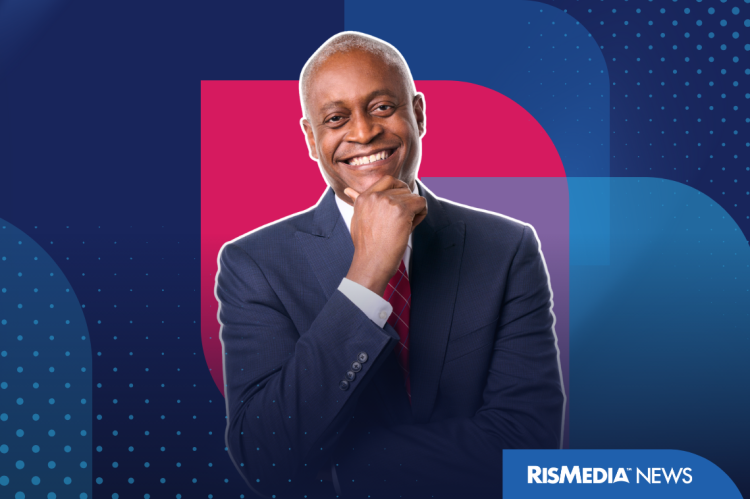
At a moderated talk held by the Rotary Club of Atlanta, retiring Federal Reserve of Atlanta President and CEO Raphael Bostic argued that the economy is in a “resilient” place, with a feared recession that “just hasn’t happened.” That resilience from 2025 will carry through to 2026, Bostic forecasted.
Noting his conversations with business leaders, Bostic said that while they are expecting “about the same” economy as 2025, there are “some scenarios” where it could be better. Bostic highlighted the potentially stimulative effect of the One Big Beautiful Bill’s changes to taxes and regulation, as well as the Federal Reserve’s interest rates cumulative 175 basis point interest rate cuts over the last 18 months.
In forecasting strong economic performance in the first half of 2026, Bostic said that this will “limit how far inflation can fall” during the first half of the year. (As Bostic noted, inflation has largely been sideways and above the Fed’s goal of an annual 2% rate.)
At the January Federal Open Market Committee (FOMC) meeting, the Federal Reserve chose to keep interest rates unchanged.
Michelle Bowman, one member of the Fed’s voting board, indicated that elevated inflation was enough of a concern to keep rates unchanged despite the soft labor market. Bostic has previously indicated, after the December FOMC where the Fed cut rates by 25 basis points, that inflation was a higher concern than the labor market.
Assessing the state of the labor market, Bostic pointed to the fact that there is “so much uncertainty in the world” that disincentizes new hiring. He also highlighted how businesses want AI technology to perfect entry-level employee jobs, and are holding off on hiring because they remain “hopeful” that they can figure out how to make that happen. When asked how the U.S. should address income inequality, Bostic said there are multiple policies needed, but one is that education should emphasize adaptability. “(We need) mechanisms for every person to get skills that are desirable in the economy, and we don’t come close to that.”
Asked about President Trump’s nomination of Kevin Warsh to succeed Jerome Powell as chair of the Fed, Bostic noted that he doesn’t personally know Warsh but believes his previous experience on the Fed (as a governor from 2006-2011) is a positive sign. Bostic characterized the job as one that requires tight organization of different personalities, including congressional lawmakers.
Asked about the investigation opened into Powell—which the chair himself has characterized as an attempt by the executive branch to exert political influence over monetary policy—Bostic did not address the allegations or investigation itself. However, he argued that “tension” over the Fed’s independence to make monetary policy will always run counter to the wishes of many lawmakers, as the Fed board looks at a “much longer horizon” than the short-term that lawmakers tend to.
For the full moderated talk, click here.