When four accomplished real estate executives came together at RISMedia’s Real Estate’s Rocking in the New Year virtual event to discuss how to adapt to new industry norms, they delivered tangible results based on their past experiences and knowledge of how best to adapt to new ways and means.
They were Vince Leisey, president of Berkshire Hathaway HomeServices; Chip Murphy, executive vice president of Michael Saunders & Company, Inc.; Robby Brady, affiliate owner of The Robby Brady Team with Howard Hanna Allen Tate Real Estate; and Carrie J. Little, designated managing broker/owner of CARMARC Realty Group, LLC.
With Leisey moderating the panel, Little emphasized the significance of data in keeping clients informed, using platforms like LinkedIn and social media to deliver market updates and establish expertise. Brady discussed strengthening relationships with past clients through strategic touchpoints and live events, emphasizing the value of personal interactions. Murphy highlighted the role of technology, particularly AI, in enhancing productivity and client experiences, while cautioning against over-reliance on technology at the expense of personal relationships.
Panelists agreed on the importance of maintaining personal connections and adapting to technological advancements to remain relevant in the industry, sharing their insights on embracing change, focusing on concierge-level service and thinking outside the box to grow and stay relevant.
Overall, the key themes that emerged were the importance of adaptability, technology integration and maintaining strong relationships with both current and potential clients to navigate the evolving real estate landscape.
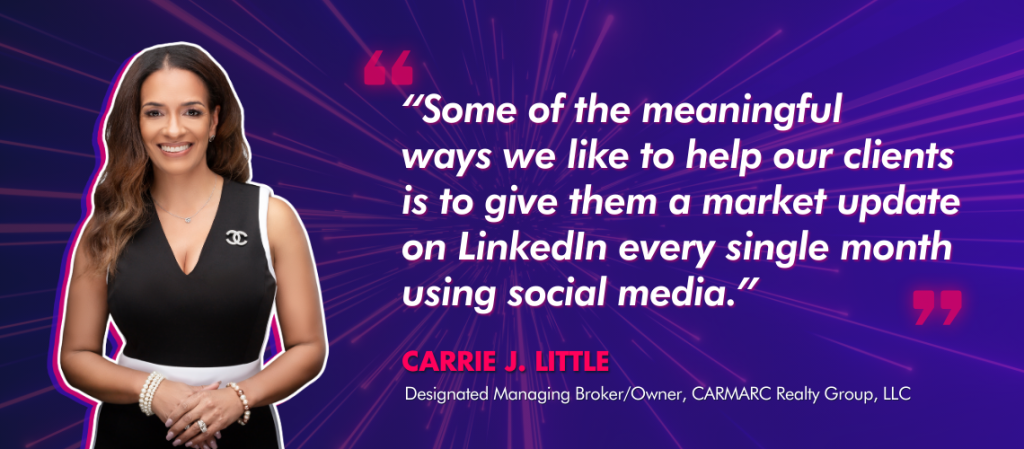
Little opened things up by talking about why it’s so important to keep clients informed with meaningful market updates, and how she delivers that information in ways they understand and value.
“Some of the meaningful ways we like to help our clients is to give them a market update on LinkedIn every single month using social media,” she said. “The one thing we’ve learned, especially in the past, is that you simply send a market update and you can leverage ChatGPT to give you these updates. Your clients will know when it’s time for them to make a decision. Not everyone is ready to buy or sell today, but when you understand the data, it can help you leverage the marketplace.”
Little favors LinkedIn over Facebook and Instagram.
“People on LinkedIn are there Monday through Friday during regular business hours,” she said. “Those are the ones you want to reach, especially in your community, because if you decide to pivot, if you decide to become a developer, if you decide to educate the community or if you want to be the person that is interviewed, maybe even on the news, LinkedIn is the place to be.”
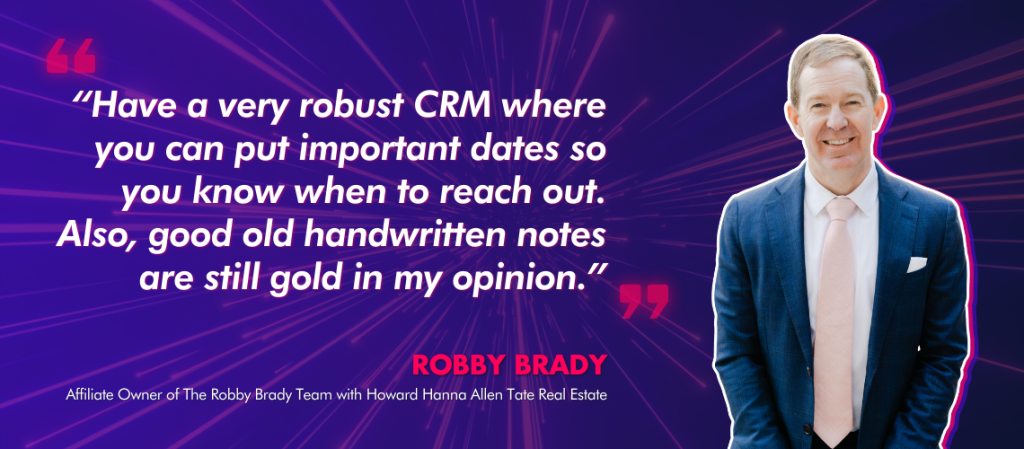
While Leisey noted that many top agents are doubling down on their past clients and their sphere as the market rapidly changes, Brady shared how he is strengthening those relationships through strategic touch points and live events.
“First of all, have a very robust CRM where you can put important dates so you know when to reach out,” he said. “Also, good old handwritten notes are still gold in my opinion. We also do three to four client events per year. It’s great to be able to reach out where you’re not being needy, where it’s more about them. It could be a pie giveaway, baseball event, something at the zoo or rent out a movie theater. The more you love those past clients, the better off you’re going to be and the deeper those relationships will be.”
Next, the conversation turned to technology. “It’s evolving at crazy lightning speed today,” noted Leisey, who asked Murphy about the tools, systems or automations that have had the biggest effect on both his productivity and the client experience—and how he is integrating them into daily operations.
“My advice would be to start using something, because something is better than nothing,” he said. “On the AI front, I use ChatGPT every single day, multiple times per day. My use of Google search has gone down dramatically because I’m relying on ChatGPT for anything from professional to personal.
“On the professional side, sending an email wanting a friendlier tone or a different tone, I created a PowerPoint presentation, uploaded my template that I use at my company and out popped this beautiful presentation. So ChatGPT might be one of the more well-known names, but there are so many, and I think it’s just starting somewhere.”
Murphy added that he is seeing associates use tools like Runway ML and Descript.
“Those will turn images into videos,” he explained. “I tend to not be a huge proponent of having AI create a video of yourself. I think sometimes it can be a bit disingenuous. So I would say lean into AI. If you’re using a tool to turn stills into videos, use that for a property walk or a landscape. Even with AI, it’s not perfect.”
How to get paid in a commission-wary market
Residential real estate is undergoing significant changes, driven by a shift toward greater transparency and clearer communication in legal and regulatory environments. These changes aim to improve consumer experiences and professional practices by emphasizing the value agents provide beyond merely facilitating transactions.
With the industry adapting to these changes, four longtime pros discussed how to educate both consumers and agents about the complexities of real estate transactions—including strategy, pricing, negotiation and risk management—during RISMedia’s Real Estate’s Rocking in the New Year event.
They were Christian Stubbs, owner and team leader at Onyx Homes; Marisela Harper, broker/owner of ClearView Realty; Ambre Theroux, an agent with Berkshire Hathaway HomeServices New England Properties; and Kourosh Sharifi, CFO and vice president at REMAX Executive.
With Sharifi moderating the panel, the emphasis was on how agents are encouraged to engage in buyer consultations and strategy sessions to set clear expectations and demonstrate their value upfront, which leads to improved consumer understanding and increased conversion rates.
The discussion also highlighted the importance of addressing misconceptions about compensation, particularly in light of recent legal changes affecting buyer’s agent fees. Brokerages and team leaders play a crucial role in supporting agents through these transitions by providing training and resources to navigate new processes confidently.
Additionally, the integration of social media and AI in real estate marketing was emphasized as a means to educate consumers and showcase the value agents bring to the table, with storytelling being a key strategy to humanize the buying and selling experience.
The panel stressed that while AI can enhance efficiencies, it cannot replace the personal touch and expertise that real estate agents provide. Continuous education and communication are essential for raising the bar in agent readiness and consumer understanding, ultimately improving the overall real estate experience.
Sharifi kicked off the session by questioning whether the recent changes in the industry, such as new processes, disclosures and more transparency, have had a positive impact for brokerages. Harper believed they had.
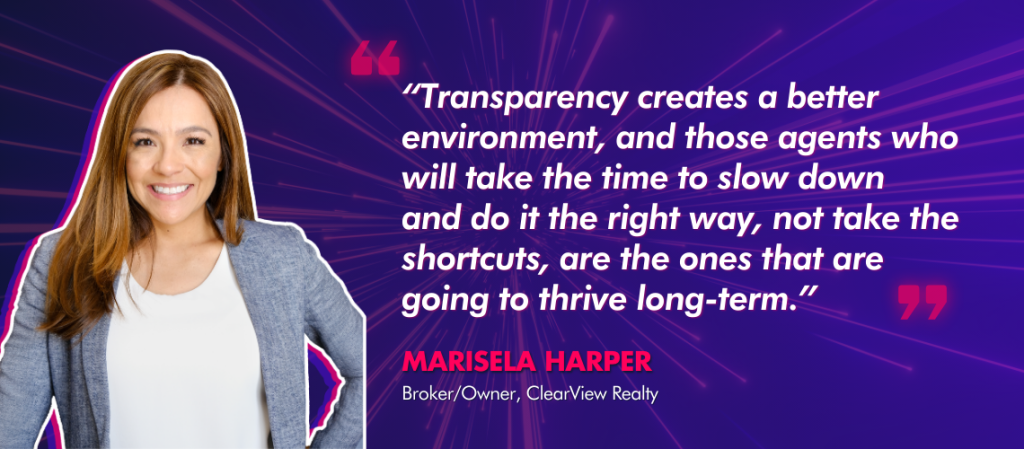
“Getting a buyer representation agreement signed prior to going out and showing a home was something I did for years,” she said. “Then COVID happened and it was a race to show the home, a race to write the offer, and there was less time to explain my process and how I worked. Transparency did go down.
“So these changes have caused us to slow down, talk about our process, talk about how we get paid and explain the process, and with that, I think it’s been positive. Transparency creates a better environment, and those agents who will take the time to slow down and do it the right way, not take the shortcuts, are the ones that are going to thrive long-term.”
Theroux agreed, stating that it’s all something that has created further clarity for everyone involved in the transaction.
“I think we’re able to go forward and have a better foundation where it is clear and everyone is on the same page from the start,” she said. “It’s creating a better industry for everyone involved as well, because the standards are being improved.”
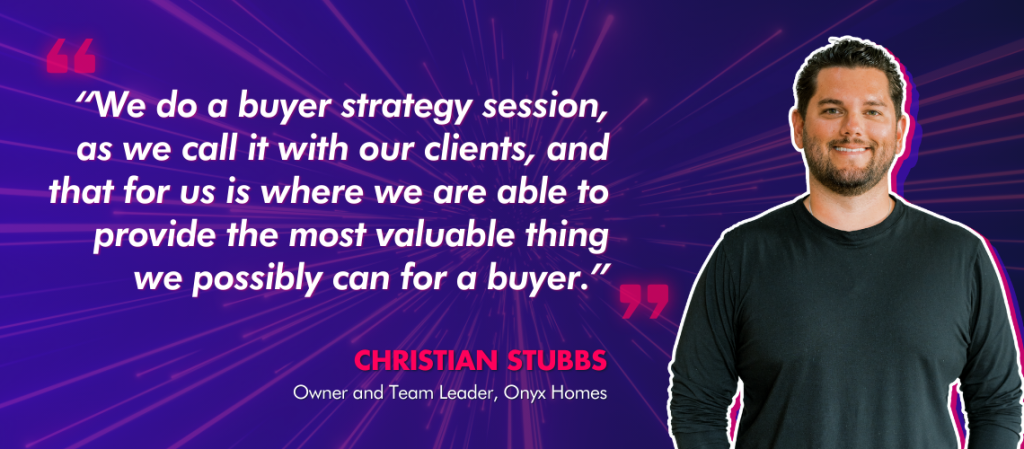
Panelists were then asked to share the strategies they’re utilizing that help agents have clear conversations, set expectations upfront and explain the value in a way that protects their compensation.
“We do a buyer strategy session, as we call it with our clients, and that for us is where we are able to provide the most valuable thing we possibly can for a buyer,” said Stubbs. “It really comes down to simply treating buyers more like we treated sellers. If you’re going to go sell somebody’s home, you’re likely to start with a listing presentation where you walk them through the entire process from beginning to end so there’s no surprises.
“And doing that with the buyer side also gives much more clarity to the consumer at the end of the day of what’s going to come, which I think is the most important part. But it also gives a really good opportunity for the agents to be able to show true value and talk about compensation prior to an actual transaction happening, getting hired by a buyer rather than just happening to work with them.”
From there, Sharifi asked whether panelists have run into challenges or confusion around the new processes or compensation discussion when working with sellers—and what approaches or scripts they’ve been using.
“I have encountered some challenges because the headlines in the news say you no longer have to pay a buyer’s agent,” said Harper. “So the seller’s like, ‘I heard and read that I don’t have to pay a buyer agent’s commission.’ So we’re having to discuss and explain that a buyer will be presenting an offer asking them to pay for that agent’s compensation. In reality, it’s just a change in accounting because in our market, sellers are still paying for a buyer agent’s compensation.”
Finally, Sharifi asked what training or support the panelists have provided to help their teams and brokers feel more confident discussing compensation and navigating the changes. Stubbs began by stating that if you interviewed 100 agents, 95 of them would have a very clear process that they would follow for sellers.
“And if you would’ve asked that to most agents before, I don’t think most had a clear sales process that they would follow,” he said. “What we did with our team is when we started hearing rumblings that this was going to come down, we implemented a very defined sales process from the beginning. We made a very streamlined process, or a very systematized process, to train all of our agents on—and we still use the same training today.
“At the end of the day, you want to make sure you’re delivering that value upfront,” added Stubbs. “And the big change we have really seen is that through having a more structured process on the buyer side, we actually have seen conversion rates on almost all lead sources go up since the changes.”