The first hurdle a homebuyer climbs over in their home search is deciding that now is the right time to buy. Headlines about housing affordability (or lack thereof) can often convince them to hold off, something we’ve seen as mortgage rates hovered above 6% the past few years, creating a “rate lock” for sellers who didn’t want to take on a higher mortgage, and buyers who wanted to wait for mortgage rates to come down.
That’s why Rocking in the New Year panelists agreed that the cornerstone of buyer strategies has to be buyer education: What the costs incurred during a purchase actually pay for, why now could be a more advantageous time to buy than they think. The panel—“Tackling Homeownership Challenges: Strategies for Helping Buyers Get Into Homes”—was moderated by Debra Beagle, the CEO/managing broker/owner of REMAX Advantage in Nashville, Tennessee.
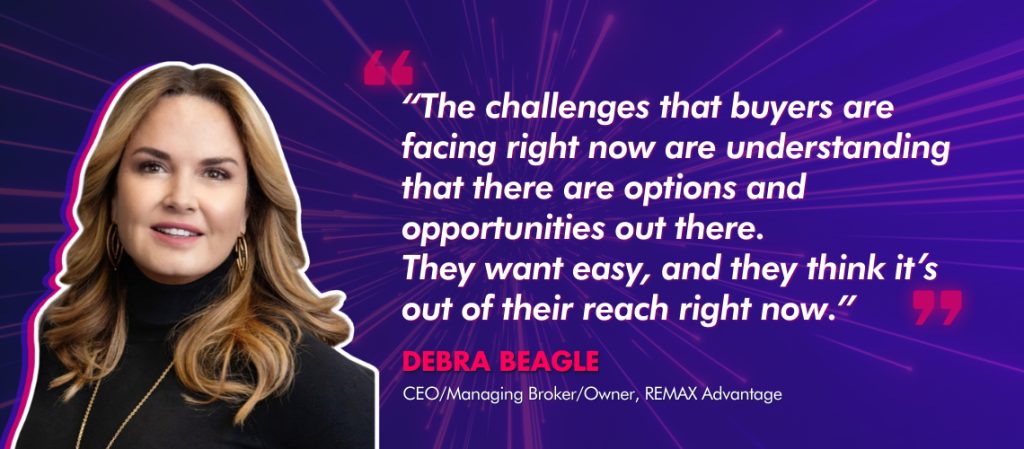
“The challenges that buyers are facing right now are understanding that there are options and opportunities out there. They want easy, and they think it’s out of their reach right now,” Beagle said during the panel when describing the housing market cynicism that many buyers across the U.S. feel.
Panelists introduced themselves by noting how many months’ housing supply is in their market and what the average price of a home is, which varies between markets. For instance, Koby Bishop, a broker associate/partner with Colorado’s Bishop Real Estate Team at The Group, said that his local market has about 2.5 – 4 months’ supply with an average price of $600,000. In contrast, Realtor® Alisha Collins of the Alisha Collins Real Estate Team with eXp Realty claimed that her Casper, Wyoming, market has an average $385,000 sales price and 4 – 4.5 months of inventory.
If you know price and supply numbers off the top of your head, that will go a long way toward being able to educate buyers and frame the big picture of current market conditions. Bishop, who agreed that buyer education is essential, also offered a counterpoint to the presumed need to hustle in order to be a successful agent. Rather, his team has opted to “(slow) down the process (for buyers).”
“I think in 2020, 2021, it was ‘How quickly can we move?’ And now we’re taking a breath and saying, ‘All right, let’s start from square one, educate you guys on the current market and then create a plan that will fit your timeline.’”
One of the most frequent misconceptions to clear up for buyers, Bishop noted, is the idea that they can just wait for prices to go down. For reference, Bishop’s Northern Colorado market has—in the past 20 years—only seen housing price depreciation in 2008 and 2009. Crunching the numbers and doing your homework about your own market can give you important context to keep in your back pocket.
Noting the importance of buyers understanding carrying costs, Collins said: “We obviously don’t want to get somebody in a position that then they have to sell within six months or a year because they can’t afford (a) payment.
“Buyer seminars are really our focus right now, and all the documentation that goes along with them, because we want to make sure that people are confident,” Collins continued. Discussing how frequently these seminars occur, Collins said her team hosts them between once or twice a month depending on attendance.
“I think that buyers have this thought in their mind that they can’t buy, and a lot of the time, that’s why I start by asking what payment they want. Because most of the time, as long as they qualify, they can afford to buy a home,” remarked Collins, whose team doesn’t stop at in-person seminars.
Athena Petersen, the senior vice president and regional manager of Long & Foster in the Northern Virginia and D.C. metro area, noted that one-on-one meetings with buyers are just as important. Her brokerage is training agents to be “really powerful” during buyer consultations and to educate consumers on costs through the very beginning of the home-buying process to what it will look like at the end. From there, the consulting agent can suggest strategies such as opening a credit card to build up the buyer’s credit or using local payment assistance programs the agent is familiar with.
“I don’t think buyers truly understand until they sit down and do a deep dive on what it’s going to take for their credit to come to a place where they can make a down payment and purchase a home,” Petersen said. A consultation is also the time for the buyer to educate their agent about their unique circumstances. Bishop, for instance, said that for buyers who receive only 1099-income, it’s a good call to ask if their parents or grandparents can cosign the loan or offer a gift fund, then do a conference call with those parents/grandparents.
“It’s always awkward to ask for money,” Bishop admitted, “but sometimes it’s a great path for these guys, especially when the parents, the grandparents and the buyer, or whoever’s contributing, are all on the same page.”
It’s just as important to get sellers on the same page. When asking for seller concessions, both Bishop and Peterson attested to it being a good idea to walk the seller through exactly what the concession will be paying for—whether it be a home inspection or repair costs.
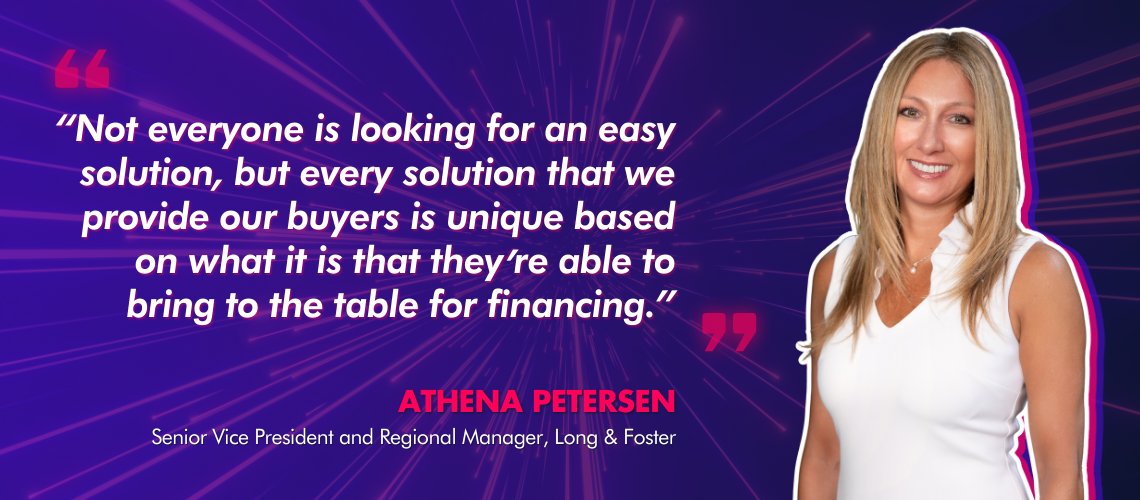
“Not everyone is looking for an easy solution, but every solution that we provide our buyers is unique based on what it is they’re able to bring to the table for financing,” Peterson explained, “whether they need more help in closing costs/credits, whether they need some seller subsidy or whether they need to negotiate the price a little bit, which we’re able to do right now because the market is softening a little bit.”