Complacency is never a great trait to develop in business, but especially in real estate.
Real estate is ever-changing, ebbing and flowing with the many factors that influence the housing market (the economy, the job market, and so on). If you become complacent and set in your ways as a real estate professional, you’ll likely lose valuable business. You have to be adaptable, constantly pushing your business forward and branching out in new ways.
Incorporating new technologies, being present within your local community, developing your knowledge and consistently evolving your team is what will keep you on top in real estate.
That is what panelists focused on during two sessions at RISMedia’s Rocking in the New Year virtual event—“Upping Your Game: How to Compete Amid the New Rules of Luxury Real Estate,” moderated by Laurie Mecier-Brochu, CEO and partner of Four Seasons Sotheby’s International Realty; featuring Keith Ard, president of REMAX Gold; Matthew Melinger, dual licensed real estate salesperson with Brown Harris Stevens; and Kimberly Cocotos, senior vice president of Allie Beth Allman & Associates and “How to Diversify Your Skill Set to Build a Market-Resistant Business,” moderated by Rei Mesa, president and CEO of Berhsire Hathaway HomeServices Florida Realty; featuring Sheena Saydam, Realtor® with Saydam Properties Group at Keller Williams Capital Properties; and Brooke Sines, team leader with Grand Allure Home Group – REMAX.
The AI revolution, and how to implement it the right way
AI is slowly and steadily becoming more and more prevalent as a business tool, but panelists agreed there are right and wrong ways to go about using it.
The consensus among many leaders in real estate is that AI is a powerful assistant for logistics and creativity, but it should never be the “face” of a brand.
It is not a replacement for real people doing real business, but it can absolutely supplement and support that business, as Kimberly Cocotos said.
“Just using it to think outside the box, make sure there’s nothing we’re missing, not as a substitute, but just an extra tool,” explained Cocotos.
This is something Laurie Mecier-Brochu agreed with.
“We use AI for efficiency in that predictive analysis to allow us to understand the behaviors a little bit better, to hyper-customize recommendations,” she said. “It is more of an assistant to streamline things like marketing plans, enhance those descriptions and call out features to encourage higher online engagement. Of course, that creates an added value, so it’s definitely an additional asset.”
As Matthew Melinger noted, “AI is obviously never going to replace the importance of customized relationships and interactions with your clients, but I do think from a support and logistics perspective, it’s really helped get those mundane tasks out of the way and get everything automated.”
In order to begin incorporating AI into your toolkit, Brooke Sines explained the importance of evaluating daily tasks that could be automated, giving them a shot in AI, one task at a time to see what works.
Integration into the backend of CRMs is something all panelists pointed to as a great way to start putting AI to use in streamlining work and assisting agents. That, as well as assisting in marketing through gaining inspiration and ideas, helping you write scripts for phone reach-outs, photo and video editing help, caption creation and more. You can even use AI to help clients visualize spaces when looking to buy a home by uploading a picture of an area and asking it to furnish it to a client’s tastes.
When integrating AI into your business, however, the one thing everyone emphasized is to never let your authenticity waiver.
Clients expect a level of nuance and personal connection that algorithms cannot replicate. As Mecier-Brochu said, “When you’re really working one-to-one, it’s not about AI, it’s about the personal experience.”
Melinger said that when he uses AI to create content, he uses it to “create sort of a benchmark or a baseline, and then customize it further so that people hear my voice and they know it’s me and not an algorithm typing.”
Overall, panelists emphasized that you can use technology to help you be more efficient, but you must never lose sight of real estate being a people-first business.
Being generous and service-oriented in your communities
While it may feel constantly harped on, being a local and hyperlocal expert in real estate is mission critical. Panelists explained that some of the strongest lead generation you will get is close to home, or in your local community.
Connecting with your local community begins with presenting yourself with care and generosity. Sines put it this way: “We live here, we work here, and we want to give back here as well. I think that’s incredibly important.”
As a real estate agent, you’re a servant of your community, giving back to those around you by helping them achieve their housing goals. Leading with a service-first, generous mentality will set the stage for connecting with new leads in your local community.
Sheena Saydam said that “when you wake up looking for buyers and sellers, it’s a very narrow vantage point.”
“We just wake up every single day asking, ‘Who can we help today?” she explained. “Show people that you’re a mission-driven company because it helps distinguish you.”
Saydam also noted that it’s not necessary to say how much you’re giving, but rather, drilling down further to explain the impact.
“They want to see the tangible results. People want to be a part of something bigger than themselves. That’s where you start,” she continued. “As you grow and you really tell that story, you’re going to see that a much larger population of people will be attracted to your business.”
One of the best ways to connect with your community and grow that generous, service-first platform is to get involved in charity. Several panelists themselves have engaged in charity with their brokerages, and pressed the importance of giving back. They said that agents do more than just sell real estate; they’re a part of the community and should work to take care of that community.
If you don’t know where to get started, Saydam noted that there are many different ways to be generous, but it all starts with leveraging your networks for good.
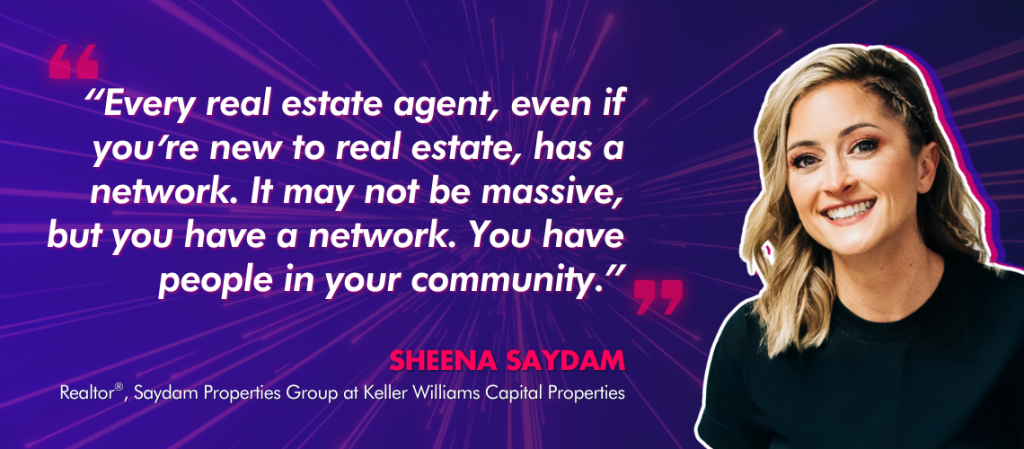
“Every real estate agent, even if you’re new to real estate, has a network. It may not be massive, but you have a network. You have people in your community,” she said. “The first thing I like to think about is to ask yourself what’s really bothersome to you, what’s pulling at your heartstrings, and then find the people already doing the work.”
Saydam added that there are many people out there looking for help, and if you approach charity with that mindset of looking for those you can help, you can leverage the people in your network to help make a difference.
Developing your knowledge as a strategic advisor
In assisting clients, panelists agreed that you have to be a strategic advisor who can filter out inaccurate online information and provide insights. You’re the expert in real estate, and you need to have the know-how to back that up and break it all down for clients.
Mecier-Brochu explained that while clients can obtain a lot of information online, it’s the real estate professional’s job to sort that information out because not everything is accurate.
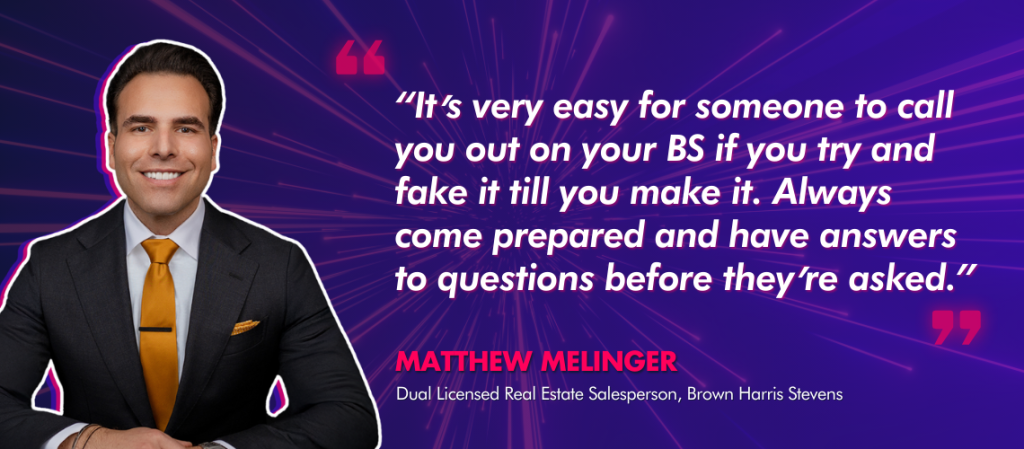
“It’s very easy for someone to call you out on your BS if you try and fake it till you make it,” added Melinger. “Always come prepared and have answers to questions before they’re asked.”
Your knowledge as an agent has to be vast, explained Cocotos, who said that it’s not just “what’s going on from block-to-block,” but also “the quality of the construction, the difference in the buildings, the lawsuits, the HOAs, anything that could be going on.” In addition, she said you should be tuned into the economy and the housing market at large.
“All those things that aren’t just the property knowledge and community knowledge, but also what’s changing our market. You need to be in the know on all of that,” Cocotos said.
Having this knowledge is what will build trust with your clients.
“When you have the knowledge, you’ve prepared yourself, you have an ease and honesty in the way you’re answering the questions, and then they really build trust with you,” said Mecier-Brochu.
Evolving your teams to the next level
Teams are a valuable support structure in real estate, one that helps agents avoid burnout while providing the best resources for their clients. In order to make the most of your team, panelists agreed that you have to evolve it from the ground up.
That begins with evolving your leadership. Saydam said that in the beginning, many leaders think, “How am I going to change everyone else here to make them fit my culture?” but what you really need to be thinking is, “How am I going to change myself?”
“That was the answer for me,” she said. “I had to become a lot more patient, a lot more graceful with people and a better listener.”
Saydam went on to explain that a big part of being a strong leader revolves around strong listening and communication skills. She said you should be “casting a vision, ensuring every day that we’re working toward that mission altogether.”
Next, you have to be strategic with your hiring, focusing on the kind of person you’re looking to hire to ensure a good culture and quality within your team. You have to evaluate not just the skills you want on your team, but the type of personality and life-knowledge someone can bring to the table in order to foster growth among team members.
“The best teams are of varied strengths,” said Mecier-Brochu.
“Not everyone’s going to have the same thing that they’re great at,” she added. “That way everybody brings their A-game, and it’s different, and you have all the bases covered. This brings value and consistency—a seamless experience.”
Cultivating your culture as a team is arguably one of the most important steps. Sines said she is “big on culture” with her team, as it promotes a great mindset for her agents.
“One of our core values is work hard, play hard,” she explained. “We want to work hard when we’re in the business and it’s time to work, but we also need to avoid that famous burnout that a lot of agents get into. That really helps, and moving the culture and that growth mindset forward for our team happens daily.”
Another important aspect associated with evolving your team is ensuring that you’ve built your structure and culture, so that when the time comes, you can scale it out.
“One of the best things about a team is that it’s scalable,” said Mecier-Brochu, who explained that teams are designed so that “you can start small and grow as your business dictates.”