While the real estate industry is noted to have a low barrier to entry for new agents, that doesn’t mean it presents an easy path to success. In fact, many agents end up leaving the industry, so what separates the ones that stay and succeed? What are the most clever and essential tactics for not just starting to excel in real estate but also maintaining that success?
During the panel titled “Surefire Growth Strategies for Every Level of Your Career” moderated by Ric Martel, a regional president, broker-manager at Berkshire Hathaway HomeServices Fox & Roach, Realtors®, experienced real estate leaders answered some rapid fire questions about their essential day-to-day tactics.
One of the most striking takeaways from the session is that real estate professionals should not only make to-do lists, they should also make—in Martel’s words—a “stop doing list,” or tasks that are better performed by real and/or virtual assistants. Martel coined that phrase after comments from Donny Samson, CEO of Samson Properties, who explained how it’s vital to always consider what the absolute best use of your time is—intel he gleaned from first-hand experience running his own brokerage.
“If you get home from work and all you say is, ‘Look, I did my brochure today, I put my listing in the MLS,’ great. But you could have paid somebody else $50, $100 to do that work for you and spent that eight hours doing higher leverage stuff,” said Samson.
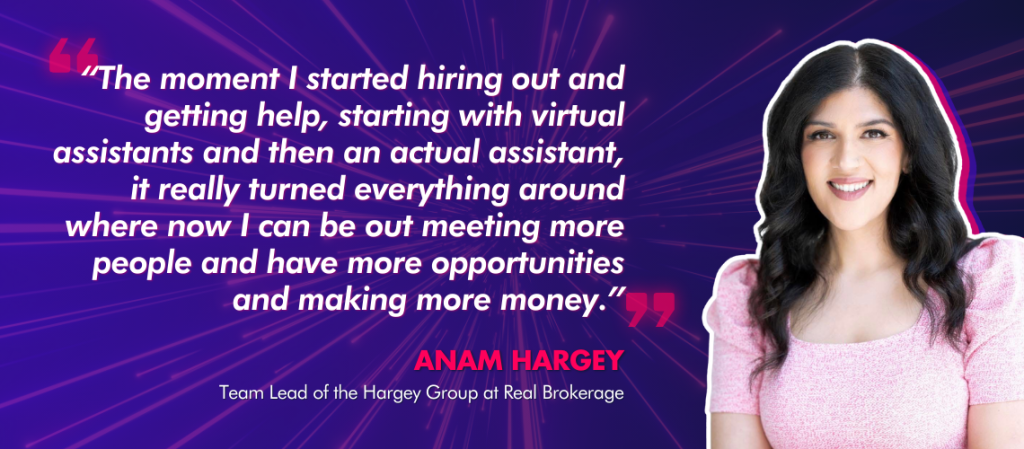
Anam Hargey, team lead of the Hargey Group at Real Brokerage, recounted how she entered the business thinking she could do everything.
“I learned the hard way, but that’s a really quick way to crash and burn,” Hargey explained. “The moment I started hiring out and getting help, starting with virtual assistants and then an actual assistant, it really turned everything around where now I can be out meeting more people and have more opportunities and making more money.”
As for making the list of what to do, Samson argued that scheduling prospecting time has been essential for him: “If you don’t have a set schedule, then you’ll end up floating around from thing to thing and not have something impactful.”
Scheduling prospecting time into your calendar as a must-do task during the day can keep agents from finding themselves with an empty to-do list for all the wrong reasons. “A lot of real estate agents, they’ll sell three or four homes in a month and then the next month they won’t have anything because they didn’t schedule in the prospecting, they didn’t schedule in things that help them build and nurture leads,” Samson explained. “So schedule in time blocks, have the non-negotiables first, then build out from there.”

John Newman, area director of the Maryland/D.C. Region for Keller Williams Realty, thinks that real estate professionals can be even more forward-looking when it comes to setting a regular schedule.
The first thing Newman blocks off is the vacation days he plans to take in a year. “My vacations come first, and my planning time comes second. I put it in my calendar and then thirdly, I block in my lead generation and then I backfill everything else,” Newman said, breaking down the scheduling strategy that’s worked for him.
As for making that prospecting time valuable, panelists agreed that to build your sphere of influence, you start with your social circle. Hargey, who noted that you can’t stop there, said that real estate agents should join local community groups. She cited her own experience of how her enthusiasm for her job grew when she decided to truly meet and connect with people.
“In the beginning, I used to buy leads,” Hargey explained. “I’m not saying there’s anything wrong with that, but it was so stressful, and once I stopped doing that and just genuinely started connecting with people, it made my job so much more enjoyable.”
Agents can take the initiative themselves to bring people together, something Samson described while recounting different community events his agents have held.

“We‘ve got a Cox Farm nearby that’s got the pumpkin patch and the slides and the pet farms, and they rent out the park for a day,” said Samson. “Maybe a little bit lesser budget is to rent out a movie theater when there’s that hot new movie out there. Then you’re the one that brought 200 people together and got to go to the cool movie.”
A sphere should extend beyond potential buyers, though: Samson argued that real estate agents should always have recommendations on hand for painters, inspectors, lenders, title professionals, etc. “You want to be the person that your database calls whenever they have a real estate or home question so that you become that one-stop shop for everybody,” he said.
“In the world of AI and automations and technology, we need to remember that this business is based on relationships, so spend more time face-to-face or belly-to-belly,” added Newman.
At the same time, though, Newman also stated that social media is a “non-negotiable” business tool, and another excellent place to join new groups and build out your sphere. But what’s the best way to conduct yourself on social media platforms?
“With social media, I use more of a lighthearted side to be a little bit funnier, but also just a reminder that I’m in real estate and don’t forget that I would love to be your Realtor®,” Hargey answered.
The omnipresence of social media, though, means it’s easier to stand out with print offerings such as postcards or newsletters, Samson argued.
“I believe it’s become too easy to swipe right on emails that don’t interest us, right? And real life print in (consumers’) hands is powerful,” said Samson.
If there’s one key takeaway from all these building blocks, it’s as Hargey said: “The more people you can meet, the more opportunities you’re going to have.”