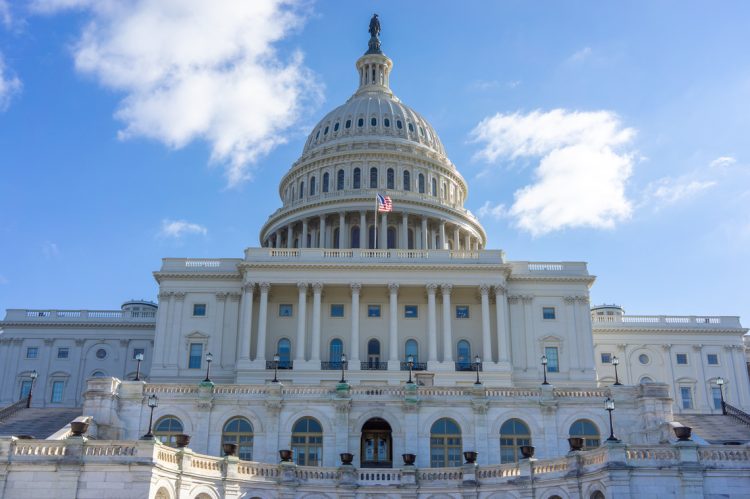
A large housing bill, currently dubbed the 21st Century ROAD to Housing Act, is moving through Congress, but the House and Senate versions are not quite the same package. The bill that passed the House was initially dubbed the Housing for the 21st Century Act, a competing version of the Senate’s ROAD to Housing Act. The Senate ultimately amended the text of the bill to essentially align with the ROAD to Housing Act, retitling the legislation as the 21st Century ROAD to Housing Act.
Following the passage of the bill, the industry reaction has been mixed, with both the National Association of Home Builders (NAHB) and the Mortgage Bankers Association (MBA) criticizing provisions to limit institutional investors in the single-family home market and calling for them to be removed. The National Association of Realtors® (NAR) struck a more positive tone, though, praising Congress for taking bipartisan action to address housing.
“It has been nearly two decades since Congress last enacted a sweeping, bipartisan housing law. The Housing and Economic Recovery Act of 2008 was the last major federal effort to address housing challenges at scale. Today’s affordability crisis demands that same level of national focus,” read a statement from NAR.
Speaker of the House Mike Johnson has indicated that the bill could head to a conference to reconcile the differences between the two bills. While they share many of the same provisions, there are stark differences too. What’s in the text of these bills?
The current draft of the bill passed by the U.S. Senate has 11 primary sections, as follows:
Improving financial literacy
Instructs the Department of Housing and Urban Development (HUD) to conduct performance reviews of housing counselors, including the suspension of counselor certificates. Mortgage borrowers who are 30 days or more delinquent on payments are also explicitly given the opportunity to receive available housing counseling.
Building more in America
This section contains numerous provisions intended to boost residential housing supply in America through updating of federal agency programs and incentives to localities. For instance, project review under the National Environment Policy Act is streamlined for a “broad range of housing-related activities” so as to “reduce delays and lower administrative burdens.”
HUD is directed to publish new guidelines and best practices for state-level zoning, while another section allows HUD to prioritize applicants for competitive grants if they are based in opportunity zones, or tax-advantaged areas designed to attract developers and spur community development. Another section encourages transit development projects to adopt pro-housing policies (such as reduced parking minimums), so as to encourage the construction of more housing near public transit.
Some provisions focus on renovation, such as an expansion of the Rental Assistance Demonstration (RAD) program to improve affordable public housing, and a new grant program RESIDE to encourage local governments to convert vacant commercial buildings into residential units.
Manufactured housing for America
This section eliminates the requirement that manufactured homes must have a “permanent chassis,” or a steel foundation for transportation of the home. Manufactured housing has become increasingly popular as a method for addressing housing affordability, due to their ease of construction at a lower cost than other housing types.
The permanent chassis requirement can add to expenses and prevent manufactured housing from being placed in certain local zoning areas; removing it has been proposed as a way to increase the viability of manufactured housing.
Accessing the American Dream
This section includes new directives for the Consumer Financial Protection Bureau (CFPB) and its oversight of mortgage lending; specifically, the CFPB is directed to study mortgage loan originator compensation and its effects on mortgage prices, and to encourage more small-dollar mortgage lending by evaluating, and if necessary, regulate current fee thresholds.
Another provision reforms current appraisal training practices as well as creating grants to support development of the appraisal workforce.
Housing units financed through certain federal housing programs—the Low-Income Housing Tax Credit (LIHTC), the HOME Program and USDA’s Rural Housing Service—will also automatically qualify for Housing Choice Voucher (HCV) inspection requirements if they passed an inspection within the past year, so as to reduce delays in HUD inspection time.
Program reform
This section reforms several federal programs pertaining to disaster recovery, homelessness and the creation of affordable housing at the local level.
HUD’s Community Development Block Grant Disaster Recovery program is updated to address the disaster recovery needs of low- and moderate-income households.
The HOME Investment Partnerships Program, a block grant program for localities to build up affordable housing supply is also reauthorized with new administrative features so as to better support housing production. Federal homelessness programs are updated so as to increase funding consistency and ensure better coordination between the different programs.
Veterans and housing
Design to enhance mortgage benefits for veterans, including an update to the Uniform Residential Loan Application—the standard document used by mortgage lenders to determine borrower eligibility—to include a section letting borrowers know they may be eligible for a Department of Veterans Affairs (VA) loan with the purpose of letting borrowers know of a loan they might not be aware of otherwise.
Oversight and accountability
Among other new congressional oversight, the heads of HUD, the Federal Housing Agency (FHA), Federal Housing Finance Agency (FHFA), the VA, Ginnie Mae, Department of Agriculture (USDA) would be required to testify before Congress every year about the status of federal housing programs and government-backed mortgages.
Coordination, studies and reporting
This section encourages collaboration between HUD, the USDA and the VA to share information between their departments so as to find ways they can streamline and better implement their own housing programs.
Homeownership for main street America
This section of the bill that has drawn the most attention—especially from outside the industry—directly bans large institutional investors from buying single-family homes so as to open up more inventory and opportunity for individual buyers. This ban would sunset after 15 years. It also does not ban such investors from purchasing multifamily homes or manufactured homes.
Under the legislation, a “large institutional investor” is defined as a for-profit entity, such as a corporation or investing fund that is “in the business of investing in, owning, renting, managing or holding single-family homes” and which has investment control over 350 or more single-family homes.
The bill does not require institutional investors to divest from or sell off single-family homes that they already own. In the event of a restructuring of corporate ownership of single-family homes owned prior to enactment of the law, or large investors building new rental properties themselves, owners are expected to sell the property to an individual buyer in no less than seven years
Central bank digital currency
This section explicitly bans the Federal Reserve from issuing a central bank digital currency, or a cryptocurrency which is backed by the Fed and widely available to the general public. The ban would sunset after 2030.
Miscellaneous
The bill includes a “severability” clause stating that if one provision of the bill is overturned, that does not invalidate the entirety of the bill.
The House version of the bill has six sections, largely updating regulations and directives for federal departments and agencies that oversee housing so as to spur faster construction and easier access to housing.
Building smarter for the 21st century
This section updates and streamlines several programs or statues at federal departments in order to build more housing supply and faster. The Government Accountability Office (GAO) is also directed to carry out a study on the barriers that middle-income households face in securing housing with the intention of finding data for future policy in addressing these issues.
The bill also includes new directives for HUD that are intended to spur further housing development. For instance, HUD is directed to publish guidelines and best practices for state and local zoning.
Moreover, NEPA review for federally supported construction projects is streamlined to lessen delays. The Federal Housing Administration’s (FHA) loan limits for multifamily mortgages are also revised.
Grants are established to be given to local governments and Native tribes to implement pre-reviewed housing designs in order to spur construction of mixed-income housing (such as accessory dwelling units and duplexes). Ten percent of the grants must be set aside for construction in rural communities.
Modernizing local development and rural housing programs
This section includes a provision broadening eligibility for the HOME Investment Partnerships program, which offers grants to local and state governments to build low-income housing. The bill also allows greater flexibility in the use of these funds and streamlines the NEPA review for projects. The inspection process for low-income housing units financed through certain federal housing programs is also streamlined.
This section contains the same provision giving automatic approval to LIHTC, HOME and Department of Agriculture (USDA)-financed units for voucher inspection requirements as in the Senate version.
The section also creates a new competitive grant program at HUD, where state, local and tribal governments are encouraged to update regulatory processes and commit to community development projects (for instance, coordinating housing and transportation project developments) to receive those grants.
Protecting borrowers and assisted families
This section is designed to alleviate cost burdens for low-income borrowers. For instance, it includes the same update to the uniform residential loan application as the original Senate version. HUD is also required to establish a “helpline” for residents of federally assisted housing programs to receive housing counseling and other assistance when facing eviction.
HUD, the VA and the USDA are authorized to share information between each other to streamline their unique housing programs.
Enhancing oversight of housing providers
This section increases HUD oversight over local public housing agencies (PHA); federally appointed monitors overseeing PHAs are required to submit written assessments. The HUD inspector general is also required to submit reports on PHA operations so as to issue recommendations on further improving oversights.
Moreover, the HUD secretary will be required to testify before Congress once per year on the departments’ activities and performance.
Strengthening community banks’ role in housing
This section adjusts regulations on private banks and the Federal Deposit Insurance Corporation (FDIC) to bring community banks into having a more prominent role in mortgage lending. Financial regulators and banking agencies are also directed to support the formation of new banks and credit unions, including minority and rural banks.
Fed Governor Michelle Bowman has recently said that she wants to spur greater participation from community banks in mortgage lending, and the updated Basel III bank capital requirements will be made with that in mind.