Consumer views on the economy continue to muddle for another month as the Iranian conflict looms over oil and gas prices, according to the latest Survey of Consumers from the University of Michigan.
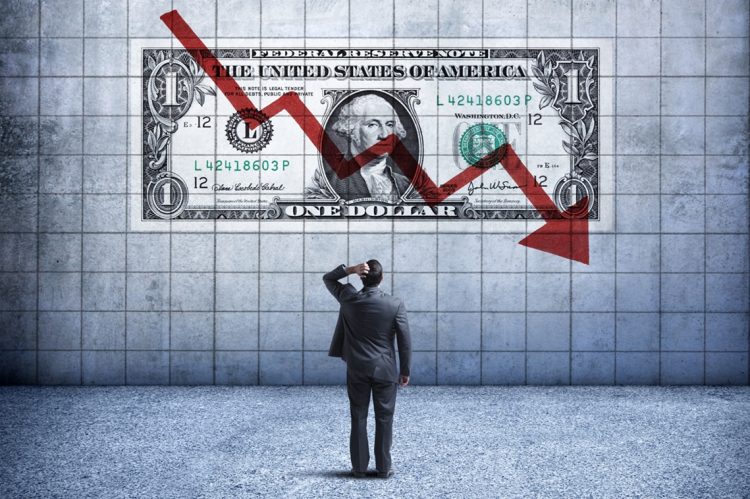
The index of Consumer Sentiment fell 6.6% month-over-month to 49.8 (from 53.3 in March), down 4.6% year-over-year and is “now comparable to the trough (lowest point) seen in June 2022,” as noted by Surveys of Consumers Director Joanne Hsu.
The decrease was observed across political parties, income, age and education.
Hsu also noted that after the two-week ceasefire with Iran was called and “gas prices softened a touch, sentiment recovered a modest portion of its early-month losses.”
“The Iran conflict appears to influence consumer views primarily through shocks to gasoline and potentially other prices,” she continued. “In contrast, military and diplomatic developments that do not lift supply constraints or lower energy prices are unlikely to buoy consumers.”
The index of Current Economic Conditions was down 5.9% month-over-month to 52.5 (from 55.8 in March), down a whopping 12.2% year-over-year.
The index of Consumer Expectations was down 7% month-over-month to 48.1 (from 51.7 in March). On the contrary to other indexes, the index of Consumer Expectations was up 1.7%.
Hsu also noted that “expected business conditions declined for both short and long time horizons, nearly matching year-ago readings when the reciprocal tariff regime was implemented.”
Year ahead inflation expectations were up from 3.8% in March to 4.7% this month, the “largest one-month increase since April 2025,” and continues to remain well above the 2.3-3% range seen in the two years pre-pandemic.
Long-run inflation expectations climbed from 3.2% in March to 3.5% in April, jumping out of the 3.2 and 3.3% range from the previous four months. Hsu said this was the “highest reading since October 2025.” This reading is also above the 2.8% and 3.2% range observed throughout 2024, and the below 2.8% range from 2019 and 2020.