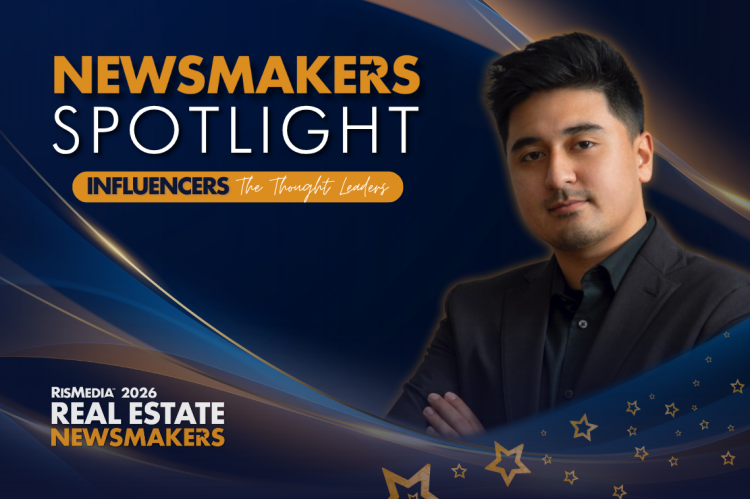
Even the most well-established brands need sharp marketing minds to adapt to where consumers are moving. For REAL New York, Director of Marketing Md Kamruzzaman offers that and more. Overseeing a portfolio of more than 1,500 properties, he led the marketing launches of luxury Manhattan properties throughout 2025, most notably the 311-unit tower Casoni.
For his marketing leadership, including his role overseeing a thriving creative culture at REAL, he was named a 2026 RISMedia Real Estate Newsmaker in the Influencer category—and spoke with RISMedia about how he ascended to these heights.
Devin Meenan: How does it feel to be named as an RISMedia Newsmaker?
Md Kamruzzaman: It feels good to be recognized for the work, but it’s also very humbling in a sense where we’re just getting started. We’re just scratching the surface in terms of what REAL New York is doing in the new development space and very excited to stack up more of these awards as we unfold the story.
DM: How long have you been working in the marketing sector for real estate specifically?
MDK: I’ve been working in the real estate marketing field since early 2020. Right before the pandemic hit, I had my first opportunity working for a new development condo-specialized brokerage. I was there for just shy of four years before transitioning to REAL New York. Approaching a decade, but it doesn’t feel like a decade. Again, when I say scratching the surface, I think we’re ready for more and more. It’s been a journey, but I’m very excited for what’s to come.
DM: As a marketing professional, what would you say is unique about working in the real estate marketing space compared to other industries you’ve worked in?
MDK: It’s different and similar in many ways. Marketing, branding and defining luxury is very similar across every other industry. We’re storytellers at the end of the day. We sell luxury, and luxury is more of a mindset. It doesn’t feel any different as far as how you would market luxury fashion, if Chanel or Louis Vuitton asked me, how is this different from any other industry?
I feel like there’s more at stake with us because when you buy a luxury product, you can change, you can discard that product. We’re selling the space where you live, which ultimately houses all those luxury products you have. It’s essentially the most embodied visualization of who you are as a person. When we sell luxury, when we market and brand luxury, we want to ensure that the person living in these buildings feels proud to be under that address, under that brand that me and my team create for the market.
DM: What types of narratives do you try to create to bring in these luxury buyers? What stories do these buyers respond to most?
MDK: It all starts with knowing who your product audience, or target audience, is. We live in New York City, where a block can change the entire demographic. You can go from families looking to expand, or you could walk down a block and it will be a demographic predominantly for young single professionals looking to have a breakstart in their career. We start by looking at the demographics of who the clientele is for the product, not for today’s market, but for tomorrow.
These developments take years to come to fruition and welcome folks through that door. We’re doing demographic studies years in advance and forecasting where the job market is going to be in New York City, but also these niche product markets. When we create that story, it’s almost like capturing lightning in a bottle in a sense, where we have an idea of who’s going to move to these neighborhoods, but no one knows for sure that would happen.
Political changes, climate changes and everything can kind of throw things off balance, but we do the demographic research early to the best of our ability to start weaving a story. Going back to that original definition, let’s say it’s a young professional that is looking to break into the business world in New York City, we’re going to create a story about what it’s like to be a solo bachelor living in the greatest city of all.
Everything from the renderings—the imagery, the brand name—are all influenced by who the client is or who we want the brand to appeal to. As I mentioned before, we want to create a feeling. We want to weave the right words and the right images to reflect to the clientele where they can look at these photos and these renderings and picture themselves in that lounge in that living room and feel like they’ve made it in a sense in their own personal journeys.
DM: What would you say have been the biggest challenges the New York market has faced throughout the past year, and how are you tweaking the narratives you’ve been telling to respond to those challenges?
MDK: One of the biggest things is more so on the legislative side. There has been an endless war of wanting to build more for the city and some government officials wanting less developments in the city. Ultimately, New York City needs more housing, and everyone knows that. It’s an overpopulated place with rental prices skyrocketing left and right, and by shorting that demand, you’re creating higher prices. That’s one of the biggest challenges: finding more product to build and product that makes sense to build when you develop in neighborhoods that don’t have an existing depiction of what residential living looks like.
For example, Gowanus, Brooklyn today is very different from Gowanus, Brooklyn 10 years ago. It was heavily thought to be a toxic place, quite frankly, with the canal and everything. But now you see luxury developments pulling up left and right where people 10 years ago would never want to live. Now it’s the hotspot of where everyone wants to live.
It’s challenging when you’re trying to convince this idea of a neighborhood that was historically not a residential neighborhood and now it’s being developed into a residential community, but we love these challenges. We’ve done it many, many times—and we are often finding ourselves as the pioneers when it comes to developing, branding and marketing properties in up-and-coming neighborhoods.
DM: You’ve had a strong influence on building a creative culture at REAL New York. Can you talk about how you’ve done that and go into some more specifics about what the creativity of that culture looks like?
MDK: I use this analogy a lot, or the saying a lot, where we spend more time with our coworkers than we do with our actual family. We want to make sure we’re fostering and creating a community within the firm where it welcomes everyone who shares that valuable time with one another. We’ve done a lot of different activities company-wide—fun happy hours, fun games, fun activities in the office. As part of the marketing team, we’ve fostered and taken great integrity in making sure every agent that comes through our doors has the highest level of marketing strategies and marketing assets. That fulfills the business side once they join the firm. But in terms of a personal get-to-know-each-other type of situation, as the world moves more toward AI, it’s harder to find that human connection.
We place a large emphasis in curating office culture into knowing who the agents are outside of this business, because I believe that affects the business directly. Every time I meet a new agent, one of the most important conversations we have is, who are you outside of real estate? Getting to know someone and whatever communities or subcultures they’re a part of allows them to understand that everyone needs a place to live. It’s not about meeting other real estate professionals and going to these networking events to help them find housing. They’re professionals in the same space. They understand that through and through. It’s about finding your niche. If you play basketball, if you’re into sports, if you’re into trading cards, whatever it may be, everyone is a potential client, but it comes down to the human level and whether they can trust you.
Being a real estate agent, your back is against the wall. There’s a negative connotation that we’re just here to make as much money as possible off of a hardworking individual’s back. That’s not the case. We’re here to create an ecosystem where it’s easier for you to not get lost in the weeds of what’s out there. There’s a lot of depictions of false advertisements throughout real estate, and New York City isn’t sheltered by that.
DM: You were classified within the Influencer category of Real Estate Newsmakers. What does that designation mean to you?
MDK: There are a lot of gray areas when it comes to marketing and branding, where a lot of it is fluff. A lot of it is beating around the bush and not getting to what the actual selling point is. I’ve cultivated and designed a team of great graphic designers and great marketing professionals within this firm so that we’re able to give a different offering in terms of the marketing and branding that New York City’s new developments haven’t seen, at least to a transparency degree.
I’ve said this a couple of times, and especially recently: When it comes to marketing, positioning and branding, I’m almost never wrong. I just see it at the wrong time and everything comes to light eventually. As I mentioned earlier, it takes a while for these new developments to come to fruition. When it comes to finding the right brand and strategy for many of our properties, we’re looking years ahead and it’s a guessing game, but it’s also using smart analysis in terms of where the market will be. Influencers, in my opinion, are people that can see into the future and call a trend before it’s a trend. And that’s exactly what me and my team do. We identify where the opportunities are, and we maximize before a single person can step foot through those apartment doors.
Check out RISMedia’s 2026 Real Estate Newsmakers here.
RISMedia’s 2026 Newsmakers is sponsored by: