RISMEDIA, Feb. 11, 2008-(MCT)-Congress passed an economic stimulus bill Thursday that will give $600 to most individual taxpayers, $1,200 to couples and $300 to more than 20 million low-income seniors and disabled veterans.
President Bush said he’d sign the bill.
“This bill will help to stimulate consumer spending and accelerate needed business investment,” Bush said. “This economic growth package is an example of bipartisan cooperation at a time when the American people most expect it.”
The stimulus plan, which will cost $168 billion in the first two years, will provide money to about 136 million Americans. The government hopes most of them will spend the money and spur the economy.
Families with children will receive an additional $300 per child. The full rebate is available to individuals with adjusted gross incomes up to $75,000 and families with taxable incomes up to $150,000. Partial rebates will be available to families with incomes between $150,000 and $186,000.
Treasury Secretary Henry Paulson, who helped broker a compromise with Senate Democrats, said the IRS will begin sending the payments in early May.
“Payments will be largely completed this summer, putting cash in the hands of millions of Americans at a time when our economy is experiencing slower growth,” Paulson said.
Both chambers waived requirements that the stimulus plan be offset with spending cuts. That means it will add to the federal deficit, which is projected to exceed $200 billion in the current budget year ending Sept. 30.
The Senate vote of 81-16 Thursday capped days of political maneuvering that ended when Democrats dropped their demand that the proposal offer more jobless benefits, heating aid for the poor and tax breaks for some industries. Republicans agreed to a compromise that included payments to 20 million senior citizens and 250,000 disabled veterans who don’t pay income taxes.
The measures were added to a stimulus bill that the House of Representatives passed last week and that President Bush supported. The Senate version of the bill passed the House Thursday night by a 380-34 vote.
The $300 rebates would be paid to low-income seniors and disabled veterans who had at least $1 of tax liability or $3,000 in qualifying income (from self-employment, veterans’ disability payments and Social Security benefits).
The Senate also made it clear that illegal immigrants wouldn’t qualify for the tax rebates.
Bush had asked Congress to pass a stimulus package in hopes that a mix of tax rebates for consumers and tax relief for business could avert a recession. Recent data suggest that the economy is on the brink of a recession, if not already in one.
A closely watched index of retail activity showed Thursday that January sales rose only 0.3% after a dismal Christmas season. Coming on the heels of a contraction in employment, anemic economic growth and worse-than-expected non-manufacturing business, it was one more signal of a troubled economy.
“Most economists say we’re headed to recession,” said Sen. Charles Schumer, D-N.Y., in a speech in the Senate. He complained that Republicans thwarted the extension of unemployment insurance benefits, which most economists said were the quickest way to spark the economy.
Senate Democrats originally tried to add unemployment insurance benefits, tax credits for alternative energy, greater tax relief for some businesses and direct energy assistance to the poor in the stimulus plan, but their efforts were defeated Wednesday by a single vote.
Most mainstream economists put the odds of a recession at 35% to 50%. Hoping to avoid that, the Federal Reserve late last month slashed interest rates more than 1.25 percentage points in eight days and 2.25 percentage points since last September to make it easier for consumers and businesses to borrow and spend.
However, a recession usually isn’t confirmed until the economy is in one.
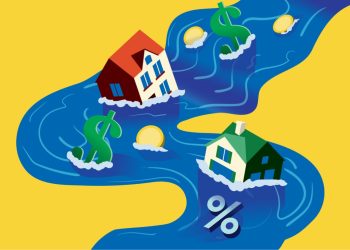
Economists generally expect that any final stimulus plan will have a modest impact. Much of what ails the economy-the housing-sector slump and the turmoil it’s created in the credit markets-won’t be directly affected by the stimulus plan.
But the plan will put cash in the hands of consumers, who drive two-thirds of the nation’s economic activity, and increased consumer spending is likely to raise the mood of Wall Street.
“I’m sure there’ll be some impact … in financial markets’ health,” said Yusuke Horiguchi, the chief economist of the Institute of International Finance.
The stimulus bill also temporarily raises the loan limits for quasi-government entities Fannie Mae and Freddie Mac. They couldn’t buy and package mortgages larger than $417,000, locking out loans for much of California and other high-cost areas of the nation. Now these loans can reach as high as $730,000.
The bill also allows the Federal Housing Administration to increase its maximum loan size from $367,000 to $729,750. Both measures seek to help those homeowners who are facing potential foreclosure to refinance.
House Speaker Nancy Pelosi, D-Calif., said Thursday that Democrats had wanted unemployment insurance, food-stamp benefits and other additions to the plan, but they agreed to drop them to reach a deal with Republicans and the White House.
“I don’t think there is any disagreement on the values that we would like to see presented. It’s just the decision about how much money you have to spend,” Pelosi said.
Democrats will try to extend unemployment insurance in separate legislation, she said.
The percentage of long-term unemployed Americans today is nearly twice what it was in the 2001 recession.
After the original House plan left out low-income seniors, members of the AARP, the lobby for older Americans, flooded Congress with calls.
© 2008, McClatchy-Tribune Information Services.