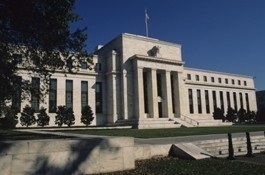
 RISMEDIA, November 3, 2010—(MCT)—The Federal Reserve began a two-day meeting that’s expected to conclude with the announcement of an unorthodox plan to spark life into the U.S. economy. The Fed has signaled since August that it’ll begin purchasing government bonds in an attempt to drive down the bonds’ yield, or their return to investors. It hopes that by flattening the return that investors can get from the safest investments, they’ll take more risks and lift the economy out of its doldrums.
The dollar is expected to weaken as a result of the Fed’s purchase of two-year and 10-year Treasury bonds. That’ll boost the U.S. economy by making U.S. exports cheaper abroad. The action is also expected to compel similar steps by the British, European Union and Japanese central banks. The risk is that all the new pump-priming may end up igniting inflation down the road.
In normal times, the Fed lowers short-term interest rates as a tool to heat up the economy, or raises them to cool it down. Times are anything but normal, and the Fed’s benchmark lending rate, which influences loan rates across the U.S. economy, has been near zero since 2008.
That’s helped to spur a modest recovery; the massive federal stimulus spending helped too. But unemployment remains near 10%, growth remains weak at best, and there’s little appetite in Congress for additional spending to spur the economy. That leaves the Fed as the only game in town, reaching for an unconventional tool.
“If you have an instrument that could work, you are supposed to use it at times of distress,” said Vincent Reinhart, a former top economist on the Fed’s rate-setting Federal Open Market Committee. “They might not go into it with a lot of confidence, but they recognize that if they were to sit on their hands, the Fed’s reputation could be damaged.”
There’s considerable skepticism about whether the unorthodox step, called quantitative easing, will work.
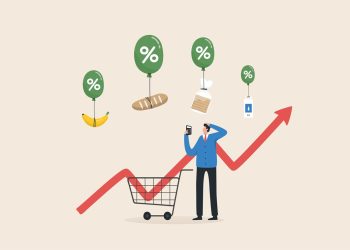
Many analysts fear it sets the stage for revived inflation, the rise in prices across the economy. Some experts worry that the Fed may not be able to rein in inflation once it reignites, or may face pressure from politicians to tolerate higher inflation rather than dial it back as the economy recovers.
That’s why Federal Reserve Bank of Kansas City President Thomas Hoenig warns that the Fed’s expected action is “a pact with the devil.”
Several Fed leaders have voiced unease with the step, in part because it’s mostly untested.
The Fed purchased more than $1.25 trillion of mortgage bonds during the financial crisis to help knock down mortgage lending rates and stabilize the housing market. It also swelled its balance sheet to more than $1.76 trillion in late 2008 with short-term lending programs to stabilize credit markets during a near-meltdown.
Those actions, though, came during a time when credit markets were impaired. This week’s action comes as financial markets are much healthier, and skeptics abound.
“I don’t think quantitative easing will have much impact on the economy,” said David Malpass, the president of forecaster Encima Global in New York. He added that, “Japan tried this in 2002, with no impact,” referring to that country’s decade-long economic stagnation, like ours brought about by a financial crisis.
“I think everybody at the Fed is aware of that,” said Lyle Gramley, a Reagan-era Fed governor, who doesn’t think the Fed is repeating Japan’s mistakes. “Japan waited much too long to move aggressively. The Fed has moved aggressively since the end of 2008. I think we’ve made more progress in cleaning up our banking situation.”
Gramley, a child of the Great Depression, has a long view. He’s never seen the Fed embark in such an unorthodox way and isn’t sure how successful it’ll be. “I think the candid answer is nobody can be sure. It’s going do some good,” he said, noting that lower lending rates will make it cheaper for businesses to purchase equipment and for consumers to buy homes. “If you are trying to put a magnitude on it, you might get something in the order of half a percent (of additional economic growth) next year, which is certainly not a panacea for our ills. That’s why it is so controversial within the Fed.”
(c) 2010, McClatchy-Tribune Information Services.
Visit the McClatchy Washington Bureau on the World Wide Web at www.mcclatchydc.com.