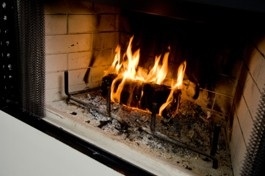
 RISMEDIA, March 2, 2011—In the winter, there’s nothing as idyllic as sitting by a gently crackling fireplace with a cup of cider or hot cocoa, feeling the warmth from your toes to your soul. The essence of comfort and luxury, a fireplace is the focal point of a home. But, in order to ensure many more years of fireside moments—and to keep something beautiful from becoming potentially dangerous—some regular maintenance is required, as well as a keen eye toward safety.
When most people think of fireplaces, they recall traditional ones, found in older and classic homes. In a traditional fireplace, the fire is encased in a metal firebox lined with special firebrick. Smoke moves up a flue, which is typically a tile or metal liner inside a masonry chimney. A flue damper keeps air from escaping when the fireplace isn’t being used; and the smoke shelf, behind the damper, stops outside air from coming in and pushing harmful smoke into the living area.
Besides traditional fireplaces, though, there are plenty of other types. A heat-circulating fireplace produces some radiant heat, but mainly warms the air that circulates around the firebox; some have a fan that increases the air flow. A gas fireplace is mostly decorative and takes gas logs. By contrast, direct-vent fireplaces are like a wood-burning heat circulator—cool air enters at the bottom, is warmed, and rises out the vent at the top; the CO is expelled out the rear, so there is no need for a chimney. Finally, if you have a modern home or apartment, there’s a good chance you’ll have a modern wood stove—they’re desirable because they’re more efficient that a heat-circulating fireplace.
No matter what type of fireplace you have, maintenance is key to safety. First, before the winter, it’s essential to call in a professional to clean the chimney. Creosote can build up in the chimney and start fires. Typically, as soon as the creosote in the chimney is 1/8-inch thick, that’s an automatic sign to call in a professional who will also check the firebox and masonry and fill in potentially dangerous cracks.
Another important safety note: Chimneys must be lined with metal, or the appropriate tile. Older homes (especially those built before 1950) are typically not. If you have just moved to your home, this is something that a certified home inspector should have found during an inspection; but, if you’re not sure, call in a reputable, professional home inspector to assess the safety of the chimney. The inspector will give input on required repairs you need to have done.
Beyond professional maintenance, it’s essential for the homeowner to take safety precautions too. Here are some of the most important:
-Never burn pine or soft wood; it generally causes extremely fast creosote buildup.
-If you have a wood stove, make sure ashes don’t build up too much. One or two inches of ash is optimal; more than that, and you should remove some.
-Never burn pressure-treated or painted wood; it can cause noxious fumes.
-Never burn any kind of trash—paper, Christmas trees, anything at all—in a wood-burning fireplace. Only use logs made for wood-burning fireplaces.
-Never burn charcoal in a wood-burning fireplace.
-Even though it’s tempting to have as big a fire as possible, never overload a fireplace or wood stove; it can cause restricted air flow and dangerously high levels of combustion.
-Use logs specifically designated for your type of fireplace. If the label on the log’s packaging doesn’t detail this clear enough (which it should), ask a representative at the store you’re buying it from.
-If you have a direct-vent fireplace, make sure that it’s underwritten by Underwriters’ Laboratories (the “UL” symbol will be prominently listed on the packaging) or by the American Gas Association (AGA).
-Play it safe. If anything looks or smells out of the ordinary while you’re operating your fireplace, call a professional for servicing.
Charles Furlough is Vice President of Pillar To Post Professional Home Inspections.
For more information, visit www.pillartopost.com.