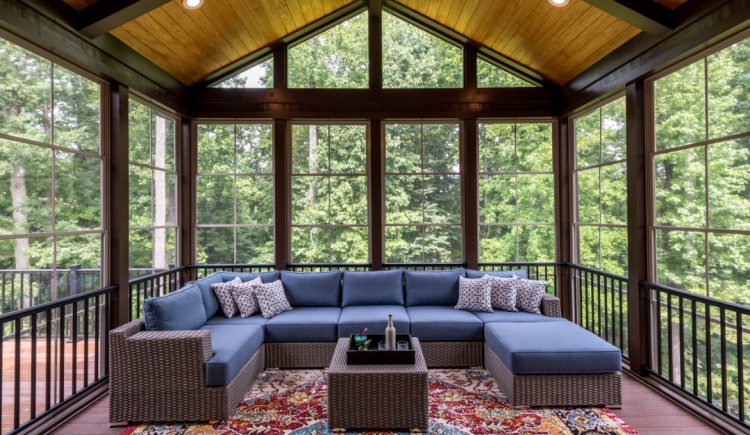
Building a porch can give you extra living space and increase your home’s value. If you decide to build a porch, one of the most important decisions you’ll have to make is whether to enclose it with a screen or keep it open.
Insects and Wildlife
The main reason why homeowners enclose their porches is to keep pests and wild animals away. Mosquitoes, flies, and bees can ruin your plans to enjoy a meal or a conversation outdoors. Having a bird or a squirrel wander onto your porch can be a delight or a nuisance, depending on the circumstances.
Walking out to the porch and discovering a raccoon or a skunk can be stressful and potentially dangerous if the animal gets frightened and bites or sprays. With a screened-in porch, you won’t have to worry about any of that.
Allergens
Spending time outside can be unpleasant for people with seasonal allergies. A porch that’s covered with pollen is the last place where a person with allergies will want to sit and eat a meal. A screen can keep allergens off the porch so you and your family can take advantage of the outdoor space and enjoy pleasant weather.
View
A screen can partially block your view of the neighborhood and the landscape around your house. You’ll still be able to see your surroundings, but a screen might be an unwelcome distraction. If you’d prefer to have a clear view of the scenery around your house, an open porch might be a better choice for you.
Cleaning and Maintenance
Since a screen can keep pollen, dirt, leaves, and other debris from blowing onto a porch, a screened-in porch will require less cleaning than one that’s open. Your outdoor furniture will also be protected from dirt, animals, and other potential forms of damage. You will have to clean the screen from time to time, inspect it for signs of damage, and make whatever repairs are necessary to keep a problem from getting worse.
Cost
Building a screened-in porch is more complex and time consuming than building an open porch. Costs for materials and labor will therefore be higher for a porch with a screen than for a porch without one.
If your new porch will be in an area that gets a lot of direct sunlight, you might want to choose a screen that can help block out the sun’s UV rays. If you have pets and you’re concerned that they might damage a screen, you can select a durable material that’s designed for homes with pets. Of course, all of that will affect the total price tag for the project.
Is a Screened-In Porch Right for You?
Before you undertake any home improvement project, weigh the pros and cons. Think about how you intend to use a porch and how often, how concerned you are about animals and insects, and how much you can afford to spend. Contact a few local contractors to get estimates for porches with and without screens.