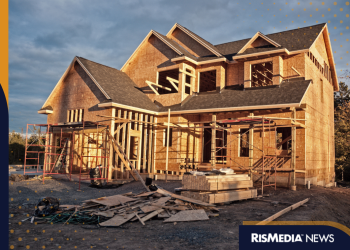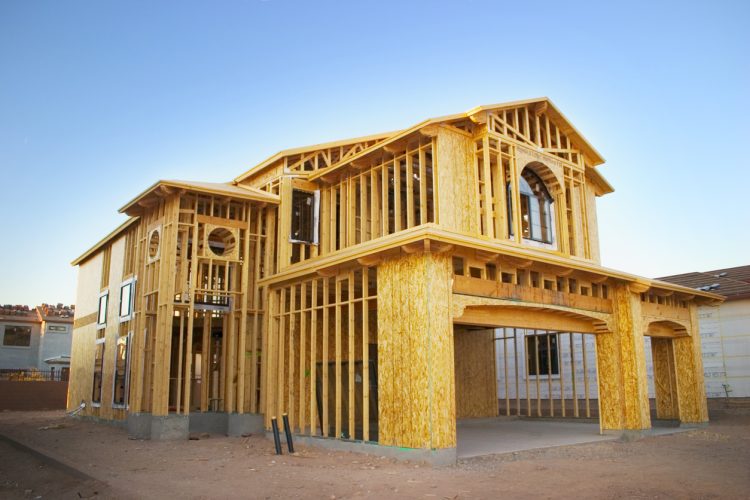
Privately owned housing starts in October were at a seasonally adjusted annual rate of 1,246,000, 4.6% below the revised September estimate of 1,306,000 and 7.8% below the October 2024 rate of 1,352,000, according to a Jan. 9 report from the Census Bureau and the Department of Housing and Urban Development (HUD).
The starts fell to the lowest level since the beginning of the pandemic as information delayed by last year’s government shutdown indicated that builders continued to cut back amid elevated prices and mortgage rates.
Single-family housing starts in October were at a rate of 874,000, 5.4% above the revised September figure of 829,000. The October rate for units in buildings with five units or more was 347,000.
Privately owned housing units authorized by building permits in October were at a seasonally adjusted annual rate of 1,412,000, 0.2% below the revised September rate of 1,415,000 and 1.1% below the October 2024 rate of 1,428,000. Single-family authorizations in October were at a rate of 876,000, 0.5% below the revised September figure of 880,000. Authorizations of units in buildings with five units or more were at a rate of 481,000 in October.
Privately owned housing completions in October were at a seasonally adjusted annual rate of 1,386,000, 1.1% above the revised September estimate of 1,371,000, but 15.3% below the October 2024 rate of 1,636,000. Single-family housing completions in October were at a rate of 1,009,000; this is 6% above the revised September rate of 952,000. The October rate for units in buildings with five units or more was 367,000.
Realtor.com® Senior Economist Joel Berner said builders are now refocusing on larger projects where before the emphasis had been placed on single-family homes.
“The housing market is struggling with trepidatious buyers, leading to an inventory glut and rising time on market, especially in the South and West, where a majority of new homes are built,” Berner said. “Builders, in response, are pulling back. Permitting is the strongest in the multifamily segment, with the pace of permits issued for projects of five or more units reaching a 2025 high. This is an inversion of the trend seen in much of the past several years. The slowdown in the for-sale market combined with the compressed margins builders are facing due to tariffs and labor shortages make larger-scale construction more attractive.”
Berner noted that the strongest permitting gains for all project types were in the Northeast, up 5.8% year-over-year, opining that it is an encouraging sign that builders are responding to price signals that show new-home demand is the strongest in that region.
“Housing starts are down nationally on a year-over-year basis, as builders seem reluctant to initiate new projects in this environment of still-high mortgage rates and subsequent slow sales,” he added. “All told, this delayed but much anticipated data release paints a bit of a gloomy picture for home construction that is driven by builders’ lack of confidence in their ability to sell homes at a price that makes it economically viable for them.
“What’s plaguing the market in 2025 is uncertainty. We’ve shown that builders are eager to move their inventory, using incentives, price cuts and favorable financing offers for buyers just to get completed homes off their hands. To avoid having this same problem in the future, they’re pulling back on building activity.”