RISMedia
  • News
  • Premier
  • Reports
  • Events
  • Power Broker
  • Newsmakers
  • More
    • Publications
    • Education
No Result
View All Result
  • Agents
  • Brokers
  • Teams
  • Marketing
  • Coaching
  • Technology
  • More
    • Headliners New
    • Luxury
    • Best Practices
    • Consumer
    • National
    • Our Editors
Join Premier
Sign In
RISMedia
  • News
  • Premier
  • Reports
  • Events
  • Power Broker
  • Newsmakers
  • More
    • Publications
    • Education
No Result
View All Result
RISMedia
No Result
View All Result

Protect Your Home From an Invisible—and Fatal—Danger: Radon

Home Best Practices
By John Egan
June 4, 2017
Reading Time: 3 mins read
Protect Your Home From an Invisible—and Fatal—Danger: Radon

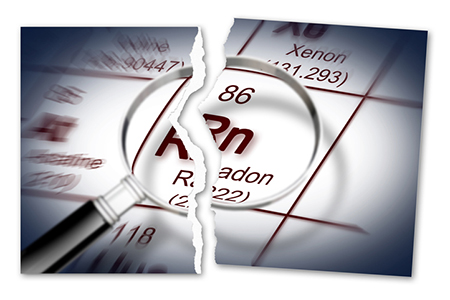
Torn photo of a periodic table of radon gas element and magnifying lens- concept image

Editor’s Note: This was originally published on RISMedia’s blog, Housecall. See what else is cookin’ now at blog.rismedia.com:

  • Top 10 Urban Properties With the Best Views
  • Summer Pool Maintenance 101
  • Where to Move If You Want to Become Bilingual

Roughly 57 lung cancer deaths per day are caused by a radioactive, invisible, odorless and tasteless gas lurking in millions of American homes. Fortunately, the presence of that gas can be detected and minimized.

After cigarette smoking, the radioactive gas—called radon—is the second leading cause of lung cancer deaths in the U.S., claiming the lives of about 21,000 people each year. Radon is the No. 1 cause of lung cancer among nonsmokers.

“These deaths are preventable, and as a nation there is an urgent need to take steps to save lives,” said Harold Wimmer, president and CEO of the American Lung Association.

Radon comes from the natural breakdown of uranium. The gas seeps into a home from rocks and soil, typically through cracks and other holes in the foundation.

“Radon gas decays into radioactive particles that can get trapped in your lungs when you breathe,” according to the U.S. Environmental Protection Agency (EPA). “As they break down further, these particles release small bursts of energy. This can damage lung tissue and lead to lung cancer over the course of your lifetime.”

The EPA says radon exposure is a preventable health risk, but testing is the only way to detect how much radon is inside your home.

Testing usually starts with a simple at-home kit that costs about $15, according to Kristina Snyder, an assistant with the radon program at Kansas State University. Radon kits are sold by hardware stores, home improvement warehouses, kit manufacturers, county extension services and local health departments, as well as online at sosradon.org.

Generally, the do-it-yourself kits are placed on the lowest level of your home where you and your family spend a significant amount of time, such as a first-floor living room. A DIY test lasts anywhere from two to 90 days, depending on the type of testing device. The test will measure the level of radon in your home by the number of picocuries per liter (pCi/L). If the pCi/L level is above 4 as determined by lab analysis, the EPA recommends a follow-up test, either a short-term one (two to 90 days) or a long-term one (more than 90 days). The higher the level on the initial short-term test, the more urgent it is that a short-term test should be done as a follow-up, according to the EPA. A test also can be done by a certified radon-testing professional.

The average level for indoor radon is 1.3 pCi/L, the EPA says. While the presence of even a tiny amount of radon can pose a threat, the EPA sets 4 pCi/L as the point where you definitely should take action to reduce in-home radon. One of every 15 homes in the U.S. has elevated levels of radon, according to the EPA.

If dangerous levels of radon are discovered, a homeowner can have a radon mitigation system installed—for about the same price as a big-screen TV—to decrease the risk of exposure, the American Lung Association says.

According to University of Nevada Cooperative Extension, radon exposure also can be reduced in our homes by:

  • Building new homes using radon-resistant construction techniques
  • Performing a radon test every two years
  • Conducting a radon test before or after a remodeling project
  • Doing a radon test after sizable earthquake activity

“Our ultimate goal is to eliminate lung cancer caused by radon, and the best way to do that is to improve the way we protect people indoors,” Wimmer said. “As we work towards implementing national strategies to save lives, we also encourage Americans to take action today to test their own homes.”

For the latest real estate news and trends, bookmark RISMedia.com.

Tags: American Lung AssociationEPAHome SafetyRadon TestingRadon-Testing ProfessionalRISMedia's Housecall
ShareTweetShare

Related Posts

Sea Glass Acquires Sperry Commercial Global Affiliates
Industry News

Sea Glass Acquires Sperry Commercial Global Affiliates

January 9, 2026
The Keyes Company Brings The Landmark IV Group to Hollywood
Agents

The Keyes Company Brings The Landmark IV Group to Hollywood

January 9, 2026
Multi-Family Housing Starts Down in October; Single-Family Starts Rise
Agents

Multi-Family Housing Starts Down in October; Single-Family Starts Rise

January 9, 2026
Middling Jobs Report Offers Little Insight on 2026 Housing Market
Industry News

Middling Jobs Report Offers Little Insight on 2026 Housing Market

January 9, 2026
‘Benchmarkets’ vs. Outliers: Why Your Local Housing Story May Differ Drastically From National Trends
Industry News

‘Benchmarkets’ vs. Outliers: Why Your Local Housing Story May Differ Drastically From National Trends

January 9, 2026
Compass
Agents

Compass Closes Anywhere Deal Amid Anonymous Reports of ‘Overruled’ DOJ Staff Concerns

January 9, 2026
Please login to join discussion
Tip of the Day

RISMedia Headliners: Innovating for the Future

Succeeding in the new year will take more than determination and hard work—it will require utilizing technology that facilitates efficiency and increased business. In this in-depth feature, real estate tech leaders share the innovations they believe will give agents and brokers a competitive advantage in 2026. Read more.

Business Tip of the Day provided by

Recent Posts

  • Sea Glass Acquires Sperry Commercial Global Affiliates
  • The Keyes Company Brings The Landmark IV Group to Hollywood
  • Multi-Family Housing Starts Down in October; Single-Family Starts Rise

Categories

  • Spotlights
  • Best Practices
  • Advice
  • Marketing
  • Technology
  • Social Media

The Most Important Real Estate News & Events

Click below to receive the latest real estate news and events directly to your inbox.

Sign Up
By signing up, you agree to our TOS and Privacy Policy.

About Blog Our Products Our Team Contact Advertise/Sponsor Media Kit Email Whitelist Terms & Policies ACE Marketing Technologies LLC

© 2025 RISMedia. All Rights Reserved. Design by Real Estate Webmasters.

No Result
View All Result
  • Home
  • Premier
  • Reports
  • News
    • Agents
    • Brokers
    • Teams
    • Consumer
    • Marketing
    • Coaching
    • Technology
    • Headliners New
    • Luxury
    • Best Practices
    • National
    • Our Editors
  • Publications
    • Real Estate Magazine
    • Past Issues
    • Custom Covers
  • Events
    • Upcoming Events
    • Podcasts
    • Event Coverage
  • Education
    • Get Licensed
    • REALTOR® Courses
    • Continuing Education
    • Luxury Designation
    • Real Estate Tools
  • Newsmakers
    • 2025 Newsmakers
    • 2024 Newsmakers
    • 2023 Newsmakers
    • 2022 Newsmakers
    • 2021 Newsmakers
    • 2020 Newsmakers
    • 2019 Newsmakers
  • Power Broker
    • 2025 Power Broker
    • 2024 Power Broker
    • 2023 Power Broker
    • 2022 Power Broker
    • 2021 Power Broker
    • 2020 Power Broker
    • 2019 Power Broker
  • Join Premier
  • Sign In

© 2025 RISMedia. All Rights Reserved. Design by Real Estate Webmasters.

X