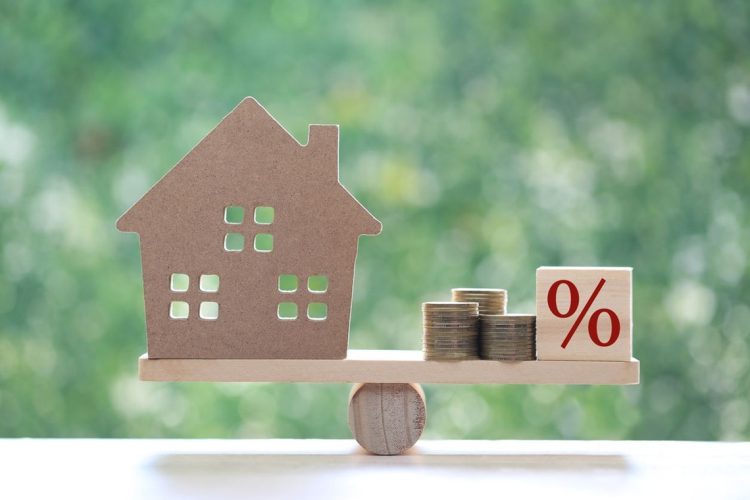
The average top-tier mortgage rates dipped below 6% this week, offering up what economists say could be the “psychological push” some buyers are looking for to get them off the sidelines and into a stubborn housing market that continues to be constrained by affordability and inventory challenges.
Mortgage News Daily (MND) reported that the average top-tier rates dipped to 5.99% yesterday for the first time since Jan. 9, and only the second time in more than three years. With rates holding steady today, this is the third day that matches that multi-year low, MND reported.
MND’s Rate Index calculates its daily average mortgage rate data using actual rate offerings from a variety of lenders including wholesale, correspondent, and retail, and for consistency uses a baseline profile of a buyer with a 740-750 FICO credit score putting at least 20% as a downpayment (75%-80% LTV) on a 30-year fixed rate (conventional conforming) loan. Their index is typically updated once per day unless multiple lenders have changed rates during the day, according to their website.
RISMedia usually reports weekly on Thursdays on Freddie Mac’s Primary Mortgage Market Survey® (PMMS®), which is often different from MND’s index because it’s looking at past data from the previous full week and calculates its national average mortgage rate by analyzing thousands of weekly loan application submissions from lenders across the country. But similar to MND, Freddie Mac’s criteria also includes weekly conventional, single-family originations with conforming loan limits as set by Federal Housing Finance Agency (FHFA).
Last week, the Freddie Mac PPMS averaged 6.01%, the lowest level since September 2022. “This lower rate environment is not only improving affordability for prospective homebuyers, it’s also strengthening the financial position of homeowners,” said Sam Khater, Freddie Mac chief economist.
Bright MLS Chief Economist Lisa Sturtevant also said lower rates should improve affordability and bring out more buyers and that rates falling below 6%, “could be the psychological push that some buyers are waiting for” to get them off the sidelines.
FHFA Director Bill Pulte posted about the dip on MND this morning on the social media platform X (formerly Twitter).
The continuing steady and lower rates year over year have also caused a notable increase in refinance activity in recent weeks. According to the February Mortgage Monitor released earlier this month by ICE Mortgage Technology, Early January declines in mortgage rates unlocked refinance opportunities for nearly five million borrowers and helped push affordability to a four-year high.
“Even small reductions toward 6% rates can significantly boost affordability, particularly for homeowners who could refinance into a lower rate and monthly payments,” said Andy Walden, head of Mortgage and Housing Market Research at ICE. “When rates hit 6.04% on January 9, the number of homeowners in the money to refinance jumped by 20% and affordability hit its best level in four years.”
However, Walden cautioned that “affordability remains structurally challenged, with home prices still elevated relative to incomes and meaningful differences emerging across regions and borrower segments.”
Inventory challenges are another ongoing concern of economists. “It is not just about rates for homebuyers,” Sturtevant said last week. “Inventory is still limited in many local markets, particularly in the Midwest and Northeast. Consumer confidence is low, as many individuals and families are dealing with higher prices for everything from groceries to cars.”
Realtor.com Senior Economist Jake Krimmel also commented on inventory challenges, saying, “Without a significant return of supply through the easing of the mortgage “lock-in effect” (referring to homeowners with lower mortgage rates in the 3% range who don’t want to sell and take on a higher, 6+% mortgage rate), lower rates may simply reignite competition and spike prices, erasing the affordability relief buyers are hoping for.”
In the latest data from the Mortgage Bankers Association (MBA), its Refinance Index—measuring the total volume of mortgage applications for refinancing existing homes—was 132% higher than the same week one year ago.
Housing affordability was recently the topic of a hearing by the House Financial Services Committee (which covers the real estate sector), where discussion ranged from permitting differences across states to the role of community banking in house.
President Donald Trump has made housing a focus in recent months, announcing plans to rein in institutional investors in the single-family home market as well as announcing in a post on Truth Social on Jan. 8 he was directing his representatives to purchase $200 billion in mortgage bonds in an effort to reduce mortgage rates and monthly payments for American homebuyers.
Housing experts are mixed on whether Trump’s flurry of proposals will move the needle on affordability, with, for example, Krimmel recently commenting on the mortgage bond purchase proposal’s influence on mortgage rates as not likely to change the mortgage market’s long-term pricing.
Trump was expected to focus part of his State of the Union address Tuesday night on the economy with housing-related topics likely included.