The cold of winter slows many things down, but the frosty season should not keep you from trying to heat up your sails. Even if you work from a home office and don’t have to worry about that commute during the winter, real estate professionals (especially ones with open houses to show) still spend plenty of time driving back-and-forth, especially to different showings.
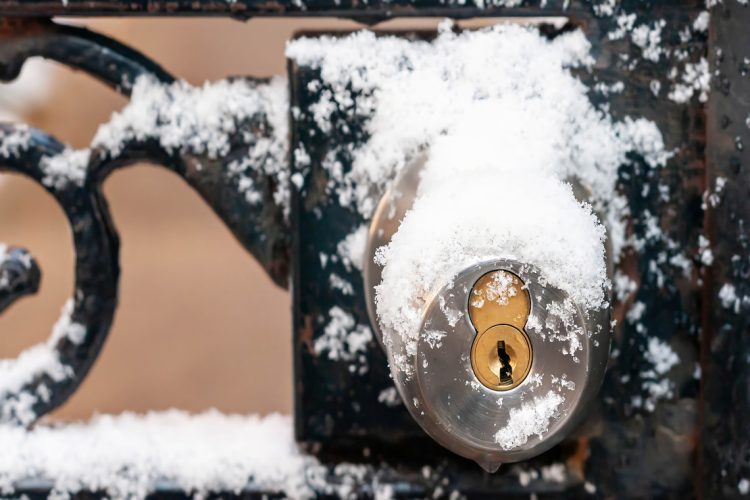
To stage a strong open house in winter, you’ll want tools such as ice melt or a good old-fashioned shovel if you need to clear out the driveway. Then comes the next barrier to entry: Getting into the house. A truly blistering winter can freeze up locks, both lockboxes and locks on the doors themselves, so it can pay off to have a fast-acting solution.
Lock deicing spray or tube
The most direct solution is a tool designed specifically for this task: Lock deicing spray or gel, alcohol-based lubricants designed to melt away any ice inside the lock. Deicers are available as both spray cans or small tubes designed to be placed in front of and applied to the lock. Various brands are available at commercial supply stores, so you’ve got options for which is the most (cost) effective variety for you.
Heating gun
A more heavy duty option for deicing, and one that ideally won’t require you to restock at your local hardware store, is a heating gun. One of the cordless tool’s main functions is thawing and that can be the only way to get rid of ice inside locks. If you have a cordless hair dryer for personal use, it can serve the same function.
A heating gun is generally a one-handed tool but it can be cumbersome. If you find it takes up too much room in your glovebox, a small lighter can also provide some thawing heat. (Be careful, though, about causing heat damage.) You can also try heating the key itself and inserting it into the lock. If that fails, heat up the lock itself.
Hand sanitizer (really)
A health-conscious real estate professional knows to keep a bit of hand sanitizer with them. After all, you’re going through many different houses and touching many different surfaces. Since hand sanitizer is alcohol-based, like deicing solutions, it can have a similar effect and melt ice trapped inside a lock. Apply a small strip of the sanitizer to the key then insert it into the lock. Since it is not designed for this purpose, though, be diligent and don’t overuse it, lest you damage the lock.
Your thermos
If it’s a cold winter day, there’s a good chance you’ve got a thermos filled with hot coffee or tea with you. If you find yourself in a last resort option, without any typically deicing solutions, then applying a touch of hot liquid could be the way to go. That said, this shouldn’t be your go-to, because liquid can easily refreeze and leave you back at square one. Plus, you probably don’t want to sacrifice your morning coffee or tea.
Use a digital lockbox
For lockboxes, there are options that can bypass a frozen lock altogether; electronic locks with digital locking mechanisms that use a number passcode rather than a key lock. Sentrilock is the option endorsed by the National Association of Realtors®. Having a high-tech lockbox in your inventory that you can present to your clients is a good way to appear prepared and impress them, too.