Less than a week ago, the United States went to war against Iran. While pundits and economists seek to assess the domestic impact, most experts have so far agreed that it is far too early to make any prediction regarding economic consequences, especially as federal officials (including president Donald Trump) offer shifting objectives and timelines.
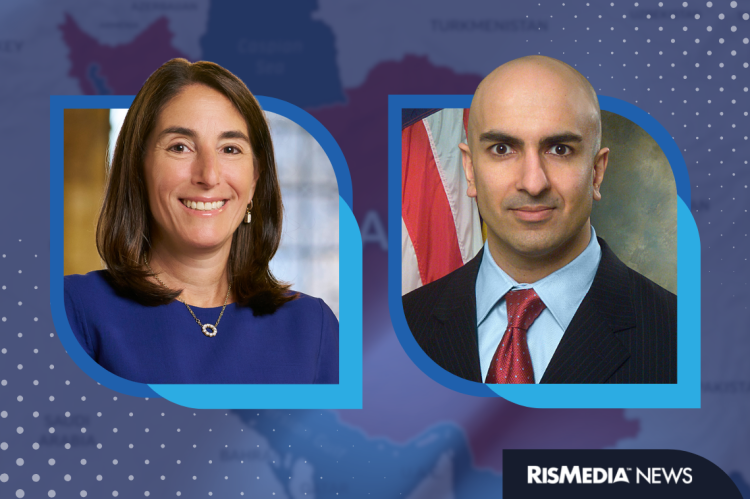
But yesterday, Federal Reserve Governor Beth Hammack told the New York Times that the war could cause inflation to rise and lower consumer demand, contributing to her view that the Fed should refrain from cutting rates until the picture becomes more clear.
According to Hammack—who is only one of 12 voting members who decide interest rates as part of the Federal Open Market Committee (FOMC), cuts could be “on hold for quite some time.”
Another voting Fed member, Neel Kashkari, speaking at a Bloomberg-hosted event on Tuesday, broadly agreed, noting that before the war, he had projected one rate cut in 2026, suggesting that was no longer his expectation.
“Now, with these geopolitical events…we need to get a lot more data in,” he said. “The inflation data before Iran has suggested that inflation is running somewhere between 2.5% and 3%.”
“We don’t know when the shocks will ever stop under this administration,” said Bloomberg reporter Michael McKee, who was interviewing Kashkari.
“Correct,” responded Kashkari.
The comments by two Fed members underscore the immediate chaos and disruption caused by a costly war, with an economy that still appears fragile. Housing economists had previously projected moderate to significant increases in home sales for 2026, at least partially due to the expectation of mortgage rates falling further.
If the Fed doesn’t cut—or even raises rates, as at least some unnamed Fed members previously foreshadowed—a housing market rebound could quickly deflate. Rates were already spiking higher this week, according to data gathered by Mortgage News Daily, an industry trade publication, up more than 12 basis points in the days following the initial bombing.
Various publications and economists previously projected national increases in home sales anywhere from modest upticks in sales and mostly unchanged mortgage rates to the National Association of Realtors®’ forecast of a 14% rise in existing-home sales and rates at 6%. A major disruption ahead of the spring market could easily upend even the lower end of this optimism, with sales coming off multiple record-low years.
The central bank is scheduled to meet again March 17 and 18, after which it will also release its “Summary of Economic Projections,” previewing how members expect the economy to evolve over the coming months and years.
But Fed members are far from unanimous. John Williams, another FOMC voter, did not address the war in remarks at an America’s Credit Unions event Tuesday, but reaffirmed he anticipated at least one rate cut in 2026.Also this week, President Donald Trump formally nominated Kevin Warsh as the new chair of the Federal Reserve, who Trump has said will cut rates—though his comments came before the war. Warsh also faces a tough confirmation fight in the Senate.