

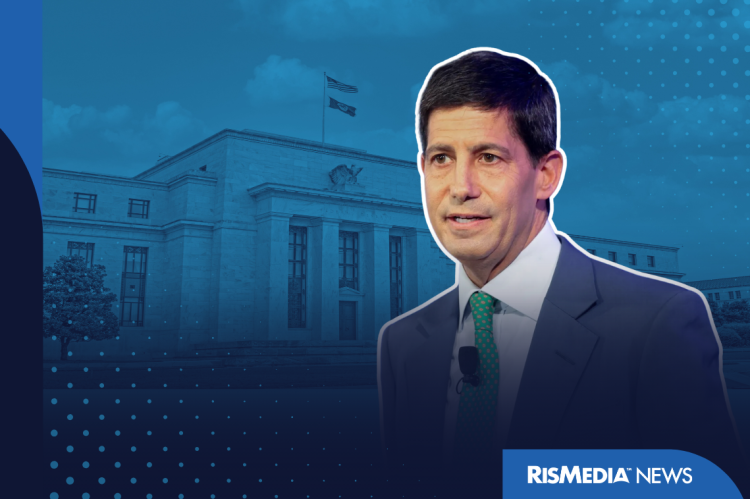
After their long-awaited meeting, the Federal Open Market Committee (FOMC) unanimously voted to raise federal funds rates by a quarter of a percentage point, moving the target range for interest rates 25 basis points, from 3.5%-3.75%, to 3.75%-4%.
During a press conference following the meeting, Fed Chairman Kevin Warsh cited the data from this past summer as a contributing factor to the decision.
“The plain fact is that inflation is too high, and has been for too long,” he said. “This summer’s inflation readings do not tell me that underlying trends have meaningfully improved. Based on the most recent CPI and PPI data, the 12-month change in total PC prices likely was around 3.6% in August. Core PCE and CPI prices running at about 3.2% and 2.4%, respectively. Too many categories are still posting increases of 3% on both the six- and 12-month basis.”
After the latest Consumer Price Index (CPI) report showed that inflation remained nearly double the Fed’s goal at 3.4%, many experts expected a rate hike to ensue after seeing the impact of elevated inflation. Melissa Cohn, regional VP of William Raveis Mortgage, was among them.
“As expected, the Fed raised rates by 0.25%,” she said in a statement. “Skyrocketing oil prices and rising inflation have forced the Fed to hike rates in an attempt to stabilize the financial markets, which have been roiled in the past few weeks.”
The Mortgage Bankers Association’s Senior Vice President, Mike Fratantoni, stated that, “markets were almost certain that the FOMC would hike rates at its September meeting.”
During his Jackson Hole speech in late August, Warsh established that he would not pursue forward guidance as his predecessors did. But, at the Fed’s press conference, he pointed out major indicators of economic health as a basis for how he made his decisions. These indicators include the labor markets, inflation trends and geopolitics.
“There is no hiding from hot spots around the world, and our judgment about what is the most likely, or least likely of the geopolitical situation has changed,” Warsh noted. “All three of those things helped themselves to a firm, unanimous decision today.”
On the Fed’s rate hike, Bright MLS Chief Economist Lisa Sturtevant turned her attention to its impact on housing, and indicated the already strained nature of the market.
“The Federal Reserve’s decision to increase interest rates today for the first time in more than three years acts as a harsh headwind for a housing market that is already losing momentum,” she stated. “The rate hike all but guarantees that mortgage rates will remain stuck at or above the 7% threshold, which creates a psychological and financial barrier that will sharply squeeze affordability and sideline even more prospective buyers.”
Realtor.com® Chief Economist Danielle Hale commented that while home shoppers have been navigating the elevated rate environment, continued pressure could sideline more homebuyers and slow the housing market even further.
“The pressure…doesn’t show signs of relenting,” she continued. “After briefly dipping below 6% in February, mortgage rates reached 6.5% before midyear and have topped 6.7% in recent weeks. So far, buyers and sellers have navigated the higher rate environment relatively well—sellers remain engaged if cautious—but momentum has weakened with pending home sales dipping and existing-home sales sapping a four month streak of yearly gains in August.”
Looking ahead, National Association of Realtors® Chief Economist Lawrence Yun described his outlook on the future of mortgage rates and the state of the housing market.
“Mortgage rates can come down once oil prices retreat and with a credible plan to reduce the budget deficit,” he said in a statement. “Also, if AI technology boosts worker productivity, then inflation and long-term borrowing rates, like for mortgages, can decline. These developments are highly uncertain, at least in the upcoming months. Expect 7% as the new normal. Job additions will be the one factor that can support homebuying.”
Warsh, for his part, said he was looking at the whole economic picture, and denied that rising inflation and an uncertain labor market were in deeper conflict.
“I don’t believe that the two parts of our mandate—price stability and full employment—are working at cross purposes over the medium term,” Warsh concluded. “Ensuring continuous, sustainable, durable economic growth, that is the business we are in. And the job we did today, the job we will continue to do, is to ensure price stability, which can mean that sustainable, durable, economic growth can go on for longer, the economy can be stronger, and as I mentioned before the least well-off can get the benefits of it.”
Mike Miedler, president & CEO of CENTURY 21 Real Estate, acknowledged that the rate increase is the Fed responding to the same pressure U.S. homebuyers are feeling every week at the grocery store and gas pump. For a housing market that has spent much of this year adjusting to higher borrowing costs, it’s another step in that adjustment, versus a surprise.
“While I don’t expect one Fed meeting to change the housing market overnight, what matters now for Americans is whether their entire financial picture starts to feel more manageable—their monthly housing payment, their paycheck and what they’re spending everywhere else,” he said. “Affordability isn’t just the mortgage rate you see on the screen; families are making a housing decision alongside the cost of groceries, gas, childcare and everything else in their budget. If today’s decision helps bring those costs down, that matters for housing affordability too.
“Housing doesn’t need every condition to become perfect at once to make progress. A little more stability in rates, more supply and sellers adjusting to today’s market can each give home buyers who have been close to making a move a little more room to do it. That gives me reason to be optimistic about the fall.”