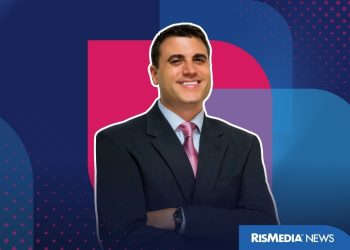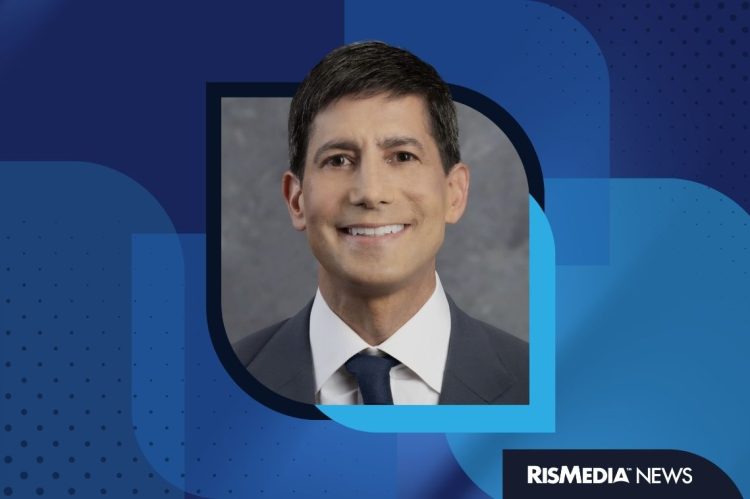
Above, Federal Reserve Chairman Kevin Warsh
Real estate professionals anxiously awaiting lower mortgage rates may not see a decrease anytime soon, as it remains uncertain what action the Federal Reserve will take at its September meeting.
In his debut speech at the 2026 Jackson Hole Economic Policy Symposium Friday in Wyoming, Fed Chairman Kevin Warsh left no clear indication of potential decisions ahead of the Fed’s next meeting, but noted there is “work to do” to continue moving inflation toward the Fed’s goal of 2% inflation.
In his remarks, Warsh showed dissatisfaction with the latest economic data, indicating that while the trends are better than “post-pandemic highs,” they do not deliver on the Fed’s promise of “stable prices.”
“While this summer’s PCE and CPI readings were better than expected, they do not tell me that underlying trends have meaningfully improved,” he said. “The data also shows moderate wage growth, but in my view in tracking underlying inflation, wage growth has not proven a reliable indicator of future inflation.”
According to the latest Personal Consumption Expenditure (PCE) report from the Bureau of Economic Analysis (BEA), inflation’s pace remains unfaltered with a 3.7% increase on an annual basis. Many economists pointed out that this is nearly double the Fed’s goal of 2%.
Prior to Warsh’s speech, Realtor.com® Senior Economist Hannah Jones theorized in a statement that the Fed Chair would “weigh in on still-elevated inflation and the ongoing Iran conflict’s ripple effects on energy prices.” While Warsh did not comment on these issues specifically, Jones was correct in expecting a “neutral tone” to his remarks.
While Warsh made no clear decisions as to whether the Fed will raise rates at September’s meeting, he emphasized the Central Bank’s role in monitoring and guiding the economy.
“It’s the Fed’s job to make sure that inflation expectations do not get unanchored. There is one signal nobody can miss: responsibility for 65 months of sustained elevated inflation sits squarely with the central bank, and that’s where it belongs,” he said. “We must be confident that underlying inflation is moving to our objective clearly and at sufficient speed. Otherwise, we have work to do.”
Moving away from forward guidance
Realtor.com Senior Economist Jake Krimmel says that just as Warsh “doubled down” on the Fed’s inflation target and preferred gauge, he also “doubled down that he would not commit to anything,” in a statement.
“These things may seem in tension—acknowledging the Fed must act while simultaneously refusing to make any pledge to do so—but what Warsh did today is make a credible threat,” Krimmel says.
In response to economists’ comments and criticism, Warsh defended his muted approach and described the ways in which he wishes to change how his role operates.
“You might know about my longtime discomfort with early pronouncements of future policy decisions. I much prefer another path,” he said.
Typically, economists could expect to hear some indication as to what the Fed might do in response to current economic conditions. At 2025’s Jackson Hole speech, former-chairman Jerome Powell signaled rate cuts in response to tariffs and slowing payroll growth. But Warsh pushed back against this practice.
“Forward guidance as a regular practice was adopted by my colleagues and me during the global financial crisis. It was essential at the time, and we introduced it with much fanfare,” he said. “But as with other legacies of crises past, I believe the practice has outstated its welcome.”
According to Warsh, forward-guidance “risks creating ambiguity in the name of clarity. Oversharing policy deliberations and overcommitting to future decisions can lead markets, businesses and households astray.”
Monitoring the potential impacts of AI
Another notable aspect of Warsh’s remarks was the usage of AI and its impact on the economy, saying that the Fed is “watching all this attentively” and “recognizes that AI is a new variable” with “ever-expanding pools of capital pouring into AI-related infrastructure of all sorts.”
While Warsh stated that it’s not yet obvious how the application of AI will change productivity and monetary policy, he reiterated that the Fed will continue to watch AI’s rise and base decisions accordingly.
“We recognize that AI is a new variable, potentially a new factor of production that will have consequences both for the economy and for the conduct of monetary policy,” he said.
Concluding his remarks, Warsh emphasized his anti-forward guidance stance as chairman and reminded listeners of the Fed’s duty to the economy.
“I stand here today committed to a discipline, not a decision,” he said.
Krimmel, however, offered a short-term prediction: “I would not predict any real mortgage rate relief this fall. But taming inflation as soon as possible can put the housing market in a much better place—on mortgage rates and on purchasing power—in the next six to 12 months, and beyond.”