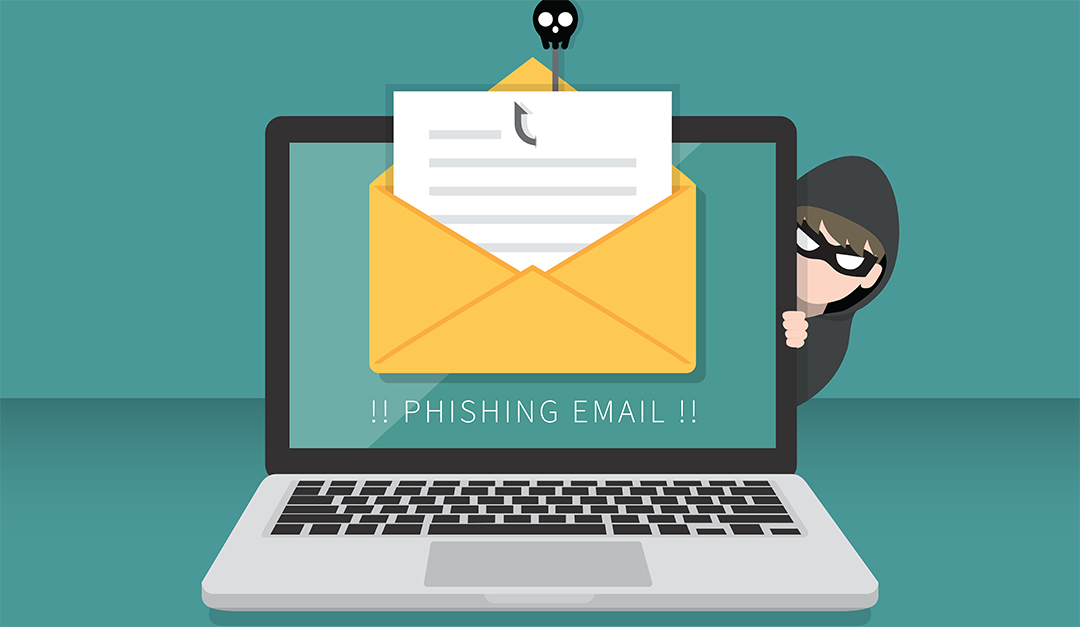
Consumer protection and fraud prevention continue to be critical during the ongoing coronavirus pandemic. Technology is an integral part of daily life as more people are working remotely, engaging in distant learning, purchasing products and services online, and conducting financial business virtually, including real estate transactions. Unfortunately, there are criminals who are using this time of crisis to harm others by engaging in identity theft, spoofing, phishing scams, imposter scams, and more. While many of the tactics that criminals use remain the same, the pandemic has changed the nature and scope of some of the scams.
Government imposter scams that prey on the hardships many are facing are on the rise due to government assistance that was provided in the various federal stimulus bills. These types of scams occur when criminals contact individuals posing as government agents from various federal and state agencies seeking to obtain personal and financial information in exchange for offering assistance with stimulus payments, unemployment benefits, business loans or other related government assistance.
Charity scams are also increasing as imposters contact individuals impersonating representatives from reputable charities seeking donations and other personal information from individuals. Medical scams are increasingly prevalent, too, given the public health crisis. Criminals are posing as healthcare professionals or medical staff in an effort to gather personal information from individuals, asserting they are collecting data for contact tracing or claiming to have coronavirus vaccines or other cures.
Scammers target victims by contacting them online, via email or via phone by calling or texting, and/or by postal mail. Many bad actors are closely monitoring social media and online profiles and using individuals as a way to track behavior and determine trends. These scams affect people of all ages, races and backgrounds. Unfortunately, there is no way to completely stop criminals from engaging in these nefarious scams, but consumers can be aware and vigilant.
Government agencies contact individuals primarily via postal mail. It is rare for a government entity to contact an individual via phone or email, but it is always best for consumers to verify and screen all calls, emails and mail correspondence that may appear to be unfamiliar or suspicious.
Fraud prevention education and consumer awareness are key ways to combat these fraud schemes. Several government agencies are committed to informing and protecting the interests of consumers, providing new educational resources and awareness tools, such as those by the Consumer Financial Protection Bureau (CFPB), the Federal Trade Commission (FTC), the Federal Housing Finance Agency (FHFA), the U.S. Department of Housing and Urban Development (HUD) and the Department of Veterans Affairs (VA). These agencies have developed resources to help consumers understand mortgage and housing assistance during this crisis, and to help consumers avoid scams and bad actors. More information can be found at https://www.consumerfinance.gov/coronavirus/mortgage-and-housing-assistance/#beware.
The National Association of REALTORS® (NAR) is also committed to combating fraud within the real estate industry, including wire fraud, title fraud, business email compromise and other related types of fraud. According to the Federal Bureau of Investigations’ Internet Crimes Report, in 2019, victims lost over $221 million due to real estate fraud based on crimes that were reported. NAR has published several resources on nar.realtor/wire-fraud to educate REALTORS® and consumers. As online services for real estate transactions increase, NAR is also advocating for safe and secure transactions through remote online notarization. If consumers believe they have been targeted in one of these various types of scams, they should immediately contact the FTC as well as their local FBI office. If they believe they have been the victim of a wire fraud scam, consumers should also immediately contact their bank to issue a recall notice and file a complaint with the FBI at ic3.gov to provide the best chance of recovery.
 Nia Duggins is NAR’s business issues policy representative.