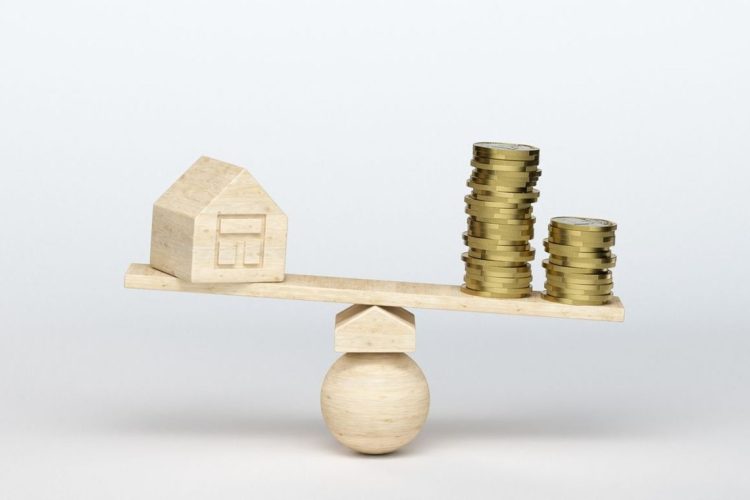
Home-price growth continued its trend of deceleration in November 2025, holding steady at two-year lows and demonstrating the possibility of market growth, according to the latest data.
The November S&P Cotality Case-Shiller Home Price Index found that home-price growth posted a 1.4% annual gain, the same rate as observed the month prior, which was noted as “among the weakest performances since mid-2023.” This month’s rate is also less than half of November 2024’s rate of 3.7%. Month-over-month, the index saw an increase of 0.4%.
“November’s results confirm that the housing market has entered a period of tepid growth,” said Nicholas Godec, head of Fixed Income Tradables & Commodities at S&P Dow Jones Indices.
Realtor.com® Senior Economist Anthony Smith noted that “broader economic conditions add nuance to the outlook.”
“November CPI showed inflation continuing to cool, easing pressure on monetary policy and helping keep mortgage rates below year-ago levels, while labor market conditions have softened, weighing on confidence,” he continued. “Together, these forces point to a market that can sustain positive annual price growth, but with less upside than earlier in the cycle and a heavier dependence on local supply constraints.”
Godec added that “home price growth still trails inflation by roughly 1.3 percentage points, meaning real home values have effectively edged down over the past year.”
Looking at the city composites, the 10-City Composite showed an annual increase of 2%, up from a 1.9% increase the previous month. The 20-City Composite posted a year-over-year increase of 1.4%, up from a 1.3% increase the previous month. Month-over-month, both indices saw a 0.5% increase.
Chicago reported the highest annual gain among the 20 cities with a 5.7% increase in November, followed by New York and Cleveland with annual increases of 5% and 3.4%, respectively. Tampa posted the lowest return in November, falling 3.9%.
Bright MLS Chief Economist Lisa Sturtevant explained the Northeast and Midwest price gains as due to inventory constraints. For the decreases in the Sun Belt, Sturtevant said that demand has “pulled back” here and “inventory is back above pre-pandemic levels.”
Looking ahead, Godec said that mortgage rates will “continue to cast a long shadow over housing.”
“Thirty-year loan rates hovered in the mid-6% range during November, weighing on affordability even as they eased slightly from recent peaks,” he continued. “This elevated financing cost continues to cap home price growth. Inflation has erased most nominal gains, leaving home values essentially flat in real terms.”
Sturtevant agreed with Godec’s sentiment, and added that in the current environment “it is likely we will see both rates and price appreciation fall in early 2026.”
“Would-be buyers have hit an affordability ceiling and they are looking for both lower rates and more price negotiation to get into the market,” she continued.
The data from the latest Federal Housing Finance Agency’s (FHFA) monthly home price index (HPI)—which tracks changes in single-family home prices—saw a similar increase of 1.9% annually and 0.6% monthly.