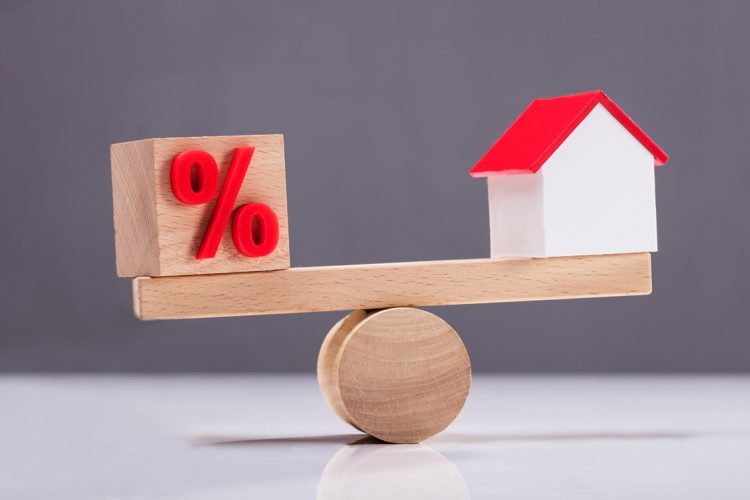
‘In a holding pattern’ is how economists are describing the spring market moving into April, with more policy stability and conflict resolution needed to move buyers and sellers back from the sidelines.
The average mortgage rate ticked down 9 basis points to 6.37% this week, down from 6.46% last week after several weeks of increases, according to the latest Primary Mortgage Market Survey® (PMMS®), released by Freddie Mac Thursday.
Bright MLS Chief Economist Lisa Sturtevant said that while the announcement of the ceasefire with Iran could have provided a brief reprieve for mortgage rates, more volatility is likely ahead as the market remains skeptical of a permanent resolution for the Strait of Hormuz.
With energy and shipping costs keeping inflation figures ‘sticky,’ a sustained drop in rates appears unlikely for the foreseeable future, she said.
“As we move into April, the spring housing market remains in a holding pattern,” Sturtevant said. “We are seeing a historic rise in inventory which should be a catalyst for sales. However, the ‘rate shock’ of the past few weeks has significantly eroded buyer purchasing power, even with this week’s dip.”
For the spring season to truly break out, she said instead of policy announcements, “We will need more policy stability. Until there is a clearer resolution to the international conflict and energy prices stabilize, both buyers and sellers will likely remain in ‘wait-and-see’ mode.”
Realtor.com Economist Jiayi Xu agreed, noting the Iran war continues to be the dominant force driving financial markets, including the bond market that underlies mortgage rates.
“While the 10-year Treasury yield began to ease following the announcement of a two-week ceasefire, any relief to mortgage rates may prove short-lived—a temporary pause rather than a true turning point,” she said. “Until a more permanent resolution emerges, the fog of uncertainty is unlikely to fully lift from the housing market.”
Xu expressed frustration over geopolitical tensions reversing the progress with decreasing mortgage rates seen earlier this year.
“Mortgage rates are one of the most powerful forces shaping whether the 2026 spring buying season thrives or stalls,” Xu said. “While buyers briefly celebrated rates dipping below 6% earlier this year—a milestone not seen in years—that window of opportunity proved frustratingly short-lived, as geopolitical tensions in the Middle East quickly reversed the progress.
“What took almost six months of gradual decline to bring rates from 6.5% down below 6% was unwound in just five weeks—a stark reminder of just how fragile affordability gains are when mortgage rate volatility enters the picture,” she said. “For buyers who had finally seen a reason to act, the rug was pulled at a bad time.”
She said if the conflict moves toward resolution, rates could resume their downward path as oil prices stabilize and inflation pressures ease, “but that timeline remains anyone’s guess. Mortgage rates don’t just affect monthly payments—they shape buyer confidence, seller motivation and the entire rhythm of the market, making every uptick a potential reason for hesitation during the season that matters most.”
Freddie Mac’s Chief Economist Sam Khater, offered a more optimistic outlook, noting, “The decrease in rates represents a positive development for prospective homebuyers and could spark a more favorable spring homebuying season than last year.”
Click here for more from Freddie Mac.