

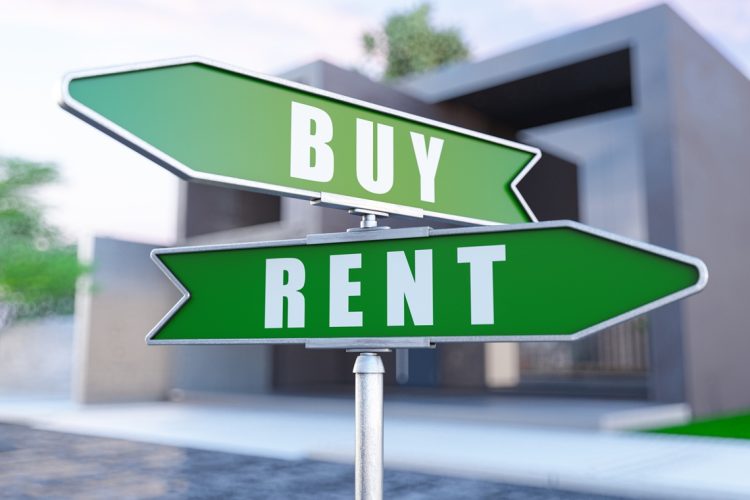
An average of 7.6% of potential homebuyers searching on Zillow also shop for rentals, according to Zillow’s new report on “dual shoppers,” highlighting the continued affordability challenges faced across the U.S. as buyers weigh their options.
Overall, in the U.S., Zillow found that it is typically $415 cheaper to rent than own (including mortgage payments, property taxes, insurance and maintenance, and assuming a 20% down payment), and renters are typically afforded 284 more square feet than owners. On average, it would take 8.45 years for a potential homebuyer to save up enough to make their purchase.
Zillow Senior Economist Kara Ng said that in today’s housing market faced by adversity, “affordability is fundamentally changing how people approach their housing search,” with more shoppers weighing their rental and buying options side by side, “especially as the monthly cost of owning continues to outpace rents in many markets.”
Ng noted that before real estate portals like Zillow evolved to where they are now, people were “either a buyer or a renter, and those two paths rarely met.” Now, “those aisles are right next to each other” as shoppers can easily toggle portals to show them listings from either path.
“Having both platforms integrated allows for a level of transparency that didn’t exist a decade ago,” she continued. “It empowers shoppers to weigh the long-term benefits of equity against the immediate flexibility of a lease without ever having to leave their couch or the app.”
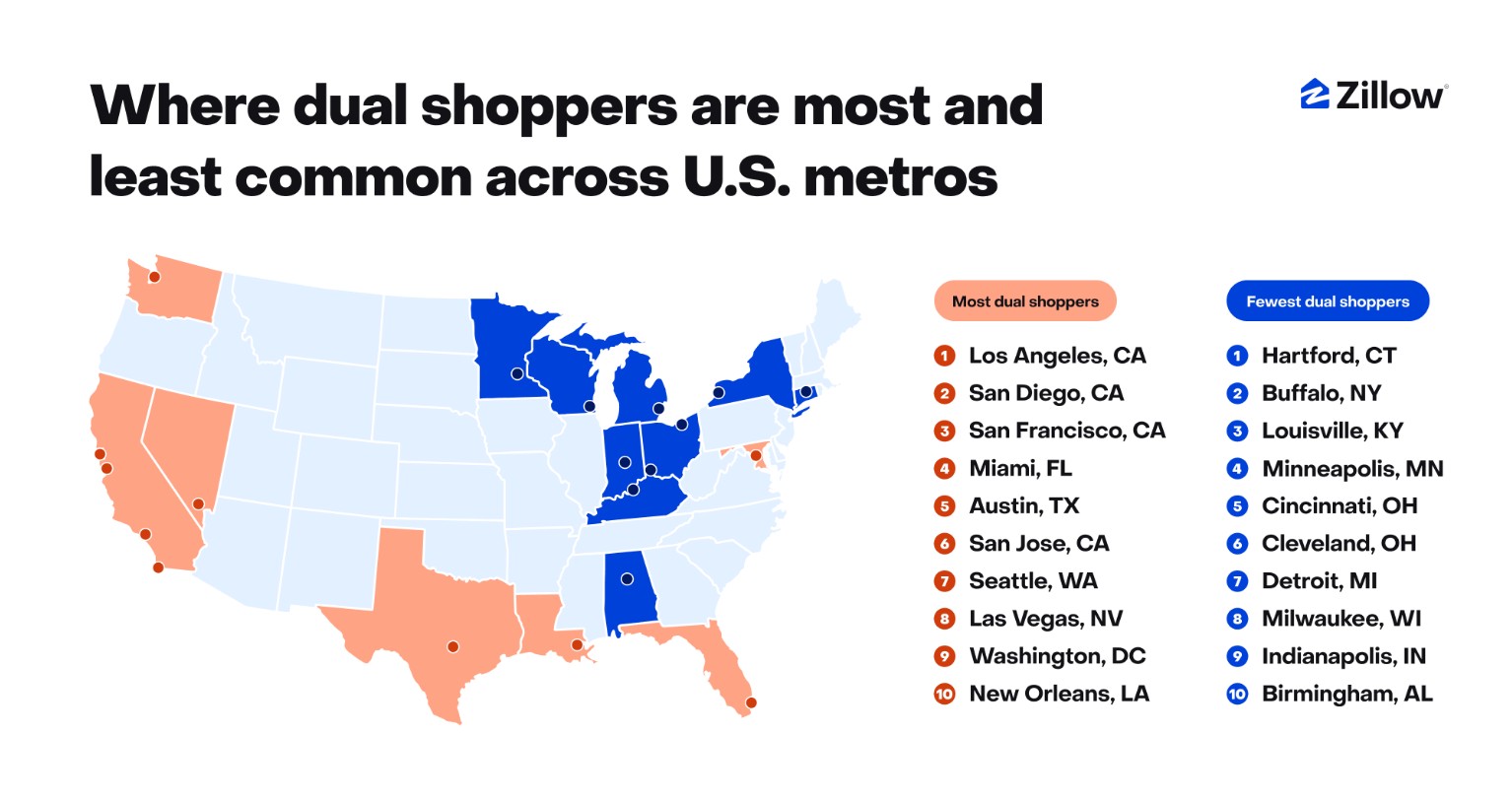
Among the 50 largest metro areas in the U.S., California—known for its affordability issues when it comes to housing—largely dominates the top 10 list of where dual shopping is the most prevalent, claiming four spots. San Jose specifically has the largest gap in payments between renting and owning at $3,438.
The West, including the four California spots, claims six of the top 10 spots, as the whole region continues to struggle under the weight of housing affordability challenges.
Here are the top 10 metro areas where dual shopping is the most prevalent:
| Metro area | Share of dual shoppers | Median monthly payment gap | Years to save up for buying a home | Median square footage gap |
| Los Angeles, California | 12% | $2,174 | 18.91 | 219 |
| San Diego, California | 10.8% | $1,724 | 16.23 | 200 |
| San Francisco, California | 10.1% | $2,212 | 15.93 | 215 |
| Miami, Florida | 9.4% | $622 | 11.06 | 160 |
| Austin, Texas | 9% | $880 | 8.17 | 207 |
| San Jose, California | 9% | $3,438 | 18.58 | 145 |
| Seattle, Washington | 8.5% | $1,292 | 12.73 | 199 |
| Las Vegas, Nevada | 8% | $510 | 10.16 | 87 |
| Washington, D.C. | 7.6% | $717 | 8.71 | 190 |
| New Orleans, Louisiana | 7.5% | $521 | 7.80 | 362 |
For many of the top 10 markets with more affordable for-sale inventory, the share of dual shoppers remains under 5.5%. Specifically, three of those markets are the only markets out of the 50 largest in the U.S. where the payment gap between renting and owning actually lies in favor of owning: Detroit, Michigan ($56 cheaper to own); Cincinnati, Ohio ($28 cheaper to own); and Buffalo, New York ($16 cheaper to own).
Here are the top 10 metro areas where dual shopping is the least prevalent:
| Metro area | Share of dual shoppers | Median monthly payment gap | Years to save up for buying a home | Median square footage gap |
| Hartford, Connecticut | 4.2% | $333 | 7.82 | 356 |
| Buffalo, New York | 4.3% | -$16 | 7.33 | 252 |
| Louisville, Kentucky | 4.3% | $131 | 7.09 | 278 |
| Minneapolis, Minnesota | 4.6% | $182 | 7.48 | 458 |
| Cincinnati, Ohio | 4.7% | -$28 | 7.09 | 272 |
| Cleveland, Ohio | 4.8% | $19 | 6.60 | 385 |
| Detroit, Michigan | 4.8% | -$56 | 6.51 | 418 |
| Milwaukee, Wisconsin | 4.9% | $183 | 9.23 | 289 |
| Indianapolis, Indiana | 5.1% | $36 | 6.93 | 349 |
| Birmingham, Alabama | 5.3% | $68 | 6.48 | 297 |