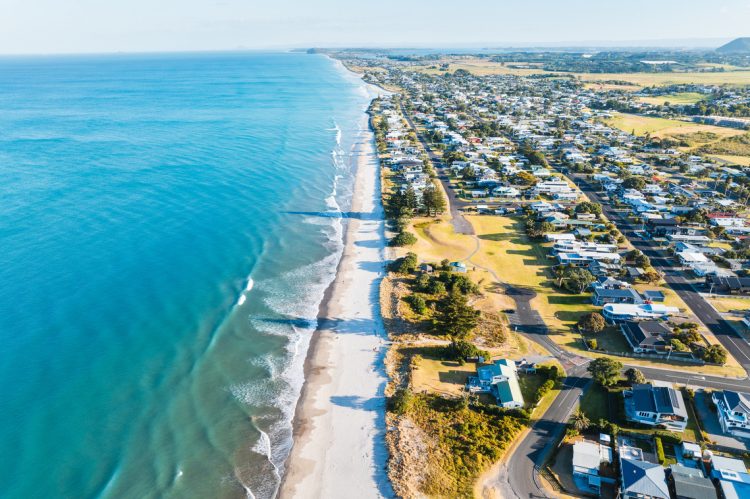
If you’re a homeowner who thinks about risk, then you’ve probably looked into where your home sits relative to sea level. What about homes right on the coast? As climate change raises global temperature and sea levels continue to rise, coastal properties are naturally at the most risk. A few high-profile studies have even claimed that there is systemic risk to real estate markets, based on a greater frequency of extreme weather and other subsequent ripple effects.
Is that deterring people from buying oceanfront?
Agents who work in these areas largely indicated that while buyers may know the risks, they aren’t necessarily basing their home-buying decisions on what may happen decades from now.
“I think (rising sea levels are) on the mind of anyone who has their eyes open and is paying attention,” says Will Langley, principal broker of Berkshire Hathaway HomeServices Keys Real Estate and Knight & Gardner Realty in Florida’s Key West. “I talk to people who’ve been here (in the Florida Keys) for five or 10 generations,” Langley said, adding that even those who have lived there for multiple generations can’t remember tides as high as current levels.
However, Langley also believes Florida is taking proactive steps to address these issues, from elevated properties with more resilient construction to one-way sewer valves to prevent backflow from those high tides.
Missy Dye, an agent with The Gatt Team at William Raveis in Rowayton, Connecticut, tells RISMedia that while her market sees similar flooding concerns as down in Florida, it remains a “highly competitive” market.
“The demand remains exceptionally strong,” Dye says. “The limited inventory is definitely sustaining that competition, but these are clients that are making significant investments, whether it’s a first-time homebuyer or they’re transitioning to a new state in their life and changing location.”
Asked if these buyers inquire not just about large storms or flooding, but about the risk of slowly rising sea levels, Dye answered this is not a question she typically faces.
“I would say that (buyers are) aware that flooding can be an issue, but I don’t think they’re looking at it from a global climate perspective. They’re looking at it from a more localized case-by-case basis in the areas where they are,” Dye explains, adding that the coastal lifestyle remains attractive, and the strong competition can make buyers jump despite the risk. (Some do their research on the risks, Dye says, and some don’t, which can lead to transactions falling apart.)
Tara Powell, a North Carolina real estate broker and owner of the REMAX-affiliated NC Coastal Team, also said that questions about a coastal home’s long-term location risks are not one she typically gets from buyers.
“Most people aren’t thinking 30 or 50 years out. They’re focused on what ownership looks like over the next five to 10 years and what the real, practical risks are during that time,” explains Powell.
“Where the conversation does go is toward things like flood zones, elevation, insurance and how a specific property has handled past storms. Buyers have seen stories in the news, like homes being swept away in places like Rodanthe, North Carolina, so it’s not that they’re unaware,” adds Powell. “They just want to understand what applies here versus what they’re seeing elsewhere.”
On the horizon
Florida is known for dangerous tropical storms, and Langley also told RISMedia that more instantly severe flooding and storms is what’s on homeowners and buyers’ minds, too.
“I would say the majority of our properties (in the Florida Keys) are not on the water, but still have the same issues that coastal properties have. And that is, we have to build our houses stronger. We have to have a building hold up to 200 mile an hour winds,” said Langley.
The increase of climate-driven natural disasters has brought the price of home insurance up nationwide; as Powell notes to RISMedia, a storm in one region can impact insurance prices in other states as large, nationwide insurance firms “(spread) that risk out. So even if we didn’t take a direct hit, buyers here still feel it.”
Langley offers firsthand insight into what buyers are seeing in the Florida Keys for insuring their homes.
“You’ve got to have flood insurance, you’ve got to have windstorm insurance, which is like your hurricane insurance, and then you have to have another policy, like your general homeowner’s liability fire policy. Whereas in the real world, you usually just have that one policy,” explained Langley.
He noted that the Keys sees “(almost) zero first-time homebuyers,” and when buyers are wealthy enough to self-insure their properties, they do so “because (it has) gotten so outrageously difficult to obtain insurance for high-end properties and so expensive to insure these high-end properties,” Langley added.
“We’re not even seeing prices go down because it’s expensive to insure. We’re just seeing a whole different type of buyer buying those types of properties that are self-insuring if they have the ability to,” Langley noted.
Powell also said insurance “definitely comes up in almost every buyer conversation,” and that buyers have become in general more conscious in researching flood zones “because it directly impacts what they’re going to pay.”
“(The cost of insurance) doesn’t necessarily stop people from buying, but it absolutely influences what they choose and how they look at a property,” said Powell. “Owning a beach property has always been more expensive, but between rising home values and higher insurance costs, it’s definitely changing who can make that work today.”
Dye, noting that part of an agent’s job is “due diligence,” in looking to a property’s past insurance claims, base elevation, etc., said there is an “opportunity to discuss insurance, even when there’s not a requirement from a lender to have the flood insurance,” due to the financial risks a potential flood poses to coastal buyers. Highlighting William Raveis’ insurance arm, Dye said she will often refer clients to in-house insurance brokers for full education.
“(Specialists) can actually provide real property-specific quotes and not estimates and kind of walk the buyers through getting private insurance versus FEMA, what the insurance covers, the limitations,” said Dye. “And I think that being able to have someone that I trust and work with that can help provide actual numbers and resources and data, that really makes a big difference in helping clients feel confident in the decisions that they’re making.”
What about coastal real estate professionals’ confidence? Are they becoming uncomfortable working in this niche when rising risks of flood, storms, sea levels and insurance costs could drive buyers away? Not any of the ones that RISMedia spoke to.
“I think good agents are aware of (rising sea levels) but not necessarily worried in a way that changes their commitment to the coastal market. Coastal real estate has always come with layers that inland markets don’t have. Storm risk, insurance (and) flood zones. Those aren’t new conversations. What has changed is the level of education buyers expect, and I think that’s a positive shift,” said Powell, who maintained the demand for coastal property will never vanish. “If anything, we’re leaning further into being a trusted resource within (our niche). Our job is to help clients understand the nuances so they can make confident decisions, not to avoid the market altogether.”
Langley also said, at this time, the flooding risks of rising sea levels do not make him concerned about the niche he’s built out in his business. “When the lenders stop lending for three years because they’re afraid (the property is) going to go underwater, then I think we’re going to see a real thing,” he said, but that point hasn’t come yet.
“I think that this coastal niche is really, it’s strong, it’s only continuing to get stronger because it’s limited,” said Dye. “(Rising sea levels is) not something that I’m concerned about. I think it’s important for all of us to be aware and to be informed, certainly being able to guide our clients, whether they’re buyers or sellers, as things change and evolve is certainly important.”