


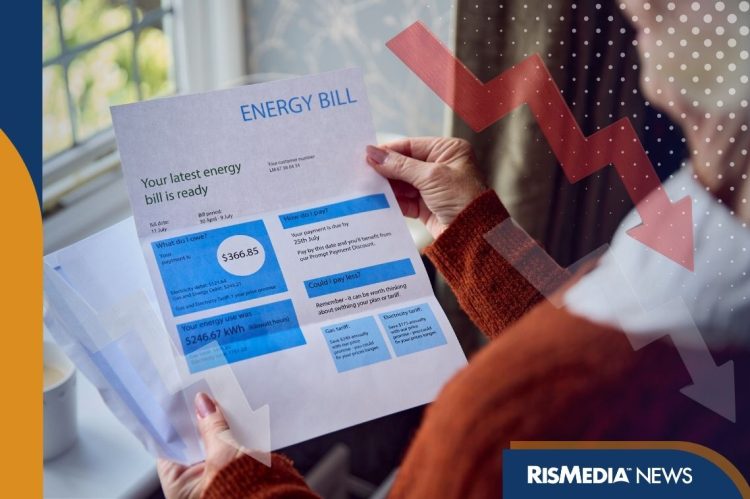
As many Americans blasted their ACs and took to the roads for summer vacations in July, the cost of energy decreased slightly while inflation overall rose slowly.
For the month of July, the Bureau of Labor Statistics (BLS) reports that the Consumer Price Index (CPI) increased slightly by 0.1% on a seasonally adjusted basis. This marks the start to slow growth after June’s CPI fell by 0.4%. On a year-over-year basis, the all-items index rose 3.4% before seasonal adjustment.
The slight uptick is being closely watched as economic pressures weigh on consumers, particularly after the BLS’s downward employment report in July, where the nation saw a decrease in 23,000 payrolls.
Bright MLS Chief Economist Lisa Sturtevant said in a statement that the modest tick downward was “prompted by a temporary dip in energy prices last month.”
The report states that the energy index decreased by 1.5% month-over-month, accounting for one of the bigger changes in July. Breaking it down further, both energy commodities and all types of gasoline decreased by 2.9%. Inversely, energy services increased by 0.3%, with utility (piped) gas services making up the biggest increase at 0.7% on a seasonally adjusted basis.
Realtor.com® Senior Economist Jake Krimmel said in a statement that September may not see the same housing activity as last year.
“The more immediate question is mortgage rates, which hit another 2026 high last week at 6.69%,” he said. “Rates are now higher than a year earlier for the first time since October 2025, which means we are not set up for the kind of September sales surge we saw in 2025.”
All items less food and energy—or core goods—increased 0.2% between June and July. Categories within core goods saw very slight growth month-to-month, but medical care commodities was the only category to fall, declining by 0.6% on an unadjusted basis.
“Two things to watch for next month’s numbers are gas prices and core goods,” Krimmel added. “July’s headline CPI improvement was helped by an early-month decline in gas prices that has since reversed, a development that will matter more for consumers and politicians than Fed policymakers or financial markets.”
The big picture
Researchers and economists have also dived into the question of power and how it impacts the housing market ever since AI and data centers started taking center stage. A recent report by Realtor.com® mentions that seven of the major AI companies pledged to cover power and infrastructure expenses, rather than passing it on to local residents.
Although energy prices have dropped in the last month, home prices and mortgage rates are still largely cutting into any breathing room buyers have been looking for.
Sturtevant noted, though, that “inflation is moving further away from the Fed’s 2% target, and this increase has at least two implications for the housing market.”
“First, it is harder to see a path forward for the Fed to lower interest rates if inflation remains above that target. Labor market conditions have softened, which complicates the decision, but inflation is still the primary concern for the Fed. A rate hike could be just as likely as a rate cut this year,” she said in a statement.
Currently, the CPI’s shelter index (which is much more sensitive to rents, and is largely a lagging indicator) remained unchanged at 0.1% from June to July, and accounted for roughly two-thirds of the monthly all items increase according to the report. Should the price of everyday goods continue to increase, realtors may continue to witness a downward trend for existing-home sales which declined by 1.7% in the last month.
“The bottom line is that consumers are still facing elevated inflation, higher mortgage rates, and falling real earnings, which slipped 0.1% in July,” Krimmel said. “Together, this is a rough combination for affordability and housing demand heading into fall, a time when buyers can often get the best deals too.”
For the full CPI release, click here.