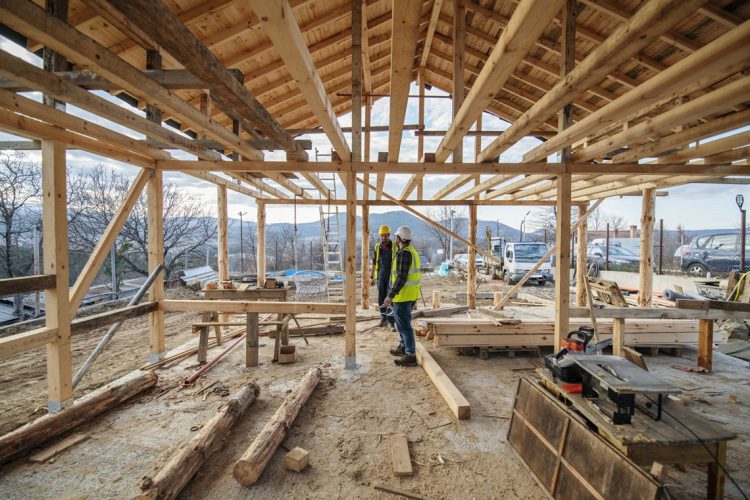
Multifamily construction remains on the rise in the face of headwinds in the single-family construction market, according to the latest data from the National Association of Home Builders (NAHB).
The NAHB Home Building Geography Index saw multifamily construction grow in six of the seven geographic categories in Q2. Some of the largest growth was in large metro core counties, which rose 11.6% year-over-year, followed by a 10.3% increase in non-metro micro counties.
The market shares for multifamily construction shaped up as follows:
- 35.4% in large metro core counties
- 27.3% in large metro suburban counties
- 3.3% in large metro outlying counties
- 24.3% in small metro core counties
- 5% in small metro outlying areas
- 3.5% in micro counties
- 1.2% in non-metro/micro counties
NAHB Chief Economist Robert Dietz noted that the growth in multifamily “suggests a possible geographic shift away from the outlying markets that led growth a year earlier.”
Single-family construction remains troubled
In the face of many challenges in the market, single-family home construction declined across several metro categories in Q2. The sharpest decline was in large metro urban core counties, which saw its fifth straight monthly decline at a drop of 13.9%. Overall, single-family construction in non-rural areas fell 7.3%.
“Single-family construction remained under pressure in the second quarter, but the rate of decline improved in six of the seven geographic categories,” said Dietz.
Despite the fall, large metro urban core counties did see a slight improvement from their 15.8% decline last quarter.
On the other hand, there was a slight increase of 0.9% in small metro outlying counties, rebounding from a 1.4% decline in Q1.
NAHB Chairman Bill Owens noted that “builders are finding more opportunities in smaller metro areas, where developable land is generally more available and less expensive.”
The market shares for single-family construction shaped up as follows:
- 14.6% in large metro core counties
- 24% in large metro suburban counties
- 9.4% in large metro outlying counties
- 29.4% in small metro core counties
- 10.9% in small metro outlying areas
- 7.1% in micro counties
- 4.5% in non-metro/micro counties