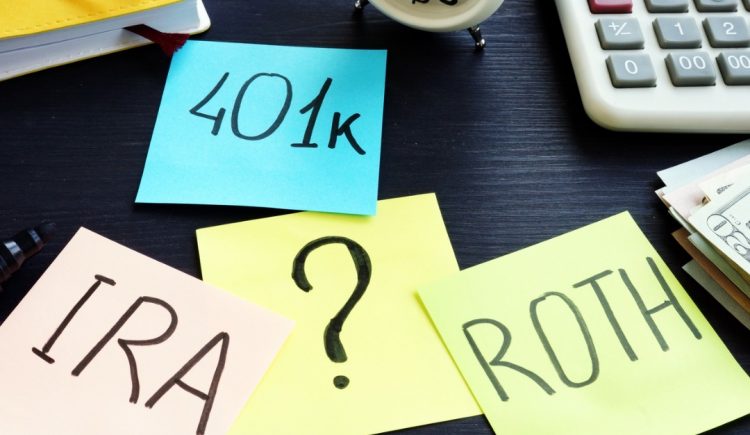
If you’d like to start investing for retirement, your options include a traditional and Roth IRA and a 401(k). In some cases, you may decide to open more than one account.
How IRAs and 401(k)s Work
An IRA is an individual retirement account that you can set up on your own, not through your employer. The Internal Revenue Service sets annual contribution limits, which are $6,000 in 2021, or $7,000 if you will be 50 or older by the end of the tax year.
With a traditional IRA, you will be able to deduct contributions on your federal tax return and you’ll have to pay taxes when you withdraw money later. With a Roth IRA, you will pay taxes on contributions now and be able to withdraw money tax free when you’re retired. To contribute to a Roth IRA, your modified adjusted gross income must not exceed limits that are based on your tax filing status.
Think about your current earnings, tax bracket and what you expect your future income and tax bracket to be. If you think you’ll be in a higher tax bracket later, a Roth IRA may be a better choice. If you think you’ll be in a lower tax bracket when you’re retired, you may prefer a traditional IRA.
If you select a traditional IRA, you’ll have to take required minimum distributions every year after you reach a specific age, which is set by law and may change in the future. With a Roth IRA, you won’t have to take annual distributions if you don’t want to.
401(k)s have higher contribution limits than IRAs. In 2021, you will be able to contribute up to $19,500 to a 401(k), or $26,000 if you will be 50 or older. Many companies offer employees a 401(k) with a match. That can substantially increase the total amount put toward retirement.
How to Choose a Retirement Account
If your employer offers a 401(k) with a match, take advantage of that and contribute enough to get the maximum match. That extra money can make a big difference in the long run.
If your company doesn’t offer a 401(k), you may want to open an IRA. Think about the tax advantages of a traditional vs. Roth IRA to figure out which would be better for you. You may decide to contribute to both, but the total amount you contribute can’t exceed the annual limit for an IRA.
You may decide to contribute to both a 401(k) and an IRA. For example, you may want to put enough money into a 401(k) to get the maximum match from your employer, then contribute additional funds to an IRA.
Get Professional Advice
Your age, number of years until retirement, income, current tax bracket and amount of money available to contribute will influence your decision. You should also consider the fees associated with various types of retirement accounts. If you need guidance, contact a financial planner to get advice tailored to your specific situation and goals.