Traditionally, spring has meant sunshine and showers, flings and flowers.
It also has meant—to real estate professionals at least—open houses, as buyers emerge from hibernation to peruse a blossoming world of new listings and real estate agents ramp up in preparation for the busiest time of the year. But in 2022, with limited inventory and new technologies that can at least partially substitute for a traditional walk-through, does the open house even exist? Are buyers still ravenously descending on every property as soon as it hits the market?
About a 90-minute drive to Manhattan (without traffic) the town of Fairfield, Connecticut has traditionally been seen as a stretch for the traditional New York commuter. With a median listing price of $775,000 this year, according to Realtor.com, a 2,300 square-foot four-bedroom ranch-style home in a quiet neighborhood falls squarely in the “affordable” category for this market, listed at $599,000.
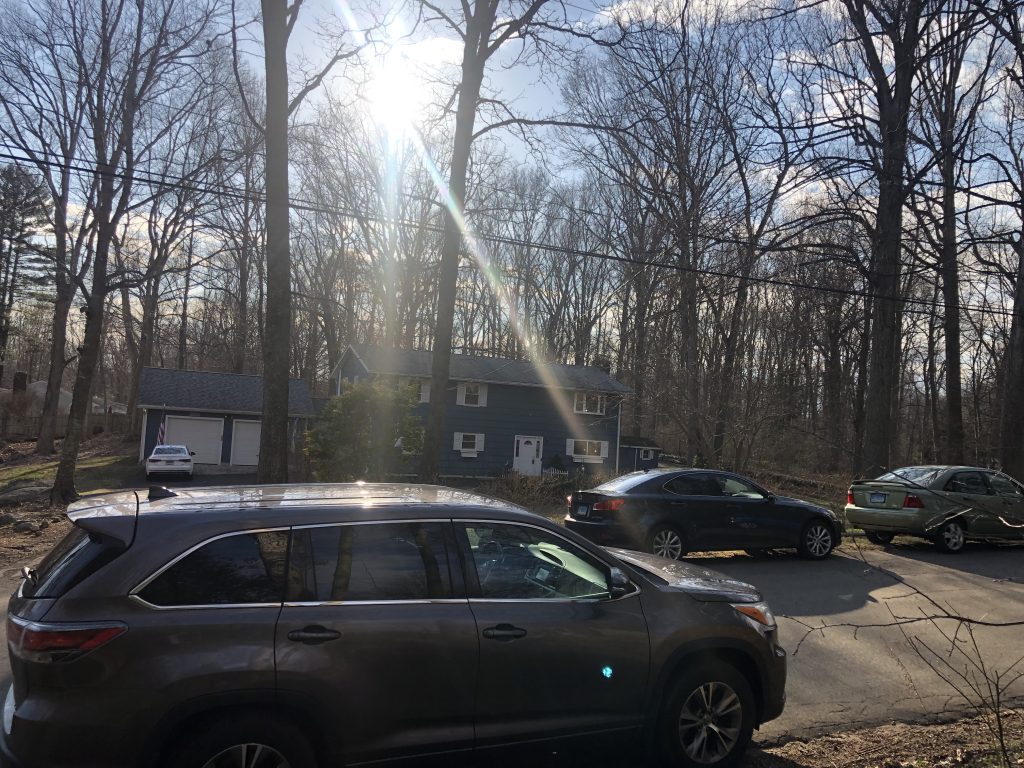
Over the course of four hours split between a Thursday and Sunday in early April, no one shows up to this property’s open house, though it receives three offers within five days of listing, all in the $530,000 to $560,000 range.
Paul Ferreira is the listing broker, owner of a RE/MAX franchise in nearby Trumbull. He says he is not changing his strategy for running open houses this spring, despite also predicting that the market is on track for a major shake-up in the coming months.
“We’ve been seeing a definite slow-down,” Ferreira says. “We haven’t seen as many bidding wars in the last four weeks as we’ve seen in the last nine months. We’re definitely starting to see a slowdown in that aspect, of people paying 8-12% over asking to get the houses.”
“I’m not saying it’s not happening,” he adds. “I’m just saying it’s not happening as much.”
Another house visited by RISMedia sits a little further out, in the more rural, coastal exurb of Madison, where bucolic country roads wind through lines of trees, and looming old-money beach mansions offer scintillating views of the Long Island Sound.
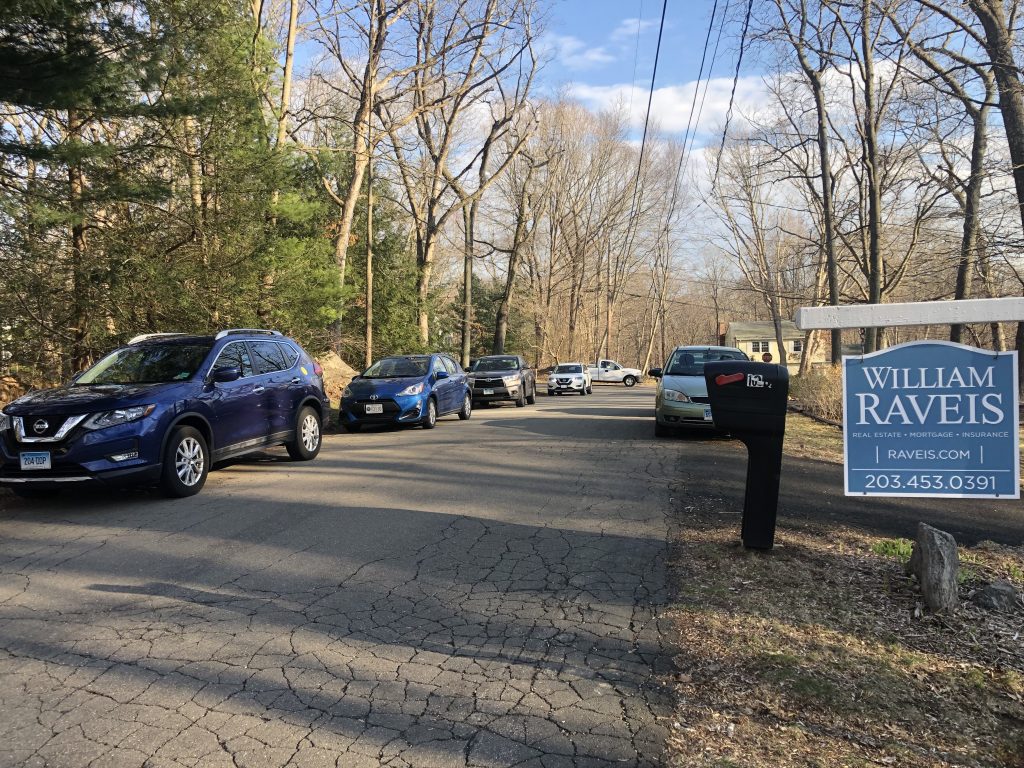
Victoria Tavares is a veteran agent with William Raveis. On a Friday afternoon in late March, a line of cars already threatens to clog up the narrow country road in front of a modest 2,100 square foot ranch sitting on just under an acre of land (which includes a small pond and well-maintained garden). Tavares is the listing agent for this home, priced at $399,000, and she receives six offers by the end of the weekend—all well above asking.
“It was crazy—the sellers did accept an offer, but I still have buyers and agents reaching out to me to see the property,” Tavares says.
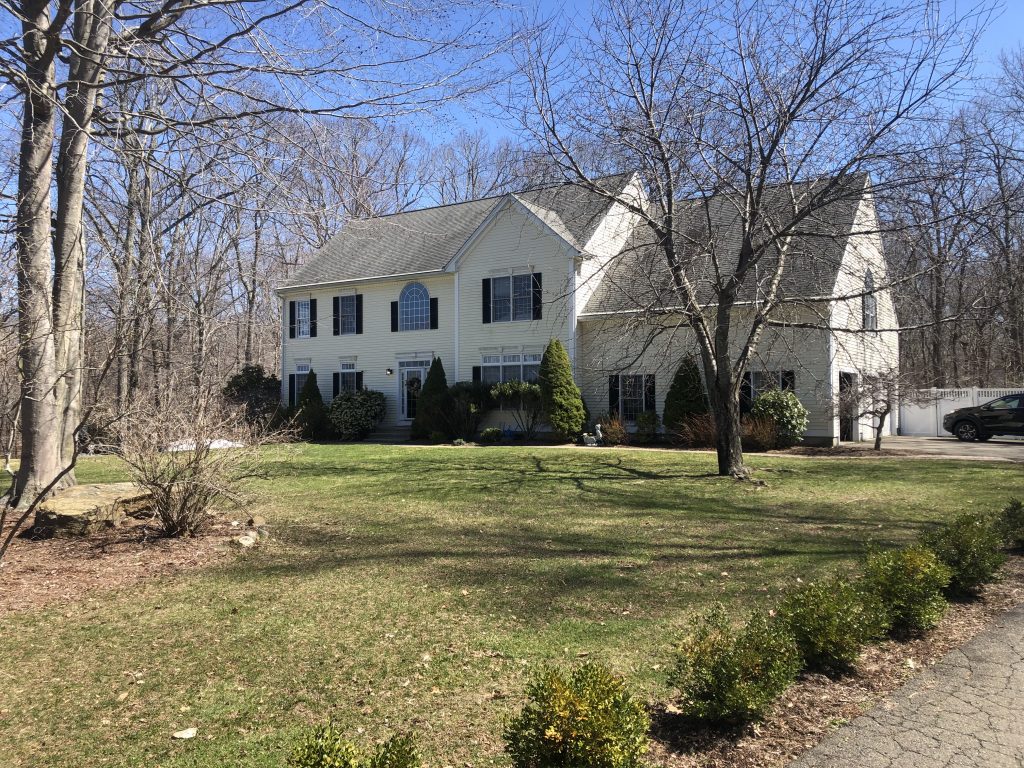
A little closer to the city of New Haven to the west in the town of Guilford sits a significantly larger home in a brand-new community with wide, well-paved streets—a much more suburban feel, though still removed from any sort of downtown or urban center. At nearly 4,000 square feet, this colonial is listed for $750,000, and offers a wine cooler, a finished basement, nine-foot ceilings and a unique playroom/home office wing connecting a wide-open well-lit space set with cubbies and playmats with a cozy work-from-home space.
This home was also listed as “pending” two days after the open house, which drew a large number of families with young children. The agent at the showing declined to speak with RISMedia and only gave a first name. Messages left for the listing agent were not returned at press time.
Vibe check
It is difficult, and probably unwise to try to draw broad conclusions from a tiny sample size in an even smaller geographic area. The Northeast has struggled even more than some with low inventory, and many other factors are likely to make the market in this area unique.
That being said, though, some of the storylines and stereotypes of the current wild market were on full display at these homes, even as Tavares and Ferreira disagreed—to some degree—on the likely path ahead for real estate.
“Most buyers were saying they’ve been searching, they’ve been making offers and they’re just being outbid by higher offers,” Tavares reflects. “Most of the buyers seem pretty urgent…they’ve definitely been doing it a while.”
At least 25 groups show up to the Madison open house in the first hour, a good mix of younger couples, families and a few older couples.
A younger couple who only gave their first names—Jeff and Alyssa—showed up early and left Tavares’ open house relatively quickly. Jeff says that the couple are in their third year of house-hunting. He described the process as “a little discouraging,” after putting in six or seven offers just recently, all at or above asking price, often beat out by “corporations.”
The couple had hoped to purchase a multi-family closer to the urban center in New Haven and make some rental income before selling to fund a single-family home that they could start a family in—something they had hoped would only take three or four years in total
“I would say broadly, my time frame has kind of run out,” Jeff quipped.
Another couple, who declined to give their names, had recently sold their house in the affluent and posh suburb of Darien—a quick hop from Manhattan, where the median listing price for a home is $1.7 million—and were looking to downsize.
They were listing their own home as an “office exclusive” and expected a deal to go through within days, they say. More than an hour’s drive into what they describe as “country living,” the couple say they are excited for the opportunity to pay significantly less for a similar-sized home, and want to escape the intensity of Darien after their children moved out—working remotely for now, but looking ahead to retirement.
Tavares says she sees plenty of mom-and-pop investors snapping up houses—mostly that are not “move-in ready.” At the $300,000 to $500,000 price range, though, houses are still getting snatched up almost instantly, and even waterfront million-dollar mansions in the area are subjected to bidding wars.
For the Fairfield house that Ferreira listed, the end result does not necessarily reflect the market. The owner of that home was an elderly woman whose children were making most of the decisions, he says. After asking if he could sell the house in 90 days (no problem, he told them), the children pivoted and claimed they needed the cash faster—within days—rejecting all the previous offers and asking Ferreria to market the home to flippers, who would pay cash.
It sold for $410,000, and Ferreira guessed the new owner would list it in a few weeks for around $800,000.
“All you can do is advise people the best course of action, but it’s up to them to take the advice,” he says.
Running a small company that still lists 60 to 100 homes a year, Ferreira says this kind of scenario is relatively uncommon and is not a reflection of the current market. He speculates that the children of this owner had personal reasons for leaving almost $150,000 on the table.
More broadly, Ferreira says that he has been advising clients to wait on home purchases (if possible) for the last eight months, deeming that prices have become inflated and that the market is destined for a pullback. He specifically refers to the fact that around 20 of his listings in the last year or so have failed to appraise—the first time that has ever happened in his career.
“We don’t think this great market is going to be as great as it has been—this is my opinion,” he cautions. “Some REALTORS® think this is never going to end, but if you lived through the 2008 correction—2006, we were seeing the same craziness.”
“Nobody’s willing to wait—everyone wants it now, now, now,” he adds.
Tavares does not express any particular concern about the market, and says that sellers are still getting almost whatever they want for their homes as buyers remain overabundant for nearly every town and niche.
“Buyers are just super eager to be the first one in the door,” she says.
Anatomy of an open house
Both Ferreira and Tavares agree that the open house is not only still a useful tool, but can be especially important for a variety of reasons in the current market conditions. Both also regularly have times on weekdays, they say, for different reasons.
Ferreira traces his open house strategy back four years ago, to an idea he borrowed from an agent in California.
“A lot of people are exhausted on the weekends from working all these crazy hours that they’re working. So we try to get one on a Thursday or a Wednesday during the week, especially once Daylight Savings time changes so it’s not as dark,” he explains. “Just like that, the people who really want to see it, they’ll get into the property. Then we do something on a Saturday or a Sunday.”
This strategy has been “extremely successful,” Ferreira says, with short weekday windows and longer times on the weekends, which can better meet the needs of more people’s schedules.
Tavares says she has seen more weekday open houses recently, and the weekday opportunities are often the busiest. It also saves a lot of time because otherwise you are spending a lot of unnecessary time scheduling showings seven days a week for a horde of desperate buyers.
“If you’re serious, come now and that’s it. And it works. Serious buyers show up,” she says. “Basically you’re finding that the second a property hits the market, you have buyers and agents calling.”
If a property is listed on a weekday, it is hard to tell people to wait until the weekend for an open house, Tavares claims. Often agents schedule evening open houses that day or the next day.
“That’s really to accommodate the demand and the desire for buyers to get in right away,” she says.
Ferreira agrees that with how busy agents are, an open house is just more efficient as long as finding buyers is easy. With the internet, he says the timing and windows for open houses can be completely flexible, and he will often schedule public open houses at the same time people request showings from him, to maximize efficiency.
“I’ll not just meet them, but if anybody else wants to come at that timeframe, they can,” he says.
All the other traditional benefits of scheduling an open house—training new agents in your brokerage, meeting new people and getting your brand out there—remain just as important as they’ve always has been, according to Tavares, even in the face of new technology and shifting consumer behavior.
“All around the board, it just kind of facilitates that entire process,” she explains.
One practice that might be new, and not necessarily welcome at open houses are attempts by other agents to sneakily poach potential clients. A man at Tavares’ open house introduces himself as the husband of another agent working in the region, and admits he regularly trawls open houses to send business her way in hopes of “an earlier retirement.”
“That is so bizarre…I wouldn’t say that is very—what’s the word—ethical?” she wonders. “That’s part of doing open houses, though. Part of that is, while we obviously require everyone to sign in, you get those people who try to slip by the sign-in sheet—not that it’s really a big deal at the end of the day, but you do kind of wonder.”
 Jesse Williams is RISMedia’s associate online editor. Email him your real estate news ideas, jwilliams@rismedia.com.