When a company’s annual report appears not long after some sort of upheaval, it’s natural that it would be inhaled by the industry’s masses like a New York Times best-seller.
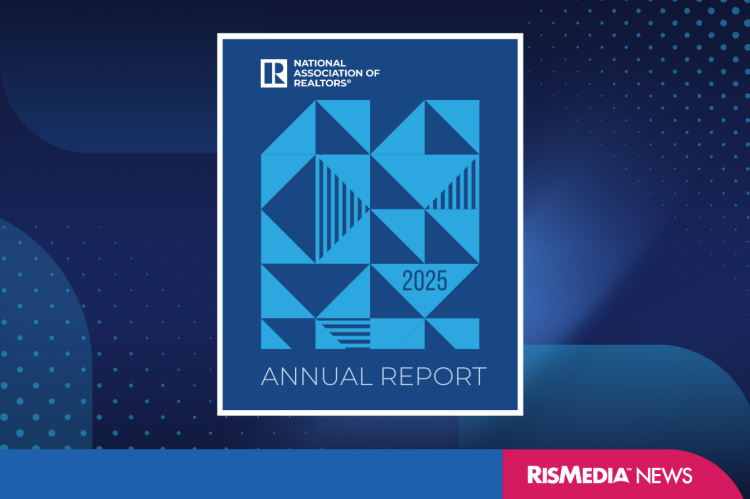
Such is the case for the National Association of Realtors® (NAR) 2025 Annual Report after the now famous Sitzer-Burnett trial outcome in late 2023, along with internal troubles that eroded the trade association’s reputation for many of its 1.5 million members.
As with many annual reports, NAR chose to look forward with optimism rather than provide perspective about what happened previously and why. The 40-page report details progress made in 2025 on 24 initiatives, and outlines NAR’s priorities for 2026, the organization stressed, underscoring a renewed focus on transparency, accountability and member value.
Including letters from NAR CEO Nykia Wright, past President Kevin Sears and 2026 President Kevin Brown, the report includes updates on efforts to modernize the association, improve the member experience and strengthen governance and operations. NAR stated in a release that the report reflects its “ongoing efforts to build a more resilient, member-focused organization positioned to support Realtors® through an evolving real estate landscape.”
The report focuses purely on the future, with little or no reflection of mistakes made in the past. Filled with impressive graphics, colors and smiling faces, it could appear to someone unfamiliar with NAR to be a forward-pointing action plan for a new business or organization, as opposed to one that dates back to 1908 and has recently weathered a storm.
RISMedia asked several leading brokerage executives for their thoughts on the report, as well as their views on how NAR is moving forward following several tumultuous years. Opinions ranged from impressed and highly optimistic to scornful and mistrusting of the country’s largest trade association.
Anthony Lamacchia, CEO and broker/owner of Lamacchia Realty, gave a thumbs up on the report, and praised how NAR has handled itself after suffering recent slings and arrows, both from within the organization as well as the greater industry at large.
“I think the annual report is great,” he says. “As far as the government affairs-related stuff, I thought it was great. They can’t put every detail in there of the staff changes they made. There were a lot of things that were done. They totally re-orged the legal department. They cut jobs and brought in a new regime. They can’t say all that in a public report. People are constantly criticizing NAR because it’s an easy target.”
Lamacchia said the decision to bring in Nykia Wright as CEO was a home run.
“Nykia is a pro,” he stressed. “She absolutely proved herself to me, and I did not say that in the beginning. She doesn’t want to waste time on stupid things. NAR got their priorities out of order from about 2020 to 2024. Nykia came in, Kevin (Sears) came in, and they fixed the damn place. There’s still work to do, but they’ve really done a lot. They had to make some very uncomfortable decisions, some of which they didn’t even love. But they did what was right for the organization. They dramatically cut the budget. And I believe they got their priorities back in order.”
Jemila Winsey, a real estate executive, operator and CEO of The Legacy Collective, a Houston-based brokerage and leadership platform, has also been impressed.
“I’m really excited about NAR’s 2025 annual report because it does something not only strategic but smart,” she says “It makes brokerage engagement a strategic priority, not a side initiative and not a checkbox but a real focus area. Priority 6.2 (Rebuild Partnership Foundations) explains that brokerages have distinct needs, and NAR’s engagement with them has been inconsistent. That’s honest. And it’s the kind of honesty that opens the door to something better.
“I’ve spent years in brokerage operations and leadership and still run a real estate company. So I’ve seen both sides of this relationship and here’s what I know: When NAR and brokerages actually work together, everyone wins. Agents get better support, brokerages build stronger infrastructure and NAR’s priorities gain traction where business actually happens.”
Rebecca Thomson, national vice president at Coldwell Banker Realty, seconds the idea that NAR’s stated priority to help agents thrive in their day-to-day business is spot-on.
“The report reflects a broader shift toward professionalism and performance,” she says. “As the industry continues to evolve, success will increasingly favor those who are adaptable, well-resourced and supported by strong operational and leadership infrastructure.
“What we’re seeing on the ground is that helping professionals succeed in their day-to-day business requires more than incremental improvement. Leaders are looking for systems and support that materially change outcomes, not just tools that help people keep up. That’s where our strategy is intentionally focused.”
Thomson also approves of NAR’s vow to meet heightened consumer needs. “The emphasis on evolving consumer expectations aligns with what we’re seeing across markets,” she says. “Clients expect more transparency, more intelligence and more value from their advisors. That raises the bar for how we support agents and leaders.”
Asked about responses to the report, a NAR spokesperson said the organization “appreciates the thoughtful feedback from brokers and members. Building trust with our members is an ongoing process that we are deeply committed to. We recognize that we must clearly demonstrate we have heard our members and are acting on their behalf.”
A differing opinion
The future-focused outlook and proactive steps outlined in NAR’s annual report did little to change how Howard W. “Hoby” Hanna IV, CEO of Howard Hanna Real Estate Services, feels. He had little interest in closely reviewing the report, his main point being that actions speak louder than written words.
“I believe that NAR at its highest level should be focused on advocacy for homeownership and housing,” he says. “Their focus should be coming up with creative ideas, hopefully working with the federal government on policy and procedures, and then on the state and local level looking at housing guidance, zoning and other things.”
Hanna warned that as consolidation of real estate companies continues, NAR’s role and importance within the industry may shrink.
“There may not be a need for NAR and for the dues agents have to pay,” he says. “There are a lot of Realtors® who volunteer their time and support NAR and support local boards. I talk to a lot of them who are very, very successful at driving the business, who don’t know what they’re paying their dues for.”
Michele Harrington, CEO of FirstTeam Real Estate, appreciated what NAR said in the report about getting back to business.
“For a long time we’ve been focused on looking good instead of actually getting results,” she says. “The job is simple: Build more homes and make it easier for people to buy them. When we lose focus on that, we become a useless organization. This housing mess didn’t happen by accident. It’s the result of bad policies that made building slow, expensive and damn near impossible. Fixing it means choosing action over approval and results over rhetoric.
“If ‘Back to Business’ means backing people who will actually vote for housing and cutting off the ones who won’t, and if we need to get down and dirty in the political swamp, then let’s go! Homeownership is too important to be polite, passive or afraid to offend.”
Winsey offers ideas she believes NAR should embrace going forward.
“There are three things that come to mind,” she says. “One is agent development that goes beyond courses. Brokerages need systems that stick, not just content agents complete and forget. Two, operational playbooks. NAR produces incredible data and the gap is turning that data into something brokerages can implement tomorrow. Third is amplification partnerships. Help brokerages use NAR messaging to recruit better, retain longer and position themselves in their markets.
“Think about it this way. NAR has the research, the advocacy muscle and the brand equity. Brokerages have the daily agent relationships, the market intel and the execution capacity. When those two forces align, you get something rare: strategy that actually moves. This isn’t about NAR pushing initiatives down or brokerages operating in isolation. It’s about co-creating value that makes both sides more effective. That’s the opportunity NAR has set up for itself. And if they execute on it, the entire industry gets stronger.”
For its part, NAR is asking for patience from members and the real estate community at large as promising more shifts in strategy and structure after all the recent turmoil
“NAR’s first Annual Report is an early example of our renewed commitment to accountability and transparency, outlining meaningful steps to strengthen governance, mitigate risk, and refocus on delivering value to REALTORS® and brokers,” the NAR spokesperson said. “While there is more work ahead, we believe the progress reflected in the report and our 2026–2028 Strategic Plan demonstrates that NAR is taking concrete steps to strengthen the organization and position it for long-term stability and success.”