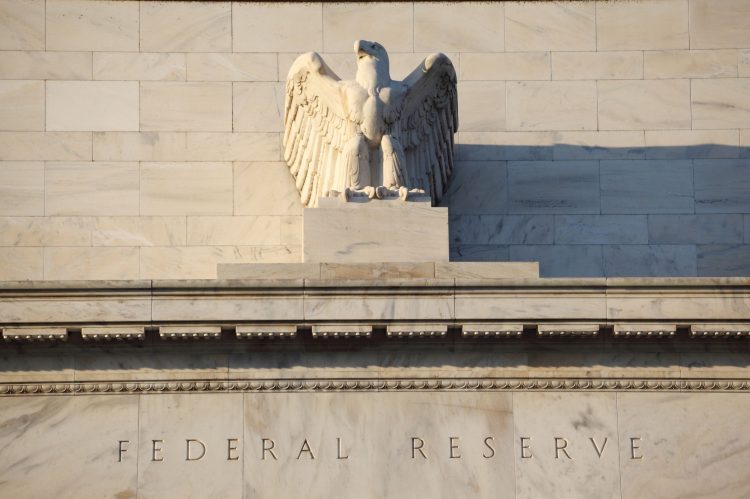
At the January 2026 Federal Open Market Committee (FOMC) meeting, the voting body chose to leave interest rates unchanged. The Federal Reserve’s dual mandate of price stability and maximum employment have been at crossroads the past few months; inflation has trickled up, but the labor market shows signs of softness.
At the January meeting, concerns about inflation won, as documented in the now-published minutes—which also suggest more interest rate cuts may be a ways off.
“A number of (the) participants judged that additional policy easing may not be warranted until there was clear indication that the progress of disinflation was firmly back on track,” the minutes read. Additionally, the notes indicated that many participants wanted to stress that if disinflation doesn’t continue, hiking interest rates may be the appropriate course of action.
The minutes did not cement that this will happen, but merely that the Fed’s decision-making is open and will change based on available economic data. But the debate further underscores how muddy the economic picture currently is, with significant disagreement among members on the proper path for rates in 2026.
Per the minutes, the majority of voting members voted to maintain current interest rates due to a belief that, after three consecutive cuts at the end of 2025, monetary policy had reached a “neutral” place, i.e., a strong position for policymakers to assess future action based on where economic data turns over the next few months.
Fed Governors Stephen Miran and Christopher Waller dissented and pushed to lower interest rates further, per the minutes, due to a belief that there are still risks to the labor market and that the current interest rate is still slightly restrictive.
Miran and Waller have been among the most dovish voting members of the FOMC; Miran voted for steeper cuts at previous FOMC meetings in January, while Waller has maintained that he is more concerned by the labor market than inflation.
“Employers are reluctant to fire workers, but also very reluctant to hire,” said Waller in a January statement explaining his dissent. “I have heard in multiple outreach meetings of planned layoffs in 2026. This indicates to me that there is considerable doubt about future employment growth and suggests that a substantial deterioration in the labor market is a significant risk.”
The minutes suggested members believe the labor market might be stabilizing; for instance, unemployment in December (coming in at 4.4%) was unchanged from where it was in September.
However, as Waller’s statement noted, both layoffs and hiring are low. Per the Fed’s business contacts, low hiring is attributed to employers’ feelings of uncertainty both about the general economic outlook and to what extent artificial intelligence technology will shift the labor market.
“Some participants pointed to the possibility that a further fall in labor demand could push the unemployment rate sharply higher in a low-hiring environment or that the concentration of job gains in a few less cyclically sensitive sectors was potentially signaling heightened vulnerability in the overall labor market,” read the minutes.
The Bureau of Labor Statistics’ latest jobs report (published after the FOMC) could support this conclusion, as it found that employment gains were largely concentrated in the healthcare sector.
On the flip side of the Fed’s mandate, notes on the meeting suggested members are relatively optimistic about inflation in the long-term. The Fed’s long-touted goal has been 2% annual inflation, and the minutes recounted that members are confident about reaching that goal—though the distance and difficulty of the path there is more uncertain.
The FOMC body attributed recent rises in core price inflation during 2025 to tariffs, which are believed to have caused a one-time bump that will subside. Fed Governor Lisa Cook made comments to this effect about tariffs in February, shortly after the FOMC met.
“Ongoing moderation” in housing services inflation was noted as likely to drive downward pressure on overall inflation. Recent housing reports, such as the National Association of Realtors®’ (NAR) quarterly report, did note a deceleration in pricing at the end of 2025.
One of the encouraging signs of inflation was the progress on core personal consumption expenditure (PCE) inflation was 2.8% in November, compared to 3% the previous year. The Consumer Price Index (CPI) also showed signs of disinflation in December 2025, a trajectory that continued in the January 2026 CPI, published after the January FOMC.
“Several participants commented that further downward adjustments to the target range for the federal funds rate would likely be appropriate if inflation were to decline in line with their expectations,” the minutes read. Shortly after the FOMC, Fed Governor Michelle Bowman predicted three rate cuts to come in 2026.
Kevin Warsh, nominated by President Trump to succeed Jerome Powell as Fed chair when Powell’s term ends in May, has also indicated he would push for lower interest rates, citing the advancement in AI technology as “structurally disinflationary,”
Per CNBC, futures traders are currently projecting the next interest rate cut will come in June. The next FOMC meeting is scheduled for March 17-18, 2026.
For the full recap of the Fed Minutes, click here.