RISMedia
  • News
  • Premier
  • Reports
  • Events
  • Power Broker
  • Newsmakers
  • More
    • Publications
    • Education
No Result
View All Result
  • Agents
  • Brokers
  • Teams
  • Marketing
  • Coaching
  • Technology
  • More
    • Headliners New
    • Luxury
    • Best Practices
    • Consumer
    • National
    • Our Editors
Join Premier
Sign In
RISMedia
  • News
  • Premier
  • Reports
  • Events
  • Power Broker
  • Newsmakers
  • More
    • Publications
    • Education
No Result
View All Result
RISMedia
No Result
View All Result

Higher Mortgage Rates Were Supposed to Cool Home Prices. How ‘Rate Lock-In Effect’ Got in the Way

A new in-depth report from Harvard casts doubt on the idea that falling rates will cause a surge in housing activity, with portable or adjustable mortgages a less than ideal solution.

Home Industry News
By Deborah Kearns
March 12, 2026, 1 pm
Reading Time: 3 mins read
rates

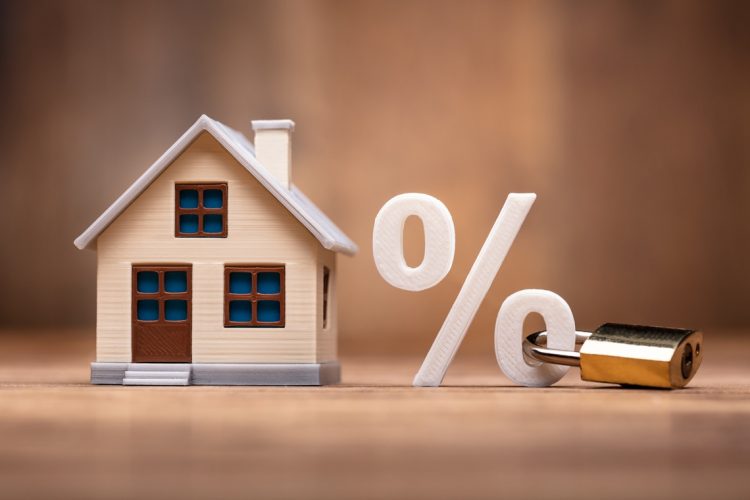
House Model Near Percentage Sign With Keypad Lock Over Wooden Desk

When the Federal Reserve began aggressively raising interest rates in 2022, many analysts expected home prices to fall. But they didn’t. Instead, they soared. A new analysis from the Joint Center for Housing Studies (JCHS) at Harvard University helps explain why—and the answer is summed up in mortgage rate locks.

From the start of 2021 to the end of 2023, interest rates on new 30-year fixed-rate mortgages climbed from 2.5% to nearly 8%, according to Harvard researcher Justin Katz, who presented the JCHS research during a March 6 webinar. A 2022 Moody’s Analytics forecast projected that higher rates would dampen homebuyer demand, lowering national home prices by 10%. Instead, owner-occupied home prices climbed 17% more than rents during that period, JCHS reported.

“A 1 percentage-point decrease in the average outstanding mortgage rate in 2021 increased nominal house price growth by 8 percentage points between 2021 and 2023,” according to the JCHS blog post. “Moreover, rate lock affects prices much more in markets where the supply of new housing is constrained.”

Katz explained the double-edged sword of rate locks. Higher interest rates meant fewer homes were available for sale because homeowners who had locked in low-rate mortgages were hesitant to move, creating a “lock-in effect.”

By the time rates peaked in October 2023 at 7.79%, the principal and interest payment for the median-priced home had jumped 78%, according to the Consumer Financial Protection Bureau (CFPB).

“If there are fewer home sellers, then there are also fewer homebuyers because there are fewer people shopping for new homes. Rate lock reduces existing homes—both supply as well as demand. And although this will decrease transactions, it doesn’t obviously impact house prices.” 

The financial stakes for a typical homeowner were substantial, Katz noted.

“A value of 0.1 means that the present value incentive to stay in your home rather than selling due to your fixed-rate mortgage increased by 10% of your property value between 2021 and 2023. That’s like a $30,000 incentive to stay rather than move if you have the median home value of about $300,000.” 

The lock-in effect explains 40% of the gap between the predicted decrease in home prices and the observed price growth between 2021 and 2023, by reducing moves from owning to renting—a force that pushed the price-to-rent ratio higher.  

But Katz stopped short of placing the entire blame for higher home prices on the rate-lock effect. Other forces, Katz said, included shifting preferences for owner-occupied versus rental housing and constrained supply.

“If instead it’s very easy to build, then builders can essentially provide the incremental unit of available supply and the decisions of existing owners aren’t going to affect prices very much.” 

The Harvard study implies the affordability crisis was, in some ways, inevitable after the Fed slashed rates, causing an uptick in homebuying and refinances. Now, as the Trump administration grapples with addressing housing affordability as a key policy issue, the industry is examining ways to help ease the pain.

One recommendation: portable mortgages. However, Katz argues that portable mortgages would do little to ease home prices. Why? Because portability eliminates rate lock only between owner-occupied units—not the own-to-rent margin that actually drives aggregate prices.

“The key friction that determines the price impacts of rate lock isn’t that mortgages are non-portable or non-assumable, but rather that mortgages have a fixed interest rate.”

Some in housing have touted adjustable-rate mortgages as another solution. Katz cautioned there’s a trade-off with the low initial fixed-rate period that gives homeowners an entry point into owning.

“Even if adjustable-rate mortgages make prices more responsive to monetary policy, for households, they might not like the greater uncertainty in terms of what their monthly payments are going to look like,” he said.

At the start of 2026, U.S. home prices are showing signs of cooling, with many notable price declines in areas like Florida and Texas that saw a boom in demand just a few years ago. The National Association of Realtors® is projecting that home-price growth will moderate to 2% to 3% in 2026, with inventory levels roughly 20% above those seen a year ago.

The overwhelming consensus in housing is that meaningfully addressing housing affordability requires attacking supply constraints—builders need to build more homes. The mortgage rate-lock effect is gradually unwinding, but it won’t spark a sudden housing rush; the process will be slow and measured, Katz noted.


Tags: HarvardHome Priceshousing market dataInterest RatesJCHSJoint Center for Housing StudiesMLSNewsFeedMortgage RatesRate Lock-In EffectReal Estate Data‘Lock-in’ Effect

Deborah Kearns

Deborah Kearns is a freelance editor and writer with more than 15 years of experience covering real estate, mortgages and personal finance topics. Her work has appeared in The New York Times, Forbes Advisor, The Associated Press, MarketWatch, USA Today, MSN and HuffPost, among others. Deborah previously held editorial leadership and writing roles at NerdWallet, Bankrate, LendingTree and RE/MAX World Headquarters.

Related Posts

Independent Brokerage Leaders Discuss Future, Navigating Mass Consolidation and Private Listing Networks
Agents

Independent Brokerage Leaders Discuss Future, Navigating Mass Consolidation and Private Listing Networks

April 10, 2026
National Association of Realtors® Begins Governance Overhaul With Initial Committee Streamlining Changes
Agents

BREAKING: NAR Settles Buyer Lawsuits for $52.25 Million

April 10, 2026
Douglas Elliman Settles Homebuyer Antitrust Claims in Tuccori Suit
Industry News

Douglas Elliman Settles Homebuyer Antitrust Claims in Tuccori Suit

April 10, 2026
Inflation Surges to 3.3% as Middle East Conflict Spikes Energy Prices
Industry News

Inflation Surges to 3.3% as Middle East Conflict Spikes Energy Prices

April 10, 2026
New Data Reveals Buyer Markets, Seller Markets and All the Ones In-Between
Agents

New Data Reveals Buyer Markets, Seller Markets and All the Ones In-Between

April 10, 2026
Zillow
Agents

Zillow Announces 28 New ‘Preview’ Partners as Industry Feels Out Premarketing

April 10, 2026
Please login to join discussion
Tip of the Day

5 Key Reasons FSBOs Regret Not Using a Real Estate Agent

Some homeowners think selling their properties with no agent will save gobs of money on commissions. Almost always they come to regret it, settling on a price that could have been better, not to mention spending way more time on the process than they envisioned Read more.

Business Tip of the Day provided by

Recent Posts

  • Independent Brokerage Leaders Discuss Future, Navigating Mass Consolidation and Private Listing Networks
  • BREAKING: NAR Settles Buyer Lawsuits for $52.25 Million
  • Douglas Elliman Settles Homebuyer Antitrust Claims in Tuccori Suit

Categories

  • Spotlights
  • Best Practices
  • Advice
  • Marketing
  • Technology
  • Social Media

The Most Important Real Estate News & Events

Click below to receive the latest real estate news and events directly to your inbox.

Sign Up
By signing up, you agree to our TOS and Privacy Policy.

About Blog Our Products Our Team Contact Advertise/Sponsor Media Kit Email Whitelist Terms & Policies ACE Marketing Technologies LLC

© 2026 RISMedia. All Rights Reserved. Design by Real Estate Webmasters.

No Result
View All Result
  • Home
  • Premier
  • Reports
  • News
    • Agents
    • Brokers
    • Teams
    • Consumer
    • Marketing
    • Coaching
    • Technology
    • Headliners New
    • Luxury
    • Best Practices
    • National
    • Our Editors
  • Publications
    • Real Estate Magazine
    • Past Issues
    • Custom Covers
  • Events
    • Upcoming Events
    • Podcasts
    • Event Coverage
  • Education
    • Get Licensed
    • REALTOR® Courses
    • Continuing Education
    • Luxury Designation
    • Real Estate Tools
  • Newsmakers
    • 2026 Newsmakers
    • 2025 Newsmakers
    • 2024 Newsmakers
    • 2023 Newsmakers
    • 2022 Newsmakers
    • 2021 Newsmakers
    • 2020 Newsmakers
    • 2019 Newsmakers
  • Power Broker
    • 2025 Power Broker
    • 2024 Power Broker
    • 2023 Power Broker
    • 2022 Power Broker
    • 2021 Power Broker
    • 2020 Power Broker
    • 2019 Power Broker
  • Join Premier
  • Sign In

© 2026 RISMedia. All Rights Reserved. Design by Real Estate Webmasters.

X