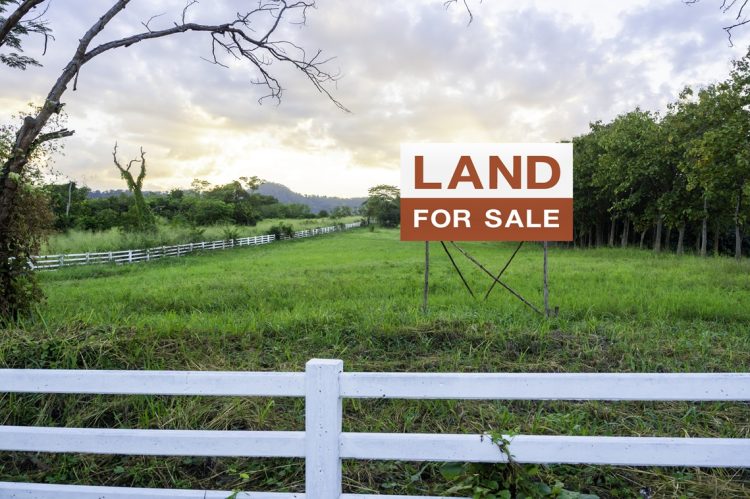
While there have been some stabilizing signs in the housing market—home price appreciation has significantly slowed and inventory is showing year-over-year growth—the construction industry continues to face challenges. Beyond the supply chain and overall economic issues for builders, land prices and inventory have yet to recover from pandemic-era downfalls, according to the latest data from Realtor.com®.
Realtor.com’s new analysis on land listings for sale found that land prices have shot up 76.6% since the pre-pandemic era (Q1 2019 to Q1 2026), as inventory has fallen 23.6%. In Q1 2026, there were 426,986 land listings for sale on Realtor.com with a median price per acre of $62,365.
Realtor.com Senior Economist Joel Berner noted that the pandemic didn’t just hurt housing inventory, “it drained land inventory, and that loss is permanent.”
“When a builder develops a parcel, that land never returns to the market. The construction boom of 2020 to 2022 burned through years of supply, and the market is still paying for it,” he continued. “Prices sit 77% above pre-pandemic levels, inventory has gone nowhere, and until the development pipeline catches up, neither of those things will change and future new construction could be more costly.”
Looking specifically through the types of land for sale (build-ready, partially developed or raw land), raw land has seen the highest rate of price appreciation, growing 86.5% from Q1 2019 to Q1 2026. Comparatively, build-ready has grown 53.3%, and partially developed 80%.
Regionally, land prices from 2019 to 2026 are up 101.5% in the Northeast (from $23,584 per acre to $47,511), 89.5% in the Midwest (from $38,757 to $73,448), 84.9% in the South (from $34,130 to $63,110) and 32.2% in the West (from $41,173 to $54,423)
Metro-wise, the largest land price appreciation rates from Q1 2019 to Q1 2026 (in metro areas with at least 500 land listings) were in Port St. Lucie, Florida (+311.1%); Spearfish, South Dakota (+286.7%); Philadelphia, Pennsylvania (+285.4%) and Kansas City, Kansas (+260.8%).
The largest land inventory declines from Q1 2019 to Q1 2026 were in Hilton Head Island, South Carolina (-72.1%); Morristown, Tennessee (-65.7%) and Wilmington, North Carolina (-61.2%).
The report also noted that all of the top 10 metros with the largest land inventory declines were in the eastern half of the country, “where raw land is scarcer and listing stocks have not been able to be refreshed.”
Despite the downfalls over the past seven years, there have been some positive signs in Q1 2026 when it comes to land prices.
Overall land prices fell 0.5% year-over-year in Q1 2026. The West is also the only regional market to see some level of stabilization in land prices, recording a 5.9% year-over-year drop in Q1 2026. The South (+1.3%), Northeast (+0.9%) and Midwest (+0.2%) all saw gains, but relatively small ones.
Raw land and build-ready have also seen some positive movement in Q1 2026, falling 2.4% and 1.1% year-over-year, respectively.