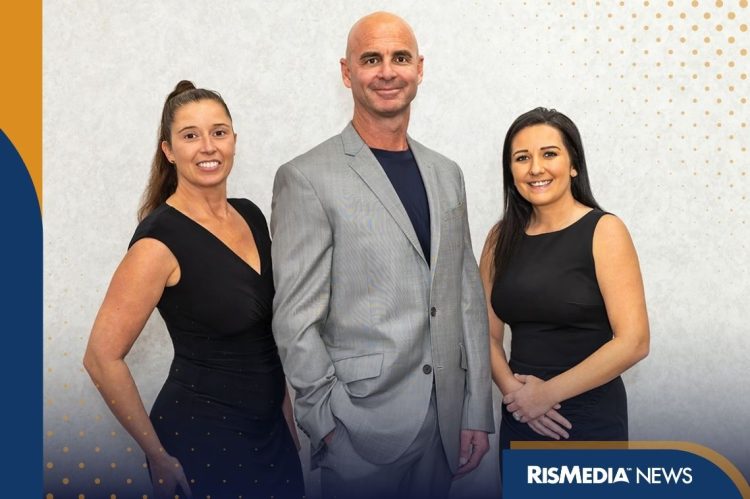
Above, Allison James Estates and Homes Vice President Jessica Crumbaugh (left); CEO Matthew Crumbaugh (center); COO Victoria Mudie (right)
Matthew Crumbaugh
CEO
Allison James Estates and Homes
Port Charlotte, Florida
https://www.allisonjamesinc.com
Regions served: California, Florida, Maryland, D.C., Nevada, Texas, Massachusetts and Virginia
Years in real estate: 17
Number of offices: 1
Number of agents: 725
Key to continued growth and success: We joined United. The industry is getting tougher, and the landscape is changing. While we’ve always been pretty lean, it’s important to be able to operate like that. The value of this great relationship is that it’s going to be fuel for the fire.
Favorite part of working in real estate: The relationships I’ve built over the years and all the great people I’ve gotten to know. I also enjoy helping inexperienced agents grow and succeed.
How did Allison James Estates and Homes grow to 725 agents operating in seven states and the District of Columbia?
Initially, we climbed the tallest tree and screamed as loud as we could. We never stopped dialing, making a thousand calls a day. That’s where we started, and we all did everything. I was the janitor, the recruiter and the marketer, focused on bringing in good people and getting good agents in certain markets. From there, we shifted our attention to building relationships. We’ve always operated as a family.
Your firm has successfully operated as an independent. What signals in today’s market told you it was time to affiliate with a national network like United Real Estate?
The signals have been there a lot longer than today’s market. These past five years, a lot of us were thinking that interest rates and the economy were going to change—and we fell into that trap a little bit. The cost of doing business has gone up, and it’s getting harder and harder to compete without big dollars, which bring in all the resources. So that was my signal: having the power of United to keep us relevant.
You’ve said United is doing things differently. What specifically stood out about their model compared to other brokerages you evaluated?
I feel like those firms we spoke with in the past were kind of like, “Here’s your box of goods, here’s your tech stack, and now you’ve got our brand.” United isn’t that. While United has the scale and everything agents need, a big part of why we’re here is the people. Partnerships can be tough, but United’s people are amazing, and we’re not working in a silo. We’re all working together to grow bigger, sharing ideas with everyone else. I can text United CEO Dan Duffy at 9 p.m., and he’s there for me. It’s the network of people and the great minds at United, and there’s no dollar amount you can put on that. To me, that’s priceless.
Many independent brokerages are concerned about losing their identity when they scale. How does this affiliation allow Allison James to maintain its culture and identity while still growing?
We’re still a family-owned brokerage operating under the same name, but our identity is only going to get better. We are who we are; we just have a bigger family now. Our presence is going to be out there a lot more, and I’m proud to be part of both United and Allison James. It’s how we service our agents and clients that truly matters.
What changed from an overhead and infrastructure standpoint after joining United?
Using tech as an example, before United, we would have spent months looking at a new tech stack and putting resources into it. That changed when we joined United, which has a one-stop agent productivity platform, BullseyeAI, and a strong home office team, so they’re taking a lot of man-hours off our plate. That has allowed us to get back to what we’ve always done best, which is loving and supporting our agents.
From your perspective as a brokerage operator, how important is access to proven, “ready-to-deploy” systems versus building everything in-house?
I’ll never build anything, because it’s not my world. The problem with building is that it’s the maintenance, it’s the servers, it’s the IT and the fact that you have to continue adding to it in order to create a better product. I said a long time ago that we’re not going down that road. United takes care of that for us.

United often emphasizes its collaborative national broker network. How did that culture influence your decision to join United, and how do you plan to leverage it?
I can literally go to any of these brokers. In fact, we all have meetings together, and we attend live events together. Joining United wasn’t simply about the tech stack. It’s the culture, the network and the people that are amazing. Relationships are important to success; we grow stronger when we work together for a common purpose.
There’s a growing narrative that independent brokerages are being squeezed. Based on your experience, what would you say to brokers who feel they can’t compete at scale without sacrificing control?
If you don’t have big backing, it’s going to get harder, and I feel like we’re getting squeezed more than ever. We have mega brokerages now, but there’s a big need for independence and being able to operate as a family because you can get lost in the shadow of those monoliths, and they can’t pivot like we can. We’ve lost no control, but what we’ve gained is the brains to help us make the right decisions.
At a high level, how does your affiliation enable the “best of both worlds,” combining United’s national resources with Allison James’ local expertise?
We’re getting a lot of national exposure from the power of United’s resources. The national referral network is a really cool thing, but it’s important to note that they’re not just national; they’re also local, so it comes back to the fact that we have local companies in our United family as well. That’s allowing our national network to expand while at the same time honing in on the local networks. We’re a big brokerage, but we also gained new regional brokerages we can team up with.
For more information, please visit https://www.GrowWithUnited.com.