RISMedia
  • News
  • Premier
  • Reports
  • Events
  • Power Broker
  • Newsmakers
  • More
    • Publications
    • Education
No Result
View All Result
  • Agents
  • Brokers
  • Teams
  • Marketing
  • Coaching
  • Technology
  • More
    • Headliners New
    • Luxury
    • Best Practices
    • Consumer
    • National
    • Our Editors
Join Premier
Sign In
RISMedia
  • News
  • Premier
  • Reports
  • Events
  • Power Broker
  • Newsmakers
  • More
    • Publications
    • Education
No Result
View All Result
RISMedia
No Result
View All Result

Can the Government Keep Spending? Most Economists Say Yes

Home News
November 27, 2008
Reading Time: 3 mins read

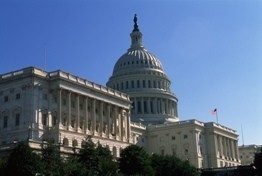
nov28leadweb.jpg

By Jack Chang

RISMEDIA, Dec. 2, 2008-(MCT)-Since the U.S. economy went into freefall in September, the federal government has announced hundreds of billions of dollars in bailouts and economic stimulus packages in attempts to shore up banks and reignite the economy.

The latest astronomical figure is an $800 billion, in a package announced Tuesday by the Federal Reserve and the Treasury Department. Many are wondering, however, how long this spending can go on.

Here are a few answers:

Q: First of all, where does the money come from?

A: The bulk of the cash has been put up by lenders buying U.S. Treasury Department securities such as bonds, notes and short-term bills. Economists estimate that international investors have purchased as much as three-fourths of such securities, with many of them flocking to relatively safe U.S. investments amid global uncertainty.

Some of the spending also has been financed by securities issued by agencies such as Fannie Mae or Freddie Mac.

Q: How much money has the U.S. government spent or loaned out since September?

A: Congress passed in early October a $700 billion bailout plan that gave the Treasury Department sweeping powers to buy distressed assets and keep banks afloat. About half of that money has already been loaned out.

The government also has injected $45 billion into a large bank, Citigroup, and $150 billion into a large insurer, American International Group.

On Tuesday, the Federal Reserve and the Treasury Department announced the latest round of spending, to the tune of $800 billion. One program would lend some $200 billion to holders of securities backed by consumer loans such as credit card loans and auto and student loans. The other program would spend up to $600 billion buying mortgage-backed assets from government-sponsored lenders such as Fannie Mae and Freddie Mac.

President-elect Barack Obama and the Democratic-controlled Congress also have promised to pass a major stimulus plan that could cost $300 billion or more.

Q: How much of that money won’t be repaid?

A: So far, as much as $100 billion of the original bailout package used to buy assets at a loss, according to economist Barry Bosworth of the Brookings Institution, a left-of-center research group in Washington. Everything else, at least theoretically, will be repaid or could be recouped.

Q: How much longer can the government keep spending?

A: A lot longer, economists say. International investors will keep buying Treasury securities even though the interest rates on many of them are close to zero percent.

Q: Why?

A: The U.S. economy is still considered the world’s strongest and most stable, and investors still believe the U.S. will pay back its loans. They know they’ll at least get their money back even if they don’t make much in interest income.

Ironically, the U.S. has become the haven from the global economic storm, although the financial mess started here. That explains why the dollar has been climbing in value around the world while other currencies have plummeted.

Q: But should the U.S. government be spending so much money?

A: Most economists say yes. Although the federal budget deficit is projected to hit a trillion dollars next year, incurring massive debt at this point is eminently preferable to letting the U.S. economy slide into deep recession.

America can worry about cutting deficit spending when the economy starts growing at a healthy clip, economists said. The goal now is to get banks lending and consumers spending again.

Q: But will all this work?

A: It’s better than doing nothing. And letting firms such as Citigroup fail would send wider shock waves through the economy that could cost millions of jobs.

© 2008, McClatchy-Tribune Information Services.

ShareTweetShare
Paige Tepping

Paige Tepping

As RISMedia’s Managing Editor, Paige Tepping oversees the monthly editorial and layout for Real Estate magazine, working with clients to bring their stories to life. She also contributes to both the writing and editing of the magazine’s content. Paige has been with RISMedia since 2007.

Related Posts

Sea Glass Acquires Sperry Commercial Global Affiliates
Industry News

Sea Glass Acquires Sperry Commercial Global Affiliates

January 9, 2026
The Keyes Company Brings The Landmark IV Group to Hollywood
Agents

The Keyes Company Brings The Landmark IV Group to Hollywood

January 9, 2026
Multi-Family Housing Starts Down in October; Single-Family Starts Rise
Agents

Multi-Family Housing Starts Down in October; Single-Family Starts Rise

January 9, 2026
Middling Jobs Report Offers Little Insight on 2026 Housing Market
Industry News

Middling Jobs Report Offers Little Insight on 2026 Housing Market

January 9, 2026
‘Benchmarkets’ vs. Outliers: Why Your Local Housing Story May Differ Drastically From National Trends
Industry News

‘Benchmarkets’ vs. Outliers: Why Your Local Housing Story May Differ Drastically From National Trends

January 9, 2026
Compass
Agents

Compass Closes Anywhere Deal Amid Anonymous Reports of ‘Overruled’ DOJ Staff Concerns

January 9, 2026
Tip of the Day

RISMedia Headliners: Innovating for the Future

Succeeding in the new year will take more than determination and hard work—it will require utilizing technology that facilitates efficiency and increased business. In this in-depth feature, real estate tech leaders share the innovations they believe will give agents and brokers a competitive advantage in 2026. Read more.

Business Tip of the Day provided by

Recent Posts

  • Sea Glass Acquires Sperry Commercial Global Affiliates
  • The Keyes Company Brings The Landmark IV Group to Hollywood
  • Multi-Family Housing Starts Down in October; Single-Family Starts Rise

Categories

  • Spotlights
  • Best Practices
  • Advice
  • Marketing
  • Technology
  • Social Media

The Most Important Real Estate News & Events

Click below to receive the latest real estate news and events directly to your inbox.

Sign Up
By signing up, you agree to our TOS and Privacy Policy.

About Blog Our Products Our Team Contact Advertise/Sponsor Media Kit Email Whitelist Terms & Policies ACE Marketing Technologies LLC

© 2025 RISMedia. All Rights Reserved. Design by Real Estate Webmasters.

No Result
View All Result
  • Home
  • Premier
  • Reports
  • News
    • Agents
    • Brokers
    • Teams
    • Consumer
    • Marketing
    • Coaching
    • Technology
    • Headliners New
    • Luxury
    • Best Practices
    • National
    • Our Editors
  • Publications
    • Real Estate Magazine
    • Past Issues
    • Custom Covers
  • Events
    • Upcoming Events
    • Podcasts
    • Event Coverage
  • Education
    • Get Licensed
    • REALTOR® Courses
    • Continuing Education
    • Luxury Designation
    • Real Estate Tools
  • Newsmakers
    • 2025 Newsmakers
    • 2024 Newsmakers
    • 2023 Newsmakers
    • 2022 Newsmakers
    • 2021 Newsmakers
    • 2020 Newsmakers
    • 2019 Newsmakers
  • Power Broker
    • 2025 Power Broker
    • 2024 Power Broker
    • 2023 Power Broker
    • 2022 Power Broker
    • 2021 Power Broker
    • 2020 Power Broker
    • 2019 Power Broker
  • Join Premier
  • Sign In

© 2025 RISMedia. All Rights Reserved. Design by Real Estate Webmasters.

X