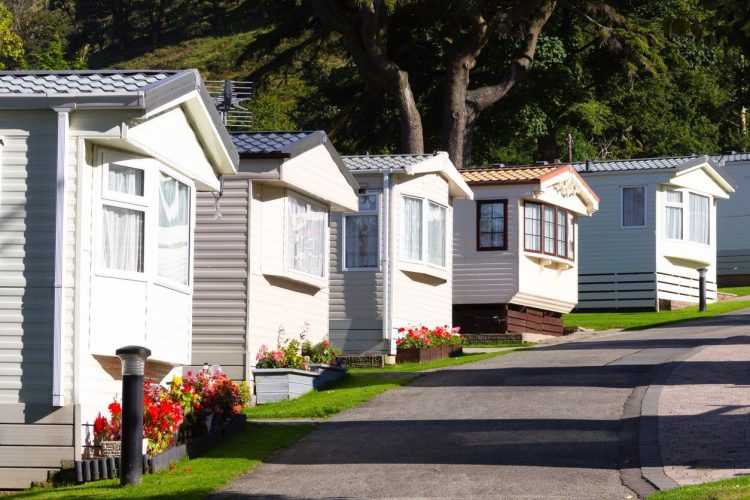
Manufactured and modular housing have been embraced as one solution to reaching housing affordability, due to their ease to build (including low cost), energy efficiency and other key benefits. On Friday, January 9, the U.S. House of Representatives passed the Affordable HOMES Act, a bill that cuts energy regulations in an effort to lower the challenges for building manufactured housing even more.
The measure would give the U.S. Department of Housing and Urban Development (HUD) exclusive authority of manufactured housing energy-efficiency standards, removing the Department of Energy’s (DOE) oversight. At the same time, the bill repeals a 2022 rule from the DOE—one that hasn’t taken effect yet, but centered around manufactured housing site-built standards. The bill stipulates that the DOE can still offer suggestions for energy conservation standards to manufactured housing, but cannot act unilaterally to enact them.
The bill passed the House on a bipartisan 263 – 147 vote. The legislation, originally sponsored by Erin Houchin (R-IN) and Mike Flood (R-NE), drew support from 57 Democrats, with no Republicans voting against it.
“As demand for affordable homes has surged, so have unnecessary costs, making the dream of homeownership slip further out of reach for Americans,” said Houchin in a public statement. “The Affordable HOMES Act takes a practical approach by cutting red tape and regulations that contribute to pricing American families out of owning a home, which will increase supply and lower costs. I’m proud to see the House take an important step toward restoring the American Dream with the passage of this bill.”
Jake Auchincloss (D-MA), the bill’s sole Democratic cosponsor, is a member of the pro-housing affordability Build America Caucus. The caucus supported the passage of the bill, calling its deregulations a “common-sense approach to reducing housing costs and unlocking housing affordability.”
“The Affordable HOMES Act will streamline energy efficiency standards and ensure that standards take into account the overall cost to homebuyers, not just the cost and benefits of energy efficiency standards alone,” said the Build America Caucus in a statement. “This clarification promises to boost manufactured housing production and provide regulatory certainty for producers, lowering the price of housing.”
Congressional representatives were encouraged to back the bill prior to the vote by a National Housing Conference (NHC)-led coalition of affordable housing organizations due to the fact that manufactured housing provides a quick and inexpensive way to expand housing options for lower-income purchasers. The letter supporting the bill was also signed by the California Community Reinvestment Corp., the Manufactured Housing Institute, the Mortgage Bankers Association, Latino advocacy group UnidosUS and others.
“Higher energy efficiency standards are an important goal which we support, however, they must be designed with affordability in mind, and by the agency that understands how housing works,” the letter read in addressing the 2022 DOE rule.
In an op-ed published by the NHC after the bill’s passage, NHC President and CEO David Dworkin praised the bill’s intent and addressed criticism leveled by the legislation’s opponents.
“While it is true that increased energy efficiency can lower costs for consumers over the long-term, the upfront costs (raised by higher energy standards in construction) are a significant barrier for many consumers, especially considering that manufactured housing is generally the most affordable option for lower-income homebuyers,” wrote Dworkin. He also pointed to pieces of the 2022 DOE energy standards rule—for example, HVAC requirements based on site-built housing standards—that could’ve been unworkable in practice.
A report published by Realtor.com® about the bill’s passage cited remarks by Pete Maysmith, president of environmental advocacy group The League of Conservation Voters and an opponent of the bill, that it would “lock families living in manufactured homes into higher energy costs, increase electric grids’ strain, drive up long-term utility and infrastructure expenses for ratepayers, and undermine proven solutions that keep living costs affordable.”
Realtor.com Chief Economist Joel Berner himself wrote it’s unlikely the bill’s changes will bring down the median price of manufactured housing (which held steady in 2024 then fell in 2025), as the DOE rule repealed by this bill has not yet been implemented and thus is unlikely to have been felt by the market.
“It’s important to note that while the DOE regulations would add to the price of new manufactured housing upfront, they were also expected to save monthly costs on energy usage going forward. So without them, there is a trade-off between purchase price and carrying costs,” said Berner.
Following its passage in the House, the bill still must pass the Senate and be signed by President Donald Trump to become law. The President has been putting forth big-swing proposals designed to make housing more affordable, from banning institutional investors from buying residential homes to directing the government-sponsored enterprises (GSEs) to purchase $200 billion in mortgage bonds.