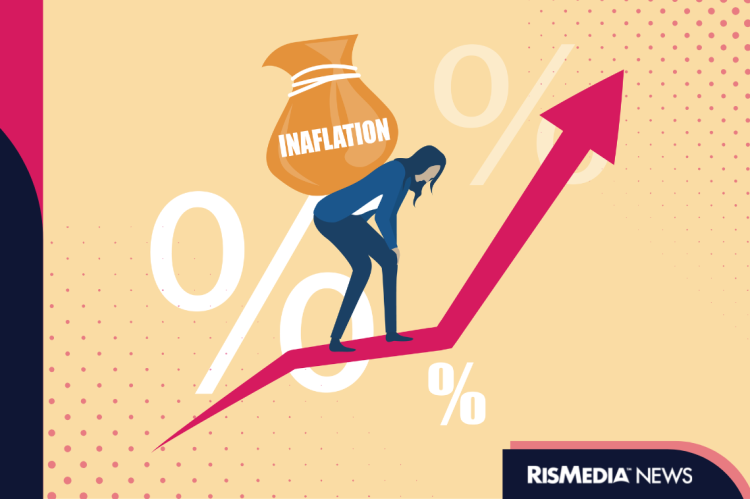
Rising energy costs due to the Iran war continue to put serious upward pressure on inflation, according to the latest data from the Bureau of Labor Statistics.
The Consumer Price Index (CPI) grew 0.5% in May, with annual inflation clocking in at 4.2%. Specifically, this is the “highest headline CPI reading in three years,” as noted by Realtor.com® Senior Economist Jake Krimmel.
As mentioned, the rise in inflation once again was largely attributed to heavy increases in the energy index, specifically over 60% of the increase. The energy index saw a rise of 3.9% in May, following a 3.8% rise in April and 10.9% in March, and is now up 23.5% over the last 12 months.
The shelter and food indexes also contributed to the increase, rising 0.3% and 0.2%, respectively. Breaking it down further, the food at home index grew 0.1% and the food away from home index grew 0.3%.
The index for all items less food and energy—aka core inflation—grew 0.2% in May, with annual core inflation now at 2.9%. Increases here were mostly observed in communication, airline fares, medical care, personal care and recreation.
Krimmel last month warned of an “inflation contagion,” on which he said this month’s report “offered modest reassurance” against this potential trend. However, he noted that while the contagion is “not yet deepening,” it “remains the most important thing to watch for consumers, the Fed and the housing market.”
Speaking of the Fed, the industry is awaiting the next FOMC meeting with baited breath as the potential of an interest rate increase was left on the table after the last meeting.
Krimmel said that with this CPI report and the strong jobs report from last week, another pause from the Fed looks “certain.”
“Looking ahead, the slightly softer core goods picture may give more runway for the Fed to maintain its wait-and-see posture through the summer.”
Looking beyond, Cotality Chief Economist Selma Hepp said that continuing developments suggest the “upside risks to inflation are building again.”
“Tariffs and renewed supply chain disruptions are pushing up the cost of construction inputs—from materials to labor—which is feeding through to higher reconstruction and replacement costs, and insurance premiums,” she continued. “That combination is keeping Treasury yields elevated and reinforcing a ‘higher-for-longer’ rate environment, which continues to put a floor under mortgage rates.”
As for the housing picture, the overall take across several industry reports as of late has been that the 2026 market is, as Krimmel put it, “more resilient than anyone expected.” Bettering signs continue to manifest in waves of rising activity, but the broader picture is that of a market still facing headwinds.
“Housing market activity has beaten the past two years and defied the low expectations that cropped up when the Iran conflict began,” Krimmel added. “But there’s only so long a housing market can outrun inflation.”
As mortgage rates remain elevated and inflation continues to plague the economy, full housing market recovery is not on the docket, but continued waves of normalization appear to be expected to continue to pop up.