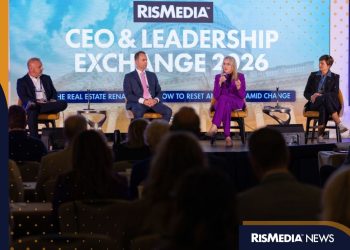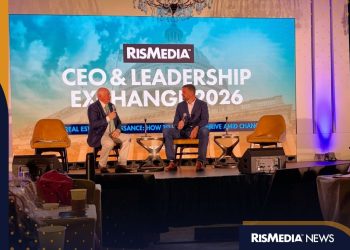
Above, David DeSantis
The residential real estate industry is shedding agents. And that is exactly what it needs.
After years of record transaction volume and historically low interest rates, the housing market has slowed dramatically. As a result, many real estate agents are exiting the business. Some view this as a warning sign. I see it as an opportunity.
A smaller, more professionalized real estate industry would be better for consumers, better for serious practitioners and, ultimately, better for the long-term health of our profession.
At the same time, another force is reshaping our business: artificial intelligence. Much has been written about AI replacing real estate agents altogether. I believe that prediction fundamentally misunderstands what the best agents actually do.
Artificial intelligence will undoubtedly replace agents who simply go through the motions. Technology can already automate listing alerts, marketing copy, transaction updates, scheduling, document preparation and countless administrative tasks that once consumed enormous amounts of time.
But exceptional agents were never valuable because they could fill out forms or unlock doors. The best agents provide judgment, strategy and emotional intelligence during deeply personal and financially significant moments in their clients’ lives. They navigate complexity, manage conflict, interpret nuance and help clients make difficult decisions under uncertainty. They understand not only the market, but human behavior.
AI can process information. It cannot replace trust, empathy, negotiation instinct, credibility or lived experience. Ironically, the rise of AI may strengthen the case for a smaller and more professionalized real estate industry. As technology automates routine tasks, consumers will place even greater value on highly skilled advisors capable of providing insight, advocacy and sophisticated counsel.
That makes the current structure of our industry increasingly difficult to defend.
Consumers are making the largest financial decision of their lives, yet in many states, the educational requirements to become a licensed real estate agent remain surprisingly minimal. In some jurisdictions, an individual can complete the licensing process in a matter of weeks and immediately begin representing buyers and sellers in transactions involving millions of dollars.
That should concern all of us.
Real estate today is extraordinarily complex. Agents are expected to understand valuation, negotiation strategy, financing structures, contract law, fair housing regulations, construction issues, risk management, local market dynamics, technology platforms and increasingly sophisticated consumer expectations. Yet our industry continues to operate with one of the lowest barriers to entry in the professional services economy.
During the pandemic-era housing boom, hundreds of thousands of new agents entered the business. Many were talented and committed professionals who built meaningful careers. But many others viewed real estate as a temporary opportunity, a part-time endeavor or a low-barrier side hustle.
Consumers deserve better than a system that makes it difficult to distinguish between deeply experienced professionals and individuals with minimal practical training. This moment presents an opportunity to rethink how our industry develops talent and protects consumers.
First, we should establish a mandatory national apprenticeship requirement for newly licensed agents. A newly licensed real estate agent should not be permitted to independently represent buyers or sellers until they have completed a meaningful period of supervised training under an experienced professional.
No newly admitted attorney immediately handles complex litigation alone. Physicians complete residencies before practicing independently. Financial advisors and CPAs undergo years of supervised experience before managing significant client relationships.
Real estate should adopt the same standard.
A modern apprenticeship program should require newly licensed agents to participate in supervised transactions and complete substantial practical field experience before earning full independent representation status. During this period, agents should receive structured training in negotiation, contracts, ethics, valuation, fair housing compliance and transaction risk management.
Second, licensing education should be significantly expanded and standardized nationwide. The current patchwork of state-by-state requirements is inconsistent and often outdated. A modern curriculum should emphasize practical competency rather than rote memorization.
Finally, brokerage leaders should stop measuring success primarily by agent count. Bigger is not necessarily better. The future belongs to firms that cultivate highly trained, highly productive professionals who provide measurable value to clients.
The best agents already operate this way. They invest heavily in education, market expertise, client service, technology and relationship management. They treat real estate not as a sales job, but as a professional advisory business.
Those professionals should welcome higher standards because higher standards elevate the reputation of everyone who takes this work seriously.
The housing market slowdown and the rise of artificial intelligence are forcing our industry to confront difficult realities at the same time. We can either resist change and protect an outdated system, or we can use this moment to build a more respected, more trusted and more professional industry for the future.
The real estate industry does not need more agents.
It needs better ones.