Editor’s note: In this two-part series, we examine the importance of comprehensive insurance policies for homeowners across the board, and the conversations real estate professionals should be having with clients. Part 1 concerned various weather issues. Here, we focus on flood insurance specifically.
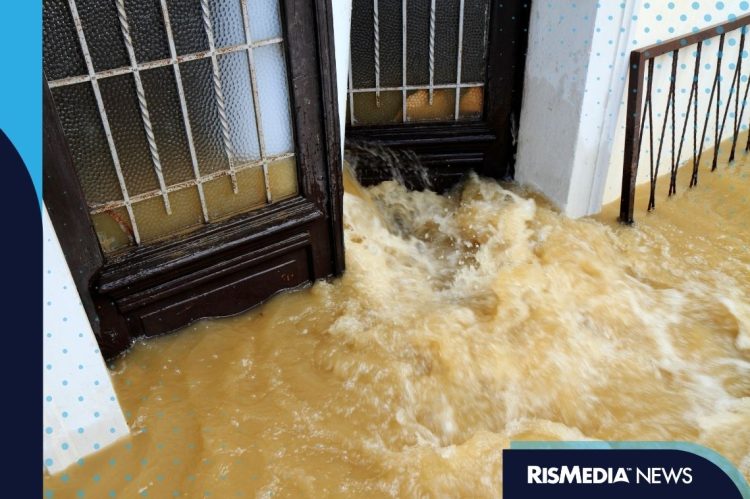
While wildfires are dramatic, flooding is much more likely to occur around the country. Agents should be ready to discuss specifics with clients so they can make decisions about how to be prepared in the event their home is deluged with flooding water.
Alton Knapp III, a flood risk consultant/broker with The Flood Risk Group | Knapp Associates Insurance in Ballston Spa, New York, provides a comprehensive overview from the insurance agency perspective.
“Flood insurance has become a much more important part of the real estate conversation in recent years, particularly as changing weather patterns, heavier rainfall events and rising property-repair costs affect homeowners in areas that may not traditionally have been viewed as high risk,” says Knapp.
How has the insuring of a home changed over the last couple of years following numerous weather and other calamities?
One of the biggest changes is that flood risk can no longer be viewed simply as a question of whether a property is located inside or outside a designated flood zone.
We are seeing more attention paid to severe rainfall, flash flooding and poor drainage/localized flooding. Climate change is also becoming part of that conversation because weather patterns are changing, and in many areas intense rainfall events are becoming a greater concern. For homeowners, that means past experience is not always a perfect guide to future risk.
A house that has never flooded before is not necessarily immune from flooding in the future. At the same time, the cost to repair homes after a flood has risen significantly because of higher construction, material and labor costs. That makes both proper insurance coverage and flood mitigation increasingly important. A flood map is still an important starting point, but it should not be the end of the conversation.
What are the factors you consider when deciding how to insure a property?
Increasingly, I also think homeowners need to consider how resilient a property is to changing weather conditions. Are storm drains nearby capable of handling a major downpour? Is the lot graded properly? Does water flow toward or away from the foundation? Are utilities and major mechanical systems located in vulnerable areas? Are there sump pumps, backup power systems, flood vents or other mitigation measures in place if the property is high risk?
The important thing is to address those questions early rather than discovering a significant flood exposure or insurance cost right before closing.
Have insurance issues caused sales to fall through?
Absolutely. That is the topic of discussion at least once a week in my office. Flood insurance can become a transaction issue when a buyer discovers late in the process that coverage is required or more expensive than they were anticipating.
Insurance affordability is also becoming a larger part of overall housing affordability. Buyers naturally focus on mortgage payments, property taxes and interest rates, but insurance costs can materially change the true monthly cost of owning a home.
Climate-related risk is likely to make that conversation even more important going forward. Homes that are more exposed to flooding or other severe-weather risks, such as wildfire, may face higher insurance costs, larger deductibles or fewer coverage options over time. That does not necessarily mean buyers should avoid those properties. It does mean they should understand the risk and cost before making the decision.
What would you tell agents so they know how to address the insurance issue with buyers and sellers?
My biggest recommendation is to bring flood risk and insurance into the conversation early. Agents do not need to become insurance or climate-risk experts, but they can encourage buyers to ask questions that go beyond whether a lender requires flood insurance.
It is also becoming increasingly important to look at mitigation. For sellers, improvements such as drainage work, sump pumps, backup systems, flood vents, waterproofing or elevating vulnerable mechanical equipment may be worth documenting.
For buyers, I would recommend speaking with an insurance professional during the due-diligence period and considering a flood-insurance quote even when coverage is not mandatory. The central point is that “not required” and “not at risk” are two very different things.
Has flood insurance become more common over the last few years, and how much should homebuyers know about how rainfall might impact the property?
There is certainly much greater awareness of flood insurance and flood exposure today. One of the biggest misconceptions is that if a home sits just outside a designated high-risk flood zone, the homeowner has little to worry about. Flooding does not work that way. Rainfall does not stop at a line on a map.
A property just outside a mapped flood zone may still experience significant flooding from intense rainfall, overwhelmed drainage systems, surface-water runoff or nearby waterways.
Climate change makes understanding those local conditions even more important. Historical rainfall patterns and historical flooding are useful, but buyers should also recognize that weather conditions are evolving. An extreme rainfall event that once seemed unusual may become more relevant when evaluating the long-term risk of owning a property.
Even when flood insurance is optional, obtaining a quote gives the buyer an opportunity to understand the cost of transferring some of that risk rather than simply assuming it themselves.
How is climate change affecting homeowners beyond simply whether they need flood insurance?
I think the larger impact is that homeowners increasingly have to think about resilience as part of homeownership. Climate change is not just an insurance issue. It can affect maintenance costs, property improvements, utility systems, drainage, landscaping and potentially the long-term cost of owning a property.
For example, homeowners in areas experiencing heavier rainfall may need to invest more in drainage, grading, sump pumps or waterproofing. In some locations, homeowners may need to consider elevating equipment, installing backup power or making other improvements that reduce the severity of a potential loss.
There is also the insurance-market impact. As insurers experience larger and more frequent losses in certain areas, homeowners may see premiums increase, deductibles change or underwriting become more restrictive. That is why mitigation is becoming increasingly important. The conversation should not only be about whether a homeowner can purchase insurance, but also about what can be done physically to make the property less vulnerable.