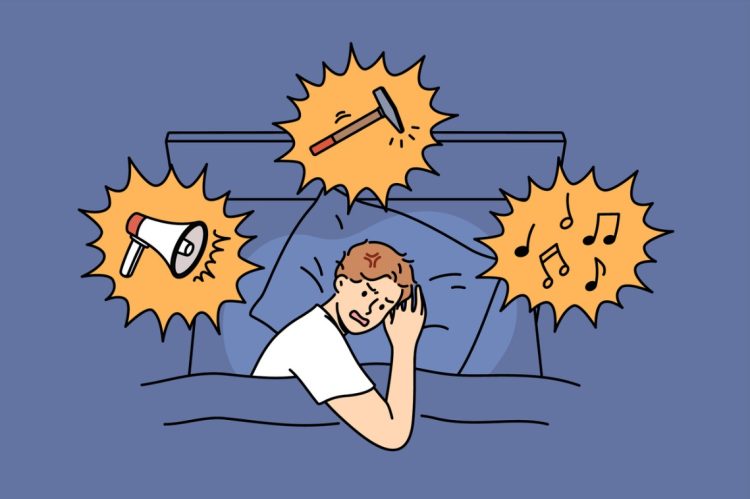
Nosy neighbors are one thing. They can be occasionally annoying. But noisy neighbors? They can be an endless drag. And for agents whose livelihoods rely on getting buyer clients through the long and winding path to closings, noise pollution can capsize otherwise promising deals.
Condo buildings anywhere and co-op high-rises in urban areas are especially problematic, since they share common walls, floors and ceilings. Unlike freestanding homes, where owners can call the authorities about crazy-loud parties and whatnot, condo/co-op dwellers are more or less at the mercy of their neighbors most of the time.
In a new study, Apt2B surveyed 2,300-plus Americans across age groups, genders and home styles to understand how noisy their neighbors are and how they feel about them. From late-night, unnecessarily heavy footsteps to constantly barking dogs or even just casual chatter that carries farther than intended, noise is one of the fastest ways households collide. While a little sound is part of everyday living, some places seem to deal with it far more often than others.
Study takeaways include:
- More than a quarter of Americans describe their neighborhood as noisy.
- 23% of Americans admit they themselves might be the “noisy neighbor.”
- 2 out of 3 Americans would rather tolerate a noisy neighbor than a nosy one.
- Nearly 1 in 5 have formally complained about a noisy neighbor, either directly or through property management/HOA.
- 4 in 10 Americans have had a conflict with a neighbor.
- 25% say their neighbors are at least moderately annoying.
Noisiest (and quietest) neighbors
The study’s responses offered a clear look at how often residents hear each other, how they feel about it and how those experiences shift between single-family homes and condo/co-op living. The results outline the noisiest (and quietest) states, and the moments when sound becomes a bigger part of daily life. The rankings reflect the share of respondents in each state who said their neighbors are “somewhat” or “very” noisy. For context, the national average was 26.3%.
- New York – 40.8%
- Hawaii – 38.3%
- Nevada – 38%
- Maine – 37%
- Ohio – 36.5%
The mix shows that noisy neighbors aren’t just an urban issue. Sound carries in plenty of places where homes sit farther apart than people think. Other parts of the country stay well below the national average, often in areas with more space between homes or slower-paced communities.
- Montana – 11.4%
- Indiana – 12.2%
- Iowa – 12.5%
- Mississippi – 14.3%
- Idaho – 14.6%
These states tend to offer more breathing room between households, whether through larger lots, fewer shared walls or layouts that naturally limit everyday noise.
RISMedia queried residential real estate professionals who specialize in multi-unit homes as well as standalone houses to gauge how noise can impact buyers…and their business.
How concerned are buyers to find out if their prospective neighbors might be noisy?
Jules Garcia, with Coldwell Banker Warburg in New York City: “Considering that residential noise complaints are one of the top 311 (NYC help line) complaints, very! People want to be comfortable in their home sanctuary. If your home is noisy and it’s from someone else’s doing, it takes away a layer of your control. Careless neighbors that take the approach of ‘just deal with it’ are terrible, but even worse are building management and co-op boards that turn a blind eye.”
Jeffrey Decatur, with REMAX Capitol in upstate New York: “It is always best to know what you are getting yourself or your client into. By all means, if noise levels are important to your client, have them find out. They should come by at different points of the day to see and hear what is going on. Keep in mind that whoever is there today could move out tomorrow, or vice versa. I have had a number of clients who worked nights and slept during the day, and have been bitten by both scenarios.”
Pam Rosser Thistle, with Berkshire Hathaway HomeServices Fox & Roach, REALTORS® in Philadelphia: “With any unusual noise (a piano player next door, dogs that bark), it is best to catch the timing when it happens and let the buyer decide.”
Mary Hall Mayer, with Coldwell Banker Warburg in New York City: “About 65% of buyers ask about noise, especially if a house is in close proximity to its neighbor or if they’re viewing an apartment or a townhouse condo that shares walls with its neighbor.”
Do buyers ask you if you can find out about things like noise?
JG: “Yes. More and more buyers are asking about the history of noise complaints when looking at units, or having the real estate attorney add it to the questionnaire for building management. Buyers will sometimes ask the owner about noise from other units or outside. Whether the owner answers honestly is another story.”
JD: “If noise levels are of concern, as an agent, don’t give an answer. Give them suggestions and let them find out. Neighbors, supers, police, whomever. But you as an agent shouldn’t make that determination for them. Your idea of noise may be different than theirs, or they may enjoy that a neighbor plays the piano. Just like we shouldn’t be answering what a neighborhood is like, it’s smart to take the same approach here.”
MHM: “When asking about possible noisy neighbors, buyers frequently ask the broker if they can find out. But unless the broker lives immediately beside, on top of or directly below, how is the broker to know whether a neighbor’s dog barks at 5 a.m. or 11 p.m?”
What do you say if you’re showing a home and hear noise from another unit or close by?
JG: “I don’t hide it. I know firsthand how awful it can be to contend with noisy apartments and/or neighbors. We’ll typically ask to come back a few times for additional showings to assess the severity when working on the buy side. If I’m the listing agent, I suggest the same so the buyers can make the best decision for themselves.”
JD: “If I’m showing a house, I will point out the noise level, or if the neighbor has barking dogs, children, loud cars or whatever it may be. Sometimes buyers are so focused on looking that they don’t pay attention. Again, I don’t give an opinion one way or the other because they could love said activity or noise. For example, I have had some older couples who love the sound of children playing loudly in the park all day.”
PRT: “The biggest outside noise factors in my city market are hearing trains and occasionally helicopters landing on top of a hospital if it is a trauma center. When I am showing in areas where there may be noises like this, I hope we hear it so that the buyer can gauge if it is disturbing. Every buyer is different. Some love trains. Others may take comfort in being close to a hospital. As far as neighbors within buildings, some will want to live on the top floor so that they don’t hear footsteps above them. Although most buildings are well insulated and may have requirements for floor coverings.”
What, if any, are the laws concerning noise where you work?
JG: “In NYC, there are warranties of habitability and the covenant of quiet enjoyment that must be adhered to. Co-op/condo boards, building management and landlords have a responsibility to address disturbances that substantially interfere or are a nuisance to everyday life and the enjoyment of your home (outside of everyday ‘normal’ noise). It’s tough because it’s not always easy to prove the excessive noise. There are decibel-meter apps for a phone/tablet, so someone can record noise to help management or boards enforce the rules in place.”
MHM: “It’s also local code in NYC that if you replace wooden floors, you have to lay soundproofing under the new flooring. In addition, most apartment buildings have house rules that address noise, quiet hours (which may be more extensive than the city’s) and other issues, such as the percentage of an apartment that must be carpeted.”
JD: “In our area, each municipality has its own noise ordinances, and some HOAs have them as well. If noise is important to your client one way or the other, they should investigate it as part of their due diligence. I have had buyers pass on houses because of proximity to playgrounds, schools, busy roads, railroads, concert venues, airports and the like. Everyone has their own noise threshold.”
Would buyers be upset with you if they bought a home and then discovered neighbors who were noisy?
JG: “Yes. Like with any industry, there are always those who don’t do the standard, let alone go the extra mile. There are also buyers who don’t clearly articulate their full needs even when asked by the agent. For less reasonable individuals, they will also project their dissatisfaction onto the agent, regardless of how much work was put into mitigating the situation. At the end of the day, both the buyer and the agent have to ensure clear communication about these considerations. The agent should definitely conduct a thorough intake, including questions about noise tolerance, and the buyers should be accountable for articulating their full list of deal breakers to the agent.”
MHM: “Frequently, purchasers blame the broker for noise, cooking odors or anything they find displeasing. Two years later, if the people upstairs get a new puppy that barks, it’s your fault. It’s the nature of the business.”
JD: “The noise topic is a serious one and needs to be discussed between you and your client. If it is a concern for your client, then by all means let them know what you know, and suggest more resources or avenues to investigate, but ultimately, let them be the ones to make the decision and do their own research.”